+86-15371769898
 [email protected]
+86-15371769898[email protected]The core differences in steel roller surface treatment processes lie in hardness, wear resistance, corrosion protection, friction control, and application environment. The most commonly used processes — chrome plating, thermal spraying, nitriding, grinding, and coating — each serve distinct industrial needs. Choosing the wrong process can reduce roller lifespan by 40–70% and significantly increase downtime costs. This guide breaks down each method with data-backed comparisons to help you make the right decision.
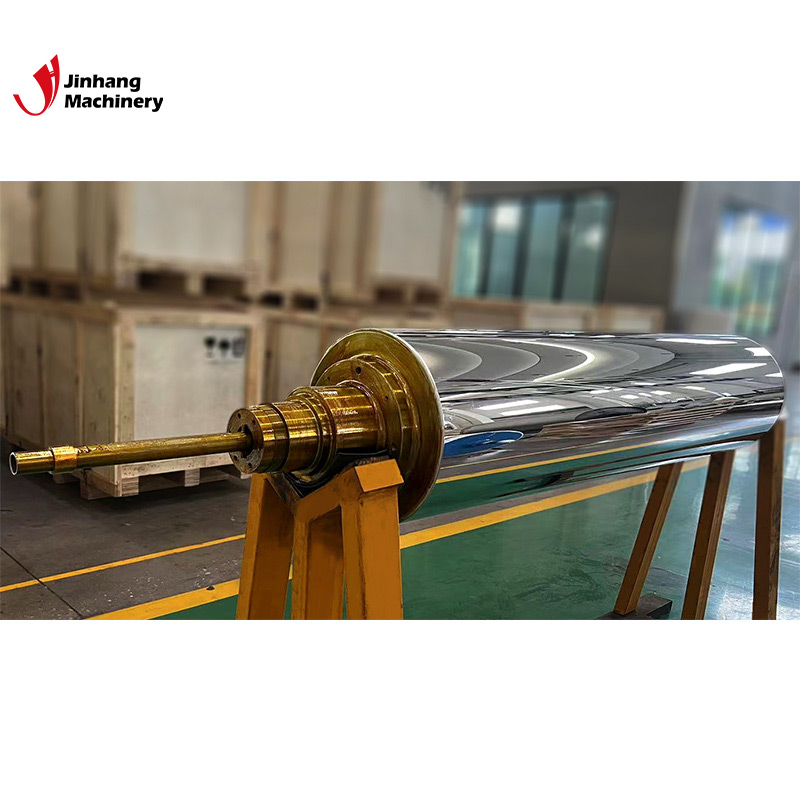
Hard chrome plating remains one of the most widely adopted surface treatments for steel rollers in printing, paper, and metal processing industries. The process deposits a dense chromium layer 20–500 microns thick, achieving surface hardness of HRC 65–70 — significantly harder than untreated steel at HRC 20–30.
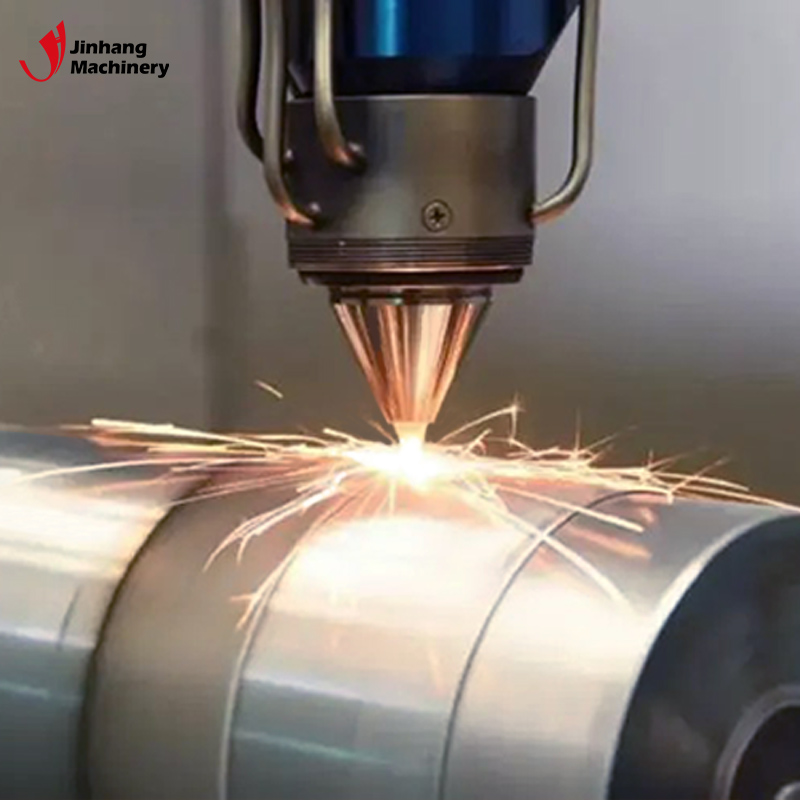
Thermal spraying — including HVOF (High Velocity Oxygen Fuel), plasma spraying, and arc spraying — applies metallic or ceramic coatings at high velocity onto roller surfaces. HVOF-applied tungsten carbide (WC-Co) coatings can achieve hardness levels of HV 1100–1400, far exceeding chrome plating, with bond strengths exceeding 70 MPa.
This process is favored in steel mills, cement plants, and paper pulp industries where rollers face extreme abrasion and temperatures up to 800°C.
Nitriding is a thermochemical diffusion process where nitrogen is introduced into the steel surface at temperatures of 480–580°C. Unlike chrome plating, nitriding does not add material — it transforms the existing surface layer, producing a hardened zone 0.1–0.8 mm deep with a surface hardness of HV 900–1200.
Because there is no coating to peel or crack, nitrided rollers are ideal for precision applications such as film calendering, textile machinery, and injection molding where dimensional stability is critical. The process also improves fatigue resistance by introducing compressive residual stresses at the surface.
One critical limitation: nitriding requires alloy steels (e.g., 42CrMo4, 31CrMoV9) to be effective. Plain carbon steels respond poorly, achieving hardness gains of less than HV 200 — often insufficient for demanding applications.
Surface grinding and polishing are not coating processes, but they are a critical final step that directly determines the functional performance of a steel roller. The surface roughness (Ra) value affects friction, material adhesion, ink transfer, and product quality consistency.
| 1.6–3.2 | Standard ground | Conveyor rollers, general industrial |
| 0.4–0.8 | Fine ground | Paper/film calenders, rubber processing |
| 0.05–0.2 | Mirror polished | Printing rollers, optical film production |
| <0.025 | Super-finished | Electronics, precision coating lines |
In printing applications, moving from Ra 0.8 µm to Ra 0.1 µm can reduce ink dot gain by 15–25%, directly improving print resolution. Grinding tolerances for high-precision rollers typically require cylindricity within ±0.005 mm.
Beyond hardness-focused treatments, functional coatings address specific operational challenges such as chemical resistance, non-stick behavior, and electrical properties.
PTFE-coated steel rollers are used in food processing, adhesive lamination, and heat-seal applications. The coating has a friction coefficient as low as 0.04, reducing material sticking and enabling easy cleaning. Operating range is typically -200°C to +260°C, with coating thickness of 25–75 µm. Trade-off: PTFE is relatively soft (HV ~5) and wears quickly under abrasive contact.
Electroless nickel plating (ENP) provides uniform coverage on complex shapes with hardness up to HV 500–600 (after heat treatment) and excellent corrosion resistance — passing 500–1000 hours in neutral salt spray tests (ASTM B117). It is widely used in chemical processing and food-grade roller applications.
Applied via plasma spraying, ceramic coatings such as chromium oxide (Cr₂O₃) and aluminum oxide (Al₂O₃) provide electrical insulation, extreme hardness (HV 1000–1400), and thermal resistance up to 1000°C. These are standard in textile yarn guide rollers and paper machine press rollers where heat and electrical isolation are required simultaneously.
No single process outperforms all others across every metric. Selection should be based on a combination of operating conditions, performance requirements, and budget constraints.
| Hard Chrome Plating | HRC 65–70 | Moderate | Up to 400°C | Low–Medium | Printing, paper, metal forming |
| HVOF Thermal Spray | HV 1100–1400 | High | Up to 600°C | High | Steel mills, mining, heavy abrasion |
| Nitriding | HV 900–1200 | Moderate | Up to 500°C | Medium | Precision rollers, film, textiles |
| Electroless Nickel | HV 500–600 | Very High | Up to 350°C | Medium | Chemical, food-grade processing |
| PTFE Coating | HV ~5 | High | Up to 260°C | Low | Adhesive lamination, food packaging |
| Ceramic (Plasma) | HV 1000–1400 | High | Up to 1000°C | Very High | Textile, paper machines, high-temp lines |
As a practical decision framework: if your rollers fail primarily due to abrasion, prioritize HVOF or nitriding. If corrosion is the main failure mode, choose electroless nickel or ceramic coatings. If material release or non-stick behavior matters most, PTFE is the logical choice. For general-purpose precision applications on a budget, hard chrome plating remains a cost-effective baseline — though regulatory pressure from REACH and RoHS continues to push the industry toward trivalent chrome and thermal spray alternatives.
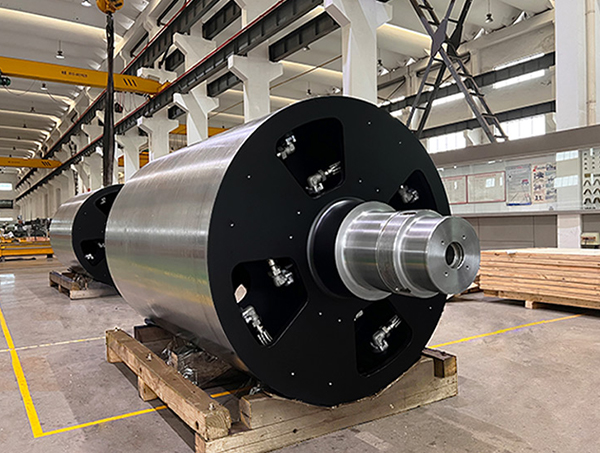
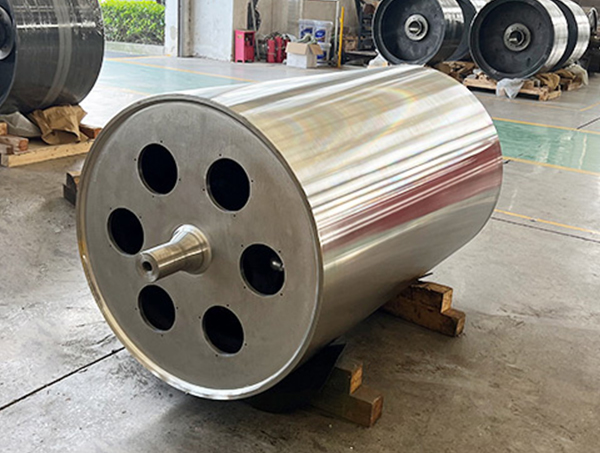
Dedicated to developing and manufacturing various shapes of rolls with different roll structures.
Phone: +86-15371769898
Email: [email protected]
Add: 9 Lifa Avenue, Chengdong Town, Haian County, Nantong City, Jiangsu Province, China
Copyright© 2025 Jiangsu Jinhang Machinery Manufacturing Co., Ltd. All Rights Reserved.
 Custom Thin Walled Roller Manufacturers


 English
 русский
 Deutsch