+86-15371769898
 [email protected]
+86-15371769898[email protected]Surface roughness — measured as the Ra value — is the single most influential parameter governing mirror surface roller performance. Ra directly controls the gloss level transferred to processed materials, the friction and release behavior at the nip point, heat transfer efficiency, contamination accumulation rate, and the roller's resistance to surface degradation under load. A change of just 0.05 µm in Ra value can mean the difference between a product that meets optical film specifications and one that is rejected at inspection — making Ra management not merely a manufacturing concern but a continuous operational priority.
Ra (arithmetical mean roughness) is calculated as the average absolute deviation of surface peaks and valleys from a mean centerline, measured in micrometers (µm) over a defined sampling length. It is the most universally used surface roughness parameter in industrial roller specifications because it provides a single, repeatable number that correlates directly with surface reflectivity, contact behavior, and functional performance.
However, Ra alone does not tell the complete story. Two rollers with identical Ra values can behave differently in production if their surface texture profiles differ — for example, a surface with deep, widely spaced valleys (high Rz relative to Ra) behaves differently under nip pressure than one with shallow, densely packed micro-peaks. For the most demanding mirror surface applications, manufacturers also specify:
For most mirror surface roller specifications, a complete surface quality definition requires Ra ≤ 0.05 µm combined with Rz ≤ 0.3 µm and Rmax ≤ 0.5 µm — ensuring both average smoothness and the absence of isolated deep defects.
The most direct and commercially significant effect of Ra value is its control over the gloss level imparted to films, coatings, laminates, and paper surfaces that pass in contact with the roller. Mirror surface rollers function as gloss transfer tools — the roller surface finish is replicated on the material surface during the contact and pressure event at the nip.
The relationship between roller Ra value and material gloss output is well established in industrial practice:
| Roller Ra Value (µm) | Gloss Level (GU at 60°) | Material Surface Appearance | Typical Product Application |
|---|---|---|---|
| 0.4 – 0.8 | 20 – 40 GU | Matte / satin | Matte packaging film, writing paper |
| 0.1 – 0.4 | 40 – 70 GU | Semi-gloss | Coated paper, standard packaging |
| 0.05 – 0.1 | 70 – 85 GU | High gloss | Premium packaging, laminating film |
| 0.02 – 0.05 | 85 – 95 GU | Mirror gloss | Decorative laminates, optical films |
| < 0.01 | > 95 GU | Optically perfect | Display panels, semiconductor films |
Gloss transfer efficiency is also influenced by nip pressure, material temperature, and contact dwell time — but Ra value sets the upper limit of gloss that can ever be achieved regardless of how these parameters are optimized. A roller at Ra 0.1 µm cannot produce a 95 GU surface finish no matter how high the nip pressure or how slow the line speed.
Ra value has a counterintuitive and critical effect on friction and material release at the roller surface. The relationship is not linear — both excessively rough and excessively smooth surfaces can create adhesion problems, but for different reasons.
At Ra values below 0.02 µm, the roller surface becomes so smooth that molecular-level adhesion forces (van der Waals forces) between the roller and certain polymer films become significant. The true contact area between roller and material increases dramatically as surface asperities disappear, and thin films — particularly polyurethane, soft PVC, and adhesive-backed laminates — can stick to the roller surface and resist clean release. This phenomenon is most pronounced at elevated temperatures and high nip pressures.
In practice, roller manufacturers and process engineers manage this by:
At Ra values above 0.2 µm, mechanical interlocking between surface asperities and soft material surfaces increases friction — which can cause material tracking issues, surface marring, and uneven tension in web-fed production lines. For precision web handling, roller Ra values of 0.05 to 0.1 µm provide the optimal balance of controlled friction for web stability without adhesion risk.
Many mirror surface rollers operate as heated or chilled rolls — transferring thermal energy to or from the processed material to control temperature during calendering, laminating, or embossing. Ra value directly influences the efficiency of this heat transfer through its control of real contact area.
Heat transfer between two surfaces in contact is governed by the thermal contact conductance — which increases as the real contact area increases and the air gap trapped between surface asperities decreases. A mirror surface roller at Ra 0.02 µm achieves a significantly higher real contact area with the material surface than a roller at Ra 0.2 µm — meaning:
Ra value determines how readily dust, coating residues, adhesive deposits, and process contamination accumulate on the roller surface — and how easily they can be removed during cleaning cycles.
Surface asperities at higher Ra values act as mechanical traps for particles and contamination — a roller at Ra 0.4 µm has surface valleys deep enough to trap particles that a roller at Ra 0.02 µm cannot retain. The practical consequences in production are significant:
A mirror surface roller's performance in production is not static — Ra value changes over the roller's service life as the surface wears, and the rate at which Ra degrades determines how long the roller can maintain its performance specification before regrinding or repolishing is required.
The initial Ra value influences wear rate in a directly measurable way through the Rpk (reduced peak height) parameter. Surfaces with high Rpk — prominent micro-peaks standing above the mean surface — wear rapidly as these peaks are the first material removed under contact load. A well-polished mirror surface with low Rpk has minimal peak material to lose, and therefore Ra value remains stable for significantly longer before degrading to the point where product quality is affected.
Practical Ra degradation rates under different operating conditions:
| Operating Condition | Typical Ra Degradation Rate | Expected Repolish Interval |
|---|---|---|
| Clean film, low nip pressure, moderate speed | 0.005 µm per 1,000 hours | 18 – 36 months |
| Coated paper, medium nip pressure, high speed | 0.01 – 0.02 µm per 1,000 hours | 9 – 18 months |
| Abrasive particulate in process media | 0.05+ µm per 1,000 hours | 3 – 6 months |
| Tungsten carbide coated roller, clean media | < 0.002 µm per 1,000 hours | 3 – 7 years |
In precision product manufacturing, the Ra value of a mirror surface roller sets the defect sensitivity threshold for the entire production line. Any surface irregularity on the roller — a scratch, a pit, a contamination deposit — that exceeds the surrounding Ra level will be replicated on every meter of material the roller contacts until the defect is identified and the roller is removed for rework.
The financial impact of Ra-related defects is significant in high-value product lines:
| Performance Parameter | Ra 0.2 – 0.4 µm | Ra 0.05 – 0.1 µm | Ra 0.01 – 0.05 µm |
|---|---|---|---|
| Gloss transfer | Semi-gloss only | High gloss | Mirror / optical gloss |
| Material release | Good | Very good | Requires management (adhesion risk) |
| Heat transfer uniformity | Moderate | Good | Excellent |
| Contamination resistance | Moderate | Good | Excellent |
| Ra stability over time | Degrades quickly | Moderately stable | Highly stable (low Rpk) |
| Defect replication risk | Lower sensitivity | Medium sensitivity | Highest sensitivity |
| Manufacturing cost | Lower | Medium | Highest |
Ra value is not a single specification number to be met at the time of roller manufacture and then forgotten — it is a dynamic performance parameter that governs every aspect of mirror surface roller behavior throughout its operational life. It controls gloss transfer, friction, heat exchange, contamination resistance, wear progression, and defect risk simultaneously. Specifying the correct Ra value for an application requires balancing all six of these performance dimensions — not simply minimizing Ra to the lowest achievable level. The optimal Ra for most mirror surface roller applications sits in the 0.02 to 0.05 µm range, where gloss transfer is maximized, adhesion is managed, heat transfer is excellent, and surface stability under production conditions is highest. Going below this range delivers diminishing gloss returns while increasing adhesion risk and manufacturing cost disproportionately.
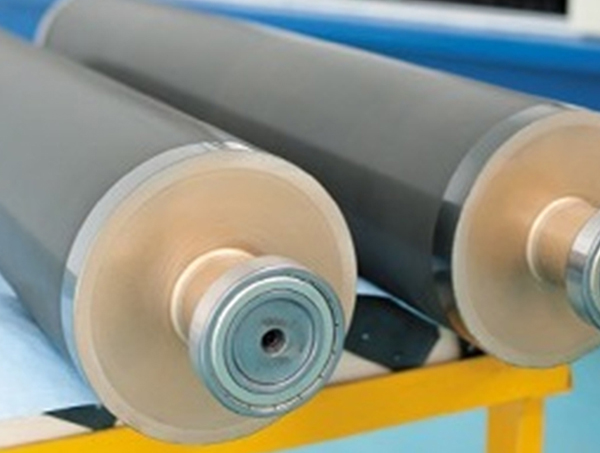
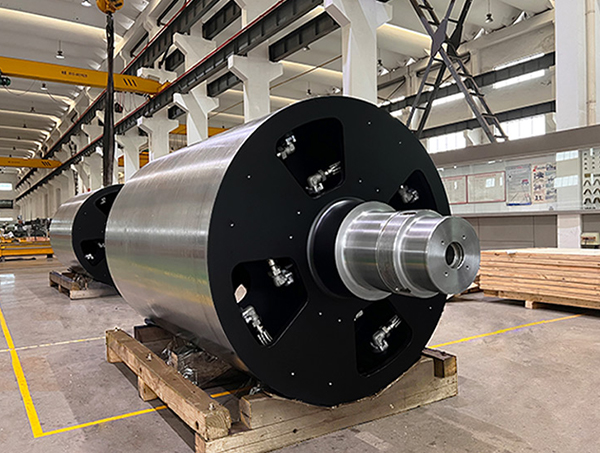
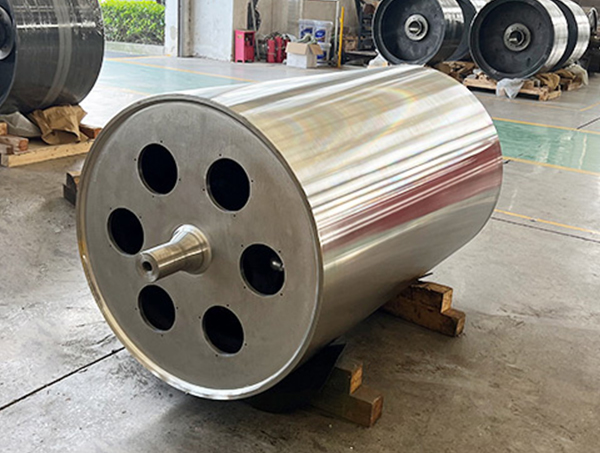
Dedicated to developing and manufacturing various shapes of rolls with different roll structures.
Phone: +86-15371769898
Email: [email protected]
Add: 9 Lifa Avenue, Chengdong Town, Haian County, Nantong City, Jiangsu Province, China
Copyright© 2025 Jiangsu Jinhang Machinery Manufacturing Co., Ltd. All Rights Reserved.
 Custom Thin Walled Roller Manufacturers


 English
 русский
 Deutsch