+86-15371769898
 [email protected]
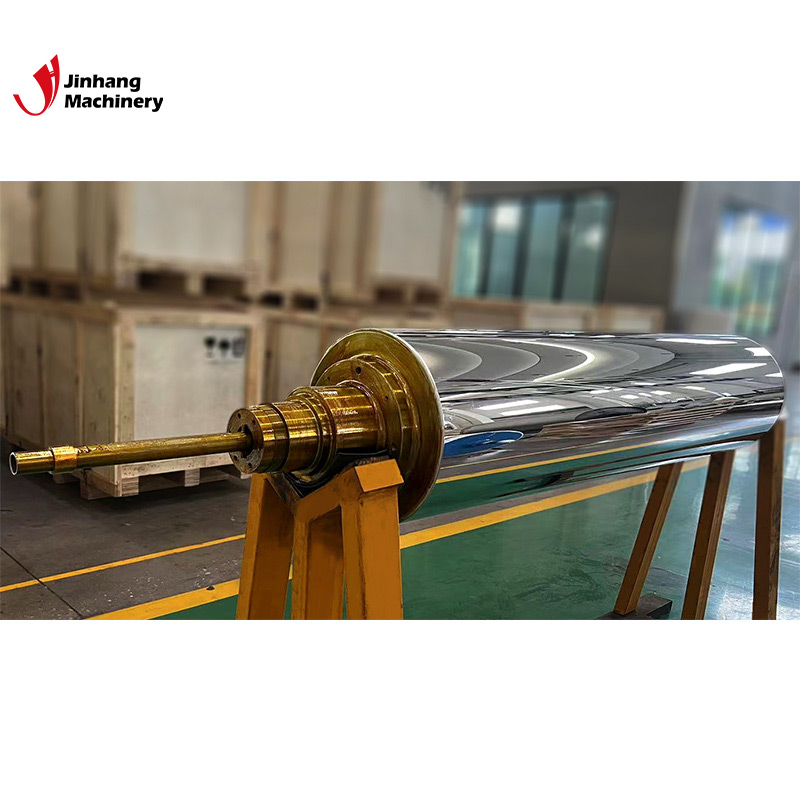
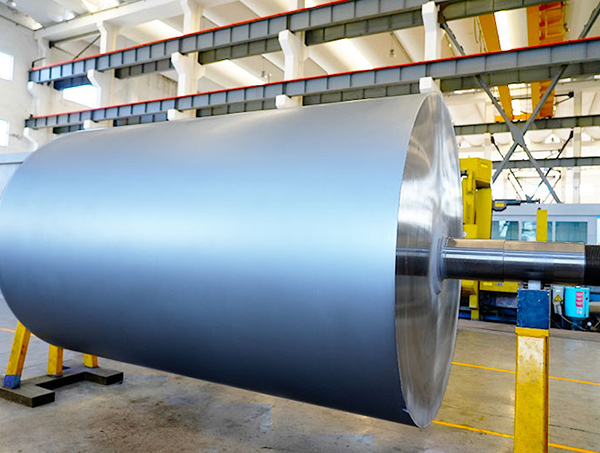
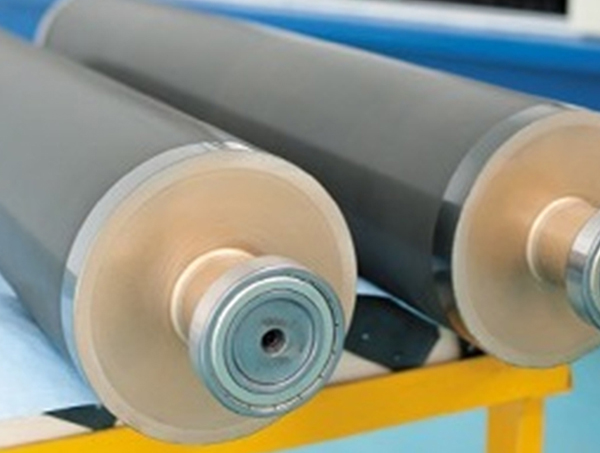
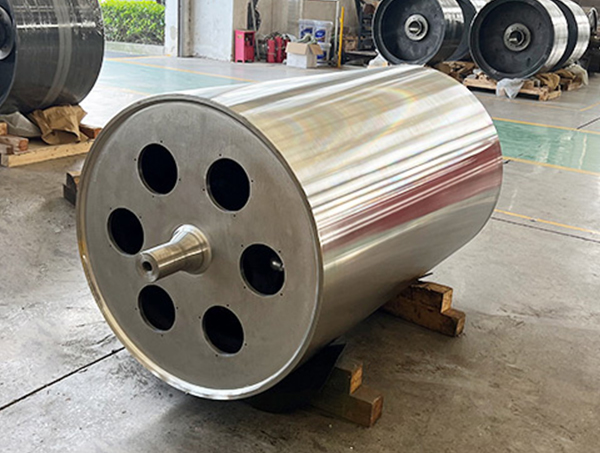
+86-15371769898[email protected]Mirror surface rollers achieve their high-gloss finish through a precisely controlled multi-stage manufacturing process that combines base material selection, rough and fine machining, multiple rounds of grinding, and final polishing to reach a surface roughness (Ra) of 0.01 to 0.05 micrometers — smooth enough to reflect light like a mirror. At this level of surface refinement, the roller can impart its finish directly onto films, foils, coatings, and laminates during industrial processing, making the quality of the roller surface the single most important factor in the quality of the finished product.
Surface roughness is measured by the Ra value (arithmetical mean roughness) — the average deviation of surface peaks and valleys from a mean line, expressed in micrometers (µm). The lower the Ra value, the smoother and more reflective the surface.
| Surface Grade | Ra Value (µm) | Appearance | Typical Application |
|---|---|---|---|
| Standard machined | 1.6 – 3.2 | Visible tool marks | General industrial rollers |
| Fine ground | 0.4 – 0.8 | Smooth, matte appearance | Standard film and paper rollers |
| High-gloss polished | 0.05 – 0.2 | Bright, semi-reflective | Packaging film, coated paper |
| Mirror surface | 0.01 – 0.05 | Full mirror reflection | Optical films, decorative laminates, precision coating |
| Ultra-mirror (super finish) | < 0.01 | Optically perfect reflection | Display panels, semiconductor films |
To put the mirror surface Ra value in perspective: a human hair is approximately 70 micrometers in diameter — a mirror surface roller at Ra 0.01 µm is 7,000 times smoother than the width of a single hair.
Achieving a mirror finish begins long before any polishing takes place. The choice of base material directly determines how fine a finish can ultimately be achieved — and how long that finish will hold under production conditions.
The most commonly used base materials for mirror surface rollers are:
Once the base material is selected, the roller blank is rough-turned on a CNC lathe to within 0.3 to 0.5 mm of the final diameter. This material allowance is left deliberately to accommodate subsequent grinding and finishing without risking dimensional undercut.
For steel rollers, heat treatment follows rough machining and is critical to mirror finish performance:
Grinding is where the roller surface begins its transformation from a rough machined blank to a precision cylinder. Mirror surface roller grinding is performed in multiple passes with progressively finer abrasive wheels, each pass removing a smaller amount of material and leaving a progressively smoother surface.
A typical grinding sequence for a mirror surface roller:
Throughout grinding, coolant flow rate, wheel speed, workpiece rotation speed, and traverse rate are all precisely controlled — deviations cause thermal damage, chatter marks, or grinding burn that cannot be recovered without restarting the grinding sequence.
For many mirror surface rollers, a hard surface coating is applied after finish grinding to provide the combination of hardness, corrosion resistance, and polish-receptive surface quality that the base material alone cannot deliver. The three most common coating technologies are:
The traditional and most widely used coating for mirror surface rollers. Electroplated hard chrome achieves hardness of HV 850–1,050 and can be polished to Ra values below 0.02 µm. Chrome layers of 0.05 to 0.2 mm thickness are standard for industrial rollers. The inherent micro-crack network in chrome plating provides some lubricant retention, which helps protect the surface during film contact. However, due to environmental regulations around hexavalent chromium (Cr VI), alternative coatings are increasingly specified.
High-Velocity Oxygen Fuel (HVOF) spraying deposits a dense tungsten carbide-cobalt (WC-Co) coating at hardness values of HV 1,200–1,500 — significantly harder than chrome. HVOF coatings are virtually porosity-free, highly resistant to abrasion and corrosion, and can be polished to Ra values of 0.02–0.05 µm. They are the preferred choice in applications where chrome is prohibited or where roller life in abrasive conditions is critical.
Ceramic coatings applied by plasma spray offer excellent hardness (HV 1,000–1,400) and outstanding chemical resistance. Chrome oxide (Cr₂O₃) ceramic in particular can be polished to mirror quality and is used extensively in printing, coating, and chemical processing rollers where aggressive media contact is unavoidable.
Polishing is what transforms a precision-ground or coated roller into a true mirror surface. It is the most labor-intensive and skill-dependent stage in the entire manufacturing process, and the one most responsible for the final Ra value achieved.
Mirror polishing of industrial rollers is performed in sequential stages using progressively finer abrasives:
Each polishing stage must be performed with clean tools and a contamination-free environment — a single abrasive particle from a coarser stage left on the roller surface will create a scratch that penetrates through all subsequent finer polishing stages, requiring the entire sequence to be restarted from the point of contamination.
After polishing, every mirror surface roller undergoes a rigorous quality inspection protocol before it is released for use. Key measurements include:
| Stage | Process | Ra Achieved (µm) | Key Objective |
|---|---|---|---|
| 1 | Material selection and rough turning | 3.2 – 6.3 | Establish geometry and material foundation |
| 2 | Heat treatment | — | Achieve surface hardness HRC 58–65 |
| 3 | Multi-pass cylindrical grinding | 0.05 – 0.2 | Precision geometry, dimensional accuracy |
| 4 | Surface coating (chrome / HVOF / ceramic) | 0.1 – 0.4 | Hardness, corrosion resistance, polishability |
| 5 | Sequential mirror polishing | 0.01 – 0.05 | Achieve mirror reflectivity and final Ra |
| 6 | Quality inspection and dynamic balancing | Verified ≤ 0.05 | Confirm all specifications before release |
A mirror surface roller does not achieve its high-gloss finish by accident or through a single process — it is the result of six precisely sequenced manufacturing stages, each building on the last, from base material selection and heat treatment through multi-pass grinding, surface coating, and final mirror polishing. The Ra value achieved at each stage sets the ceiling for what the next stage can accomplish, which is why no step can be skipped or rushed. The final Ra value of 0.01 to 0.05 µm that defines a true mirror surface roller represents one of the highest levels of surface finish achievable in industrial manufacturing — and it directly determines the gloss, clarity, and quality of every product the roller touches.
Dedicated to developing and manufacturing various shapes of rolls with different roll structures.
Phone: +86-15371769898
Email: [email protected]
Add: 9 Lifa Avenue, Chengdong Town, Haian County, Nantong City, Jiangsu Province, China
Copyright© 2025 Jiangsu Jinhang Machinery Manufacturing Co., Ltd. All Rights Reserved.
 Custom Thin Walled Roller Manufacturers


 English
 русский
 Deutsch