+86-15371769898
 [email protected]
+86-15371769898[email protected]Heating roller temperature is controlled through a closed-loop feedback system combining precision temperature sensors, PID (Proportional-Integral-Derivative) controllers, and a regulated heat source — whether electric, oil, induction, or steam. In high-demand production lines, this system maintains surface temperature uniformity within ±1°C to ±3°C across the full roller width, even as line speed, material type, and ambient conditions fluctuate. Achieving and sustaining this level of tolerance is not a single-component problem — it requires the correct integration of sensing technology, control logic, heating method, and roller construction.
Every reliable heating roller temperature control system operates on the same fundamental principle: measure actual temperature, compare it to the setpoint, calculate the deviation, and adjust the heat input accordingly — continuously, in real time. This is the closed-loop control architecture, and its performance depends on three subsystems working in concert.
The temperature sensor is the system's eyes. Two sensor types dominate industrial heating roller applications:
For rollers where contact sensors are impractical — such as high-speed rotating rollers or those processing sensitive substrates — non-contact infrared (IR) pyrometers are used to measure surface temperature without physical contact, with response times as fast as 1–10 milliseconds.
The PID controller is the brain of the system. It continuously calculates the difference between the measured temperature and the target setpoint, then adjusts heat output using three mathematical terms:
A well-tuned PID controller on an electric heating roller can maintain setpoint accuracy within ±0.5°C under stable load conditions. Modern digital PID controllers — such as those from Omron, Eurotherm, or Yokogawa — support auto-tuning algorithms that automatically calculate optimal P, I, and D parameters during initial commissioning, significantly reducing setup time.
The controller's output signal is converted into a physical adjustment of heat supply. The actuation method depends on the heating technology:
The heating method is not interchangeable — each has a distinct thermal response profile that determines how quickly and precisely the control system can maintain setpoint temperature.
| Heating Method | Typical Temp. Range | Control Precision | Thermal Response Speed | Uniformity Across Width |
|---|---|---|---|---|
| Electric (Cartridge / Rod) | Up to 400°C | ±1°C – ±3°C | Medium (minutes) | Moderate — depends on element placement |
| Thermal Oil (TCU) | 50°C – 350°C | ±1°C – ±2°C | Slow (high thermal mass) | Excellent — fluid distributes heat evenly |
| Induction Heating | Up to 500°C+ | ±0.5°C – ±1°C | Very fast (seconds) | Very good — zoned coil control possible |
| Steam | 100°C – 200°C | ±2°C – ±5°C | Slow | Good in core, poor at roller ends |
| Hot Air Circulation | Up to 300°C | ±3°C – ±8°C | Slow | Poor — convective losses at edges |
Maintaining a consistent setpoint temperature at the center of the roller is only half the challenge. Axial temperature uniformity — consistent heat across the full width of the roller — is equally critical, especially in wide-web applications such as film laminating, nonwoven fabric bonding, and paper calendering where width can exceed 2,000–4,000 mm.
Wide heating rollers are divided into independent heating zones — typically 3 to 8 zones along the roller width — each with its own sensor and control loop. This allows the system to compensate for the natural tendency of rollers to lose more heat at the ends (edge cooling effect) by applying slightly more power to end zones. Without zoned control, end-to-center temperature differentials of 5°C–15°C are common in wide rollers, causing non-uniform processing across the web width.
In oil-heated rollers, the internal flow channel geometry directly determines temperature uniformity. Three common designs offer progressively better performance:
On critical production lines, a scanning infrared thermometer or thermal camera continuously profiles the full roller surface temperature in real time, generating a temperature map across the entire width. Deviations beyond a defined threshold — typically ±2°C from setpoint — trigger automatic zone-level corrections or production alarms. This technology is standard in precision film extrusion and pharmaceutical tablet coating lines.
Even a perfectly tuned control system must contend with real-world disturbances that pull the roller temperature away from setpoint during production. Understanding these disturbances — and how the control system compensates — is essential for process engineers maintaining tight tolerances.
When line speed increases, the substrate spends less time in contact with the roller and absorbs less heat — but simultaneously, more cold substrate passes over the roller surface per unit time, increasing the heat extraction rate. The net effect is a temperature drop of 2°C–8°C depending on speed increment, substrate thermal mass, and roller heat capacity. A well-tuned PID controller with derivative action anticipates this drop and pre-adjusts power output, recovering setpoint within 15–30 seconds on induction-heated rollers and 60–120 seconds on oil-heated rollers.
When the substrate web breaks or production pauses, the roller surface suddenly loses its primary heat sink. Without intervention, surface temperature overshoots setpoint rapidly — in electric heating rollers, overshoots of 10°C–25°C within 2–5 minutes are possible. Modern control systems address this with automatic power reduction or standby mode triggered by web break detection sensors, immediately cutting heat input to prevent thermal damage to the roller surface or coating.
In facilities without climate control, ambient temperature swings of 10°C–20°C between seasons — or even between morning and afternoon in summer — affect the roller's steady-state heat loss to the surrounding environment. Feedforward control strategies that incorporate ambient temperature as an input parameter allow the controller to pre-compensate for these slow drifts before they impact the roller setpoint.
For production lines with demanding tolerance requirements — typically ±0.5°C or tighter — standard single-loop PID control may be insufficient. Several advanced strategies are used to push temperature control performance further.
Cascade control uses two nested PID loops: an outer loop controlling roller surface temperature and a faster inner loop controlling the heating medium temperature (oil outlet temperature or heater element temperature). The inner loop responds to disturbances before they propagate to the surface, dramatically improving rejection of supply-side disturbances. Cascade control is standard in high-precision oil-heated roller systems and reduces surface temperature deviation by 40–60% compared to single-loop PID under the same disturbance conditions.
MPC uses a mathematical model of the roller's thermal behavior to predict future temperature trajectory and calculate optimal control actions in advance. Unlike PID, which reacts to errors after they occur, MPC anticipates disturbances based on known process dynamics — such as scheduled line speed changes — and adjusts heat input before the disturbance impacts surface temperature. MPC is increasingly deployed in precision film processing and pharmaceutical roller applications where setpoint deviations must remain within ±0.3°C.
Feedforward control supplements PID by using measurable disturbances — line speed, substrate thickness, or ambient temperature — as direct inputs to the controller. When line speed increases by a known increment, the controller immediately adds a calculated power boost without waiting for the surface temperature to drop. Combined with PID feedback, feedforward reduces the peak temperature deviation during speed transitions by 50–70%.
Modern heating roller temperature control does not operate in isolation — it is integrated into the broader production line automation architecture for coordinated process management.
Even well-designed systems experience temperature control degradation over time. The following failure modes account for the majority of out-of-tolerance temperature events in production lines:
| Failure Mode | Symptom | Root Cause | Prevention |
|---|---|---|---|
| Thermocouple drift | Gradual setpoint offset | Sensor aging, thermal cycling fatigue | Annual calibration; replace every 12–18 months |
| Oil channel fouling | Poor uniformity, slow response | Oil degradation and carbon deposit buildup | Regular oil analysis; flush channels every 6–12 months |
| SSR degradation | Temperature oscillation or runaway | Thyristor wear, overcurrent damage | Monitor SSR junction temperature; replace proactively |
| PID detuning | Hunting, overshoot, slow recovery | Process changes invalidating original tuning | Re-tune after major line changes; use auto-tune feature |
| Heating element failure | Unable to reach setpoint | Electrical burnout, insulation breakdown | Monitor power draw; predictive replacement schedule |
Maintaining heating roller temperature within tight tolerances in a production line is the result of four integrated elements working together: accurate sensing, responsive PID control, an appropriate heating method, and a roller construction that distributes heat uniformly. Advanced strategies — cascade control, model predictive control, and feedforward compensation — push performance further for the most demanding applications. Integration with PLC and SCADA systems ensures process traceability and recipe consistency across product changeovers. And proactive maintenance of sensors, heating elements, and control hardware prevents the gradual degradation that silently erodes temperature accuracy over time. For process engineers, understanding each layer of this system is the foundation for consistently achieving the thermal precision that product quality demands.
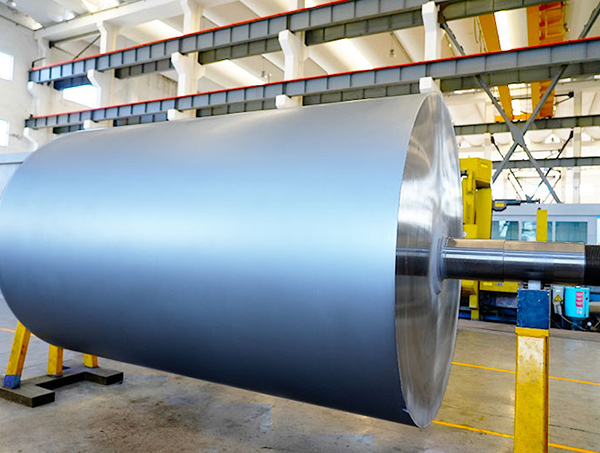
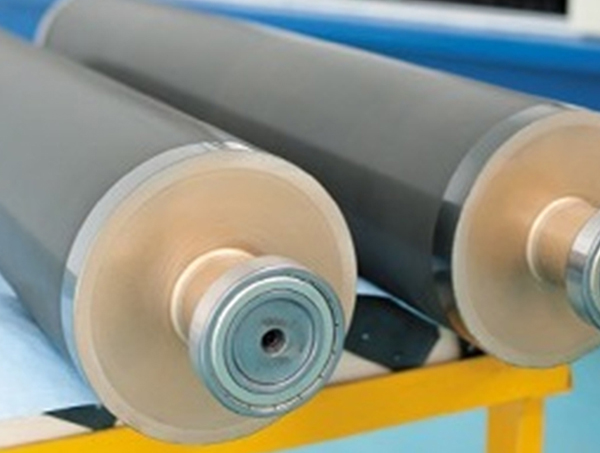
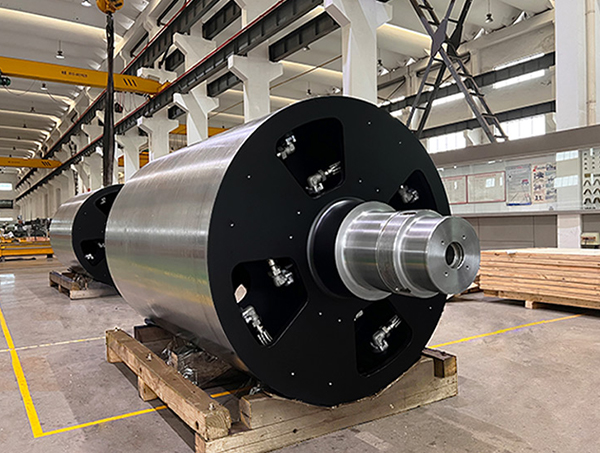
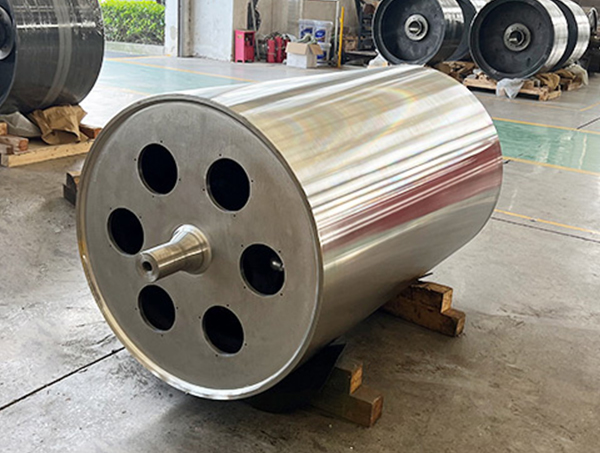
Dedicated to developing and manufacturing various shapes of rolls with different roll structures.
Phone: +86-15371769898
Email: [email protected]
Add: 9 Lifa Avenue, Chengdong Town, Haian County, Nantong City, Jiangsu Province, China
Copyright© 2025 Jiangsu Jinhang Machinery Manufacturing Co., Ltd. All Rights Reserved.
 Custom Thin Walled Roller Manufacturers


 English
 русский
 Deutsch