+86-15371769898
 [email protected]
+86-15371769898[email protected]The correct heating roller temperature depends entirely on what you are processing — hair type, material, or industrial substrate. For personal use, the safe range is 250°F–400°F (121°C–204°C) depending on hair texture and condition; for industrial applications, roller temperatures can range from 100°F to over 500°F (38°C–260°C) depending on the material and process. Using the wrong setting is the single most common cause of damage, uneven results, and equipment wear. This guide gives you precise, application-specific temperature recommendations you can act on immediately.
Temperature is not just a setting — it is the core variable that determines whether a heating roller delivers the result you need or causes irreversible damage. Too low, and the roller fails to transfer enough energy to the substrate. Too high, and you risk scorching, structural breakdown, and costly rework.
In hair care, temperatures above 450°F (232°C) have been shown in studies to permanently alter the disulfide bonds in the hair cortex, causing breakage that cannot be repaired by conditioning treatments. In industrial laminating, a roller running just 10°C above the specified dwell temperature can cause adhesive bleed-through that ruins an entire production run.
The key principle: always start at the lowest effective temperature and increase incrementally. This applies equally to a hairstylist and a production engineer.
Hair heating rollers — including hot rollers, curling rollers, and barrel rollers — must be matched to the hair's moisture content, thickness, and chemical history. The following table gives specific recommended ranges:
| Hair Type | Recommended Temp (°F) | Recommended Temp (°C) | Notes |
|---|---|---|---|
| Fine / Thin | 250°F – 300°F | 121°C – 149°C | Low heat prevents breakage on fragile strands |
| Medium / Normal | 300°F – 360°F | 149°C – 182°C | Standard range for most hair care applications |
| Thick / Coarse | 360°F – 410°F | 182°C – 210°C | Higher heat needed to penetrate dense cortex |
| Color-Treated / Bleached | 250°F – 320°F | 121°C – 160°C | Chemical processing weakens the cuticle; treat as fine hair |
| Curly / Natural | 350°F – 400°F | 177°C – 204°C | Requires higher heat; always use heat protectant |
| Damaged / Over-Processed | 200°F – 250°F | 93°C – 121°C | Avoid high heat entirely; consider heatless alternatives |
A heat protectant product effectively raises the safe temperature threshold by coating the hair shaft and slowing heat transfer. Studies show that silicone-based heat protectants can reduce surface temperature damage by up to 50% at equivalent roller settings. Always apply to damp or dry hair before contact with any heated roller, regardless of your hair type.
Temperature and time work together. At 300°F (149°C), leaving a roller in for 30 seconds delivers similar energy to 15 seconds at 375°F (190°C). For tighter curls, use a higher temperature for a shorter time rather than a lower temperature for an extended period — prolonged contact at any heat level increases cumulative damage.
In manufacturing and processing, heating rollers are used across a wide range of industries — from paper and film lamination to textile calendering and rubber vulcanization. Each application demands a precise temperature window, and deviations of even 5–10°C can affect product quality, adhesion strength, or surface finish.
| Application | Typical Temp Range (°C) | Key Consideration |
|---|---|---|
| Paper / Board Lamination | 80°C – 120°C | Too high causes curl; too low causes delamination |
| Plastic Film Extrusion | 150°C – 220°C | Temp must match polymer glass transition point |
| Textile Calendering | 150°C – 200°C | Fiber type determines upper limit (synthetics melt lower) |
| Rubber Processing | 100°C – 180°C | Vulcanization rate is temperature-dependent |
| Adhesive Tape Coating | 60°C – 130°C | Acrylic vs. rubber adhesive systems have different windows |
| Carbon Fiber Composites | 120°C – 180°C | Resin cure cycle dictates temperature profile |
| Hot Stamping / Foiling | 100°C – 160°C | Speed and pressure interact with temperature |
A common source of industrial process error is the gap between the roller's internal set-point temperature and its actual surface temperature. Surface temperature can run 10°C–30°C lower than the internal sensor reading, depending on roller diameter, rotation speed, material contact area, and ambient conditions. Always use a calibrated infrared thermometer or contact thermocouple to verify actual surface temperature before finalizing process parameters.
Temperature and speed are inseparable variables in any roller heating process. A roller set to 160°C running at 10 m/min delivers a very different energy dose than the same roller running at 50 m/min. Faster speeds reduce the contact time (dwell time), meaning less heat is transferred per unit area.
The practical implication:
Whether you are styling hair or running a production line, the material itself tells you when the temperature is off. Learn to read these signals early:
Never assume the dial or digital display is accurate. Consumer hair rollers can have temperature tolerances of ±15°F (±8°C), while industrial rollers should be verified with traceable calibration instruments on a scheduled basis.
Use this summary as a fast lookup when you need a starting-point temperature for a new application:
| Use Case | Starting Temp (°F) | Starting Temp (°C) | Max Safe Temp |
|---|---|---|---|
| Fine / Damaged Hair | 250°F | 121°C | 300°F / 149°C |
| Normal / Medium Hair | 300°F | 149°C | 380°F / 193°C |
| Thick / Coarse / Curly Hair | 350°F | 177°C | 420°F / 215°C |
| Paper Lamination | 175°F | 80°C | 248°F / 120°C |
| Plastic Film / Extrusion | 300°F | 150°C | 430°F / 220°C |
| Textile Calendering | 300°F | 150°C | 392°F / 200°C |
| Hot Stamping / Foiling | 212°F | 100°C | 320°F / 160°C |
Most temperature-related failures trace back to a handful of recurring errors:
The right heating roller temperature is the lowest setting that achieves your target result on your specific material. For most people styling normal hair, that means starting at 300°F (149°C) and adjusting from there. For industrial applications, it means starting at the lower boundary of your material's process window and running qualification tests before full production.
Temperature guides give you a starting point, not a final answer. The material's response — how it feels, looks, and performs — is your real feedback signal. Use the data in this guide to make an informed first setting, then let the result tell you where to go next.
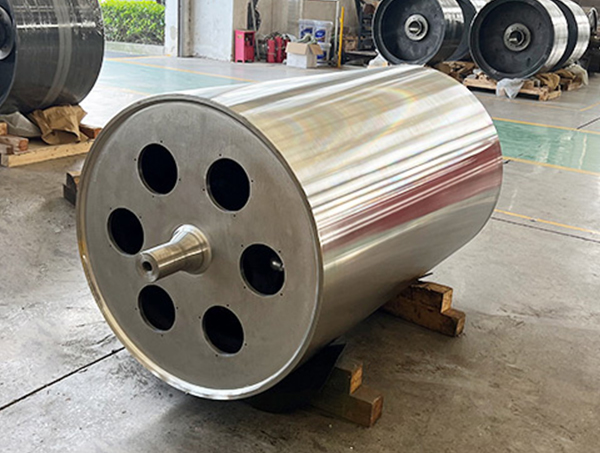
Dedicated to developing and manufacturing various shapes of rolls with different roll structures.
Phone: +86-15371769898
Email: [email protected]
Add: 9 Lifa Avenue, Chengdong Town, Haian County, Nantong City, Jiangsu Province, China
Copyright© 2025 Jiangsu Jinhang Machinery Manufacturing Co., Ltd. All Rights Reserved.
 Custom Thin Walled Roller Manufacturers


 English
 русский
 Deutsch