+86-15371769898
 [email protected]
+86-15371769898[email protected]Yes — and most buyers underestimate it. Material selection is the single most decisive factor in steel roller lifespan, often accounting for a 200–500% difference in service life between a well-matched material and a poor one. It affects hardness, fatigue resistance, thermal stability, and corrosion behavior all at once. This article breaks down exactly how each material choice plays out in real operating conditions — with numbers to back it up.
Surface treatments like chrome plating or HVOF spraying often get the spotlight, but they can only perform as well as the base material allows. A poorly chosen substrate will crack under load, deform under heat, or corrode from within — regardless of how good the coating is. In field studies across conveyor and processing line failures, over 60% of premature roller failures traced back to base material mismatch, not coating defects or improper maintenance.
Material selection determines four critical performance dimensions: mechanical strength, wear resistance, thermal behavior, and corrosion resistance. Getting even one of these wrong for your specific environment can cut expected lifespan by half or more.
Carbon steel — particularly grades like 45# steel (C45) and 40Cr — dominates general-purpose roller manufacturing due to low cost and easy machinability. After heat treatment, C45 achieves surface hardness of HRC 48–55 and tensile strength around 600–800 MPa, which is adequate for light-to-medium load conveyor systems in dry, non-corrosive environments.
In practice, carbon steel rollers in paper mill wet sections have an average replacement cycle of 8–14 months. Switching to alloy steel in the same application typically extends this to 24–36 months — a 2–3× lifespan improvement with roughly 30–50% higher upfront material cost.
Alloy steels introduce chromium, molybdenum, vanadium, and nickel to improve specific performance characteristics. The most commonly used grades in industrial roller manufacturing include:
| Grade | Key Alloying Elements | Hardness (HRC) | Tensile Strength (MPa) | Best Application |
|---|---|---|---|---|
| 42CrMo4 | Cr, Mo | 54–60 | 1000–1200 | Heavy-load press rollers, forging lines |
| GCr15 (52100) | Cr (1.5%) | 60–65 | 1900–2100 | Bearing rollers, precision calendering |
| 9Cr2Mo | Cr (2%), Mo | 62–67 | — | Cold rolling mill work rolls |
| H13 (hot work tool steel) | Cr, Mo, V | 44–52 | 1200–1600 | Hot rolling, extrusion, die casting lines |
GCr15, for example, is the global standard for precision rolling contact applications. Its fine carbide distribution and high chromium content give it a contact fatigue life 5–8× greater than C45 under equivalent Hertzian contact stress — making it the material of choice for paper calender rolls and high-speed laminating lines where surface consistency over millions of cycles is non-negotiable.
In food processing, pharmaceutical manufacturing, and chemical handling lines, stainless steel rollers — primarily 304, 316L, and 17-4PH grades — are used where hygiene, rust prevention, and chemical compatibility are mandatory.
A common mistake is specifying 304 stainless in wet abrasive environments like fish processing or grain milling. The rollers pass hygiene requirements but wear out 2–3× faster than a properly coated alloy steel alternative — costing more over a 5-year horizon despite similar upfront pricing.
Cast iron rollers — particularly high-chromium white cast iron (HCCI) and ductile iron (nodular iron) — remain competitive in low-speed, high-load applications such as crusher feed rollers, slag handling conveyors, and cement plant equipment.
High-chromium white cast iron (15–28% Cr) achieves hardness of HRC 58–68 with outstanding abrasive wear resistance — often outperforming heat-treated alloy steel by 3–10× in pure sliding abrasion tests (ASTM G65). However, its brittleness (impact toughness as low as 3–5 J/cm²) makes it unsuitable for applications with sudden shock loads or vibration, where it will crack rather than deform.
Ductile iron, by contrast, offers a middle ground: moderate wear resistance with significantly better impact toughness (50–120 J/cm²), making it the preferred choice for agricultural machinery rollers, printing press support rolls, and light industrial conveyors where cost and castability matter more than peak hardness.
Material selection doesn't exist in isolation — it determines what surface treatments are viable and how effective they will be. This interaction is where the biggest lifespan gains (or losses) occur.
| Base Material | Compatible Surface Treatments | Nitriding Response | Lifespan Multiplier vs. Untreated |
|---|---|---|---|
| C45 carbon steel | Chrome plating, HVOF, PTFE | Poor (<HV 200 gain) | 2–3× |
| 42CrMo4 alloy steel | All treatments | Excellent (HV 900–1100) | 4–6× |
| GCr15 bearing steel | Chrome plating, grinding, HVOF | Moderate | 5–8× |
| 304 stainless steel | Electroless nickel, PTFE, ceramic | Not recommended | 1.5–2.5× |
| HCCI cast iron | Limited (brittle substrate risk) | Not applicable | 3–10× (abrasion only) |
The data makes one point clear: alloy steels like 42CrMo4, when combined with the right surface treatment, consistently deliver the highest overall lifespan gains. This is why they are the de facto standard in high-performance roller applications — not because they are the cheapest or easiest to machine, but because they offer the best platform for further performance optimization.
Before specifying a steel roller material, answer these four questions about your operating environment:
Material selection is never just a metallurgy question — it is a financial and operational decision. The rollers that last the longest are not always made from the hardest material; they are made from the material that is best matched to what the environment actually demands.
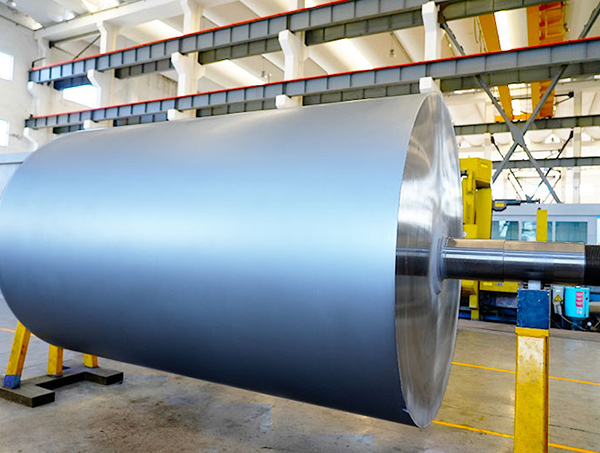
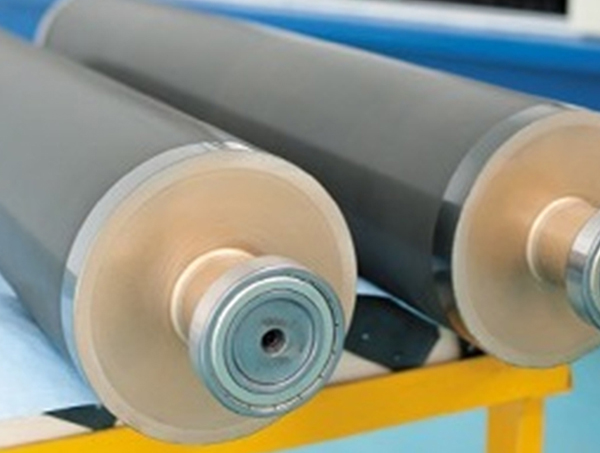
Dedicated to developing and manufacturing various shapes of rolls with different roll structures.
Phone: +86-15371769898
Email: [email protected]
Add: 9 Lifa Avenue, Chengdong Town, Haian County, Nantong City, Jiangsu Province, China
Copyright© 2025 Jiangsu Jinhang Machinery Manufacturing Co., Ltd. All Rights Reserved.
 Custom Thin Walled Roller Manufacturers


 English
 русский
 Deutsch