+86-15371769898
 [email protected]
+86-15371769898[email protected]A water quenching roller is a precision industrial component used to rapidly cool hot metal strip, plate, or bar stock immediately after rolling or heat treatment. Its primary function is to control the cooling rate of metal — a critical variable that directly determines the final hardness, grain structure, and mechanical properties of the finished product. This guide covers how they work, the main types, key selection criteria, and what to watch for in 2026 procurement.
In metal processing — particularly steel, aluminum, and stainless steel production — the transition from high temperature to ambient temperature must be precisely managed. Uncontrolled cooling produces inconsistent microstructures, warping, surface defects, and residual stress that compromise part performance.
Water quenching rollers solve this by combining two functions in one unit: they transport the hot workpiece through the production line while simultaneously applying controlled water cooling to the metal surface. Internal water channels or external spray nozzles deliver cooling water at calculated flow rates and pressures, enabling cooling rates that can exceed 100°C per second in high-performance systems.
Without effective quenching rollers, achieving consistent tensile strength, yield strength, and surface finish across a production run is extremely difficult — particularly in high-volume continuous casting or hot rolling lines running at speeds of 10–25 m/min.
The fundamental operating principle relies on convective and conductive heat transfer. As hot metal contacts or passes near the roller, water flowing through or around the roller absorbs heat energy and carries it away. The three main heat transfer mechanisms at work are:
Modern systems use water flow control valves, pressure regulators, and temperature sensors integrated into a PLC-based control loop. Flow rates typically range from 50 to 500 liters per minute per roller depending on the application and workpiece dimensions.
Not all quenching rollers are built the same. The right type depends on your process temperature, line speed, metal type, and cooling uniformity requirements.
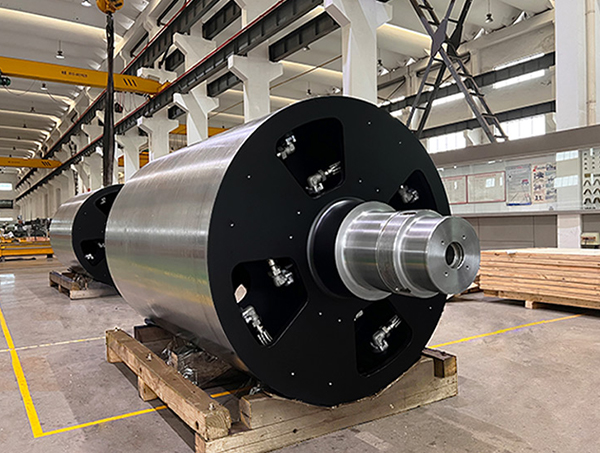
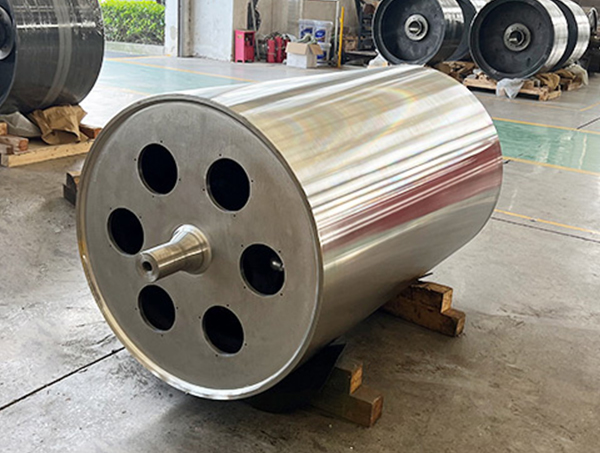
Water circulates through channels bored or cast inside the roller body. The outer surface contacts the hot metal directly. These rollers deliver consistent, uniform cooling across the full contact width and are the preferred choice for flat-rolled products like steel strip and aluminum sheet. Surface temperature differentials of less than 5°C across the roller width are achievable in high-precision designs.
Water is delivered through nozzles mounted on or near the roller, spraying directly onto the metal surface. These are used where direct roller contact with the hot surface is not practical — for example, with very thick plate or irregular profiles. Spray systems offer more flexible cooling zone control but require careful nozzle maintenance to prevent clogging and uneven spray patterns.
High-performance lines — particularly in automotive steel production — often use rollers that combine internal water cooling with integrated spray nozzles on the entry and exit sides. This two-stage approach accelerates initial cooling while maintaining roller surface integrity.
Advanced designs divide the roller into independent cooling zones across its width, each with individually controlled water flow. This allows the operator to compensate for edge cooling effects or profile variations in real time. These are standard in wide-strip mills processing widths above 1,200 mm.
| Type | Cooling Method | Best Application | Cooling Uniformity | Maintenance Complexity |
|---|---|---|---|---|
| Internally Cooled | Internal water channels | Steel strip, aluminum sheet | Excellent | Low |
| Spray-Type | External spray nozzles | Thick plate, profiles | Good | Medium |
| Combined | Internal + spray | Automotive / high-strength steel | Very High | Medium |
| Segmented / Zone-Controlled | Independent zone flow | Wide-strip mills (1,200mm+) | Highest | High |
Water quenching rollers are critical components across several heavy industries:
The most common application. After hot rolling at temperatures of 900–1,200°C, quenching rollers in the runout table cool the strip to coiling temperature — typically 550–700°C for carbon steel. Achieving a uniform coiling temperature across the strip width is essential for consistent mechanical properties, and quenching roller performance directly determines whether that target is met.
In continuous casting, quenching rollers in the secondary cooling zone control solidification of the strand below the mold. Improper cooling here causes internal cracking, surface defects, or segregation. Roller spacing and water flow in this zone are calculated precisely based on steel grade and casting speed.
Aluminum alloys are more sensitive to cooling rate variations than most steels. Quenching rollers in aluminum heat treatment lines (T4, T6 temper processing) must maintain tight temperature uniformity — temperature variation exceeding ±5°C across the strip width can cause distortion or inconsistent age-hardening response.
High-speed wire rod mills (running at up to 120 m/s for fine wire) use water-box quenching systems with guide rollers to rapidly quench wire immediately after the finishing block. This produces the fine pearlitic or martensitic microstructure required for high-strength wire products like tire cord or spring wire.
The operating environment — high temperature, water exposure, mechanical load, and abrasive contact — places extreme demands on roller materials. The most common constructions are:
When specifying or purchasing water quenching rollers, the following parameters have the greatest impact on performance and service life:
Larger diameter rollers have greater thermal mass and maintain more consistent surface temperatures under load. Standard runout table rollers range from 200 mm to 500 mm in diameter. Face length must match or exceed the maximum strip or plate width being processed, with a typical overhang allowance of 50–100 mm per side.
The geometry of internal cooling channels — diameter, pitch, and whether they follow a helical or straight-bore pattern — determines cooling efficiency and pressure drop. Helical channel designs typically achieve 15–25% better heat transfer coefficients than straight-bore designs at equivalent flow rates, at the cost of higher manufacturing complexity.
Confirm the roller's rated maximum surface contact temperature. Most standard cast iron rollers are rated to 900°C contact temperature; high-alloy or coated designs can handle up to 1,150°C. Exceeding the rated temperature accelerates thermal fatigue cracking and reduces service life significantly.
Match the roller's design flow rate to your facility's water supply system. Most industrial quenching rollers require inlet pressures of 3–8 bar and flow rates of 50–300 L/min. Insufficient flow causes localized overheating of the roller surface; excessive pressure can damage seals and increase water consumption without proportional cooling improvement.
The rotary water joints (also called rotary unions) that deliver water to a rotating roller are a common failure point. Look for designs with double mechanical seals rated for the operating temperature and pressure, and confirm the bearing housing is designed to prevent water ingress — a leading cause of premature bearing failure in quenching roller systems.
| Specification | Typical Range | Impact if Undersized |
|---|---|---|
| Roller Diameter | 200–500 mm | Surface overheating, thermal fatigue |
| Water Flow Rate | 50–500 L/min | Insufficient cooling, hot spots |
| Inlet Pressure | 3–8 bar | Reduced heat extraction rate |
| Max Contact Temp. | 900–1,150°C | Cracking, accelerated wear |
| Surface Hardness | HRC 45–65+ | Rapid surface wear, marking defects |
Quenching rollers are high-wear components operating in harsh conditions. A structured maintenance program can extend service intervals by 30–50% and reduce unplanned downtime significantly.
The following issues are the most frequently reported in quenching roller systems, along with their root causes:
When sourcing water quenching rollers — whether as OEM replacements or for a new line — use these questions to evaluate supplier capability and product quality:
The right water quenching roller is determined by three factors above all others: operating temperature, required cooling uniformity, and maintenance access constraints. Here is a concise selection framework:
In all cases, the lowest purchase price is rarely the lowest total cost. A roller that lasts 18 months versus 12 months in a high-volume mill can save tens of thousands of dollars in replacement labor, unplanned downtime, and product quality losses — making material grade and manufacturing quality the most important selection criteria in 2026.
Dedicated to developing and manufacturing various shapes of rolls with different roll structures.
Phone: +86-15371769898
Email: [email protected]
Add: 9 Lifa Avenue, Chengdong Town, Haian County, Nantong City, Jiangsu Province, China
Copyright© 2025 Jiangsu Jinhang Machinery Manufacturing Co., Ltd. All Rights Reserved.
 Custom Thin Walled Roller Manufacturers


 English
 русский
 Deutsch