+86-15371769898
 [email protected]
+86-15371769898[email protected]The four main types of steel rollers — solid, hollow, grooved, and coated — are not interchangeable. Each is engineered for a specific load profile, surface interaction, and operating environment. Choosing the wrong type costs you in premature wear, poor product quality, and unplanned downtime. This guide gives you a precise breakdown of each type, its strengths, its limitations, and the exact applications where it outperforms the alternatives.
Steel rollers are contact components — their geometry, surface, and mass directly determine how force and material are transferred across every cycle. A roller specified correctly for its application can run for tens of thousands of hours with routine maintenance. The same roller misapplied may fail within weeks.
The four structural types differ across five critical performance dimensions:
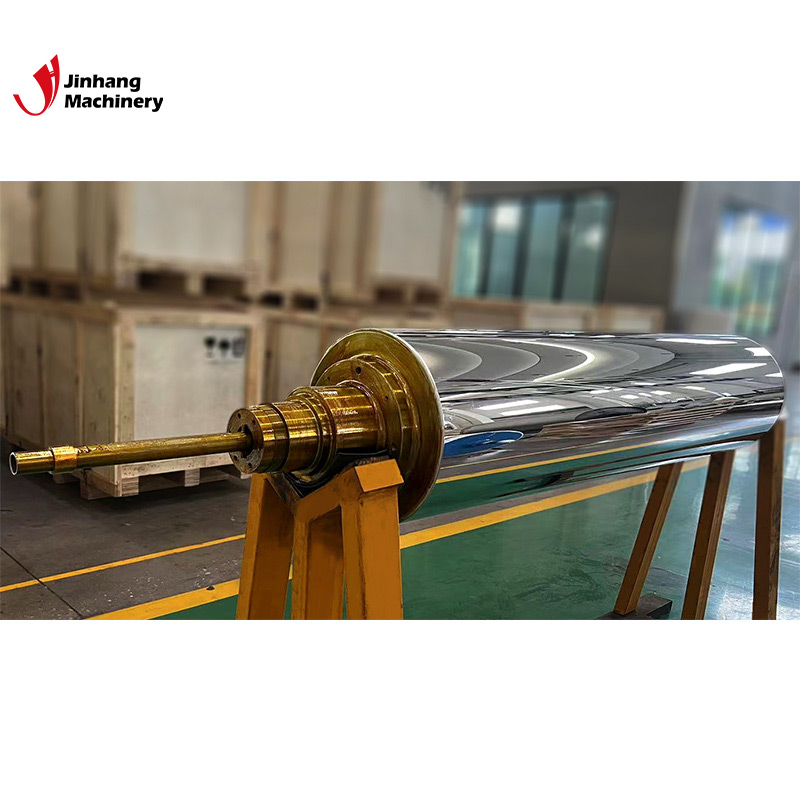
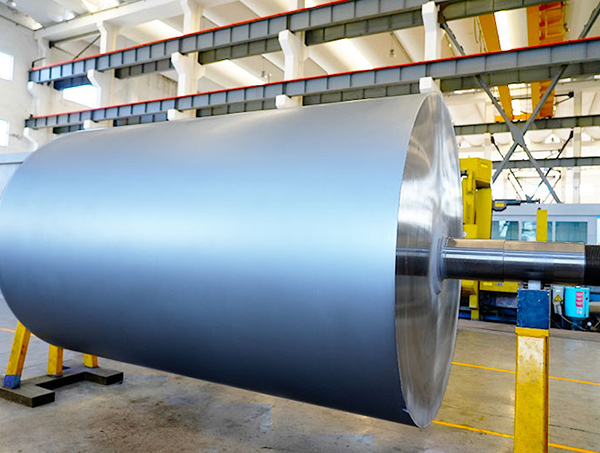
A solid steel roller is machined from a single billet of steel with no internal voids. It is the heaviest, most rigid, and highest-load-capacity type available. Solid rollers are the default choice wherever maximum structural integrity and resistance to deflection are non-negotiable.
Solid rollers are typically manufactured from medium-carbon steel (such as AISI 1045 or 1060), alloy steel (4140, 4340), or stainless steel (304, 316, 440C) depending on the corrosion, temperature, and hardness requirements of the application. Surface hardness after heat treatment commonly reaches 58–65 HRC on the working surface, providing excellent wear resistance under continuous contact loading.
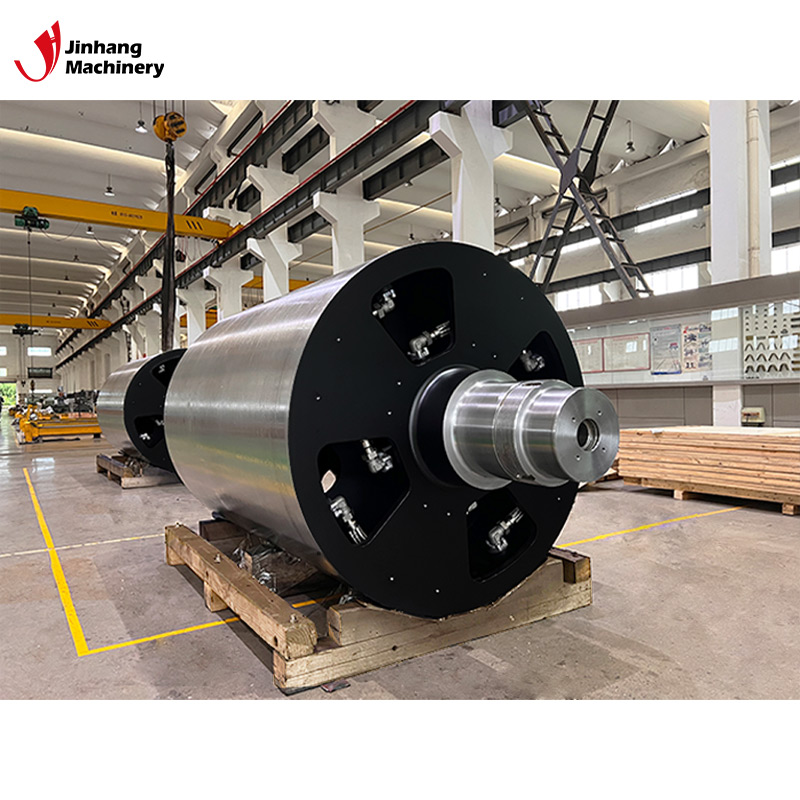
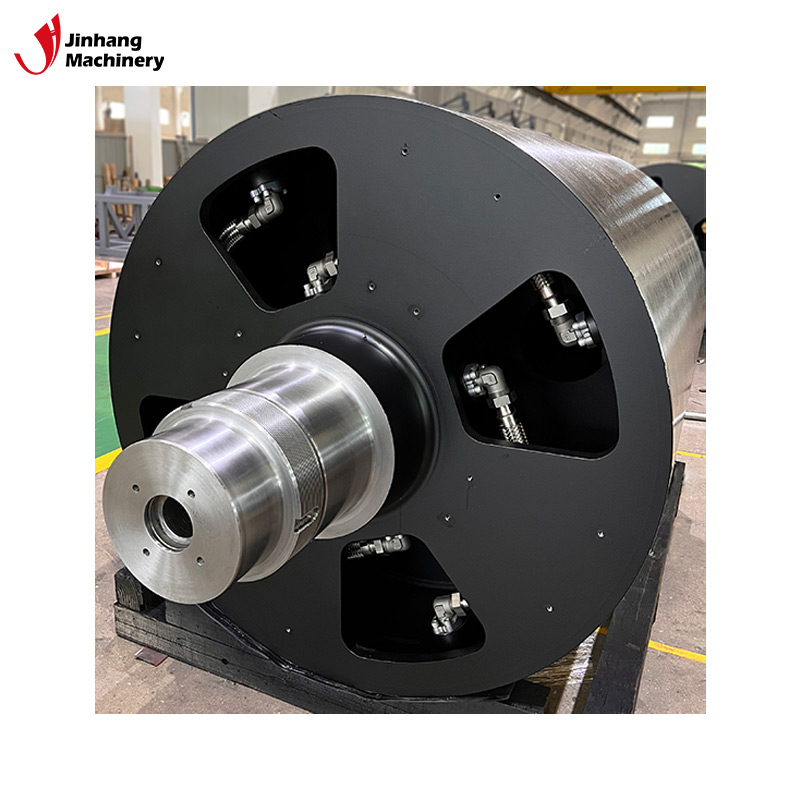
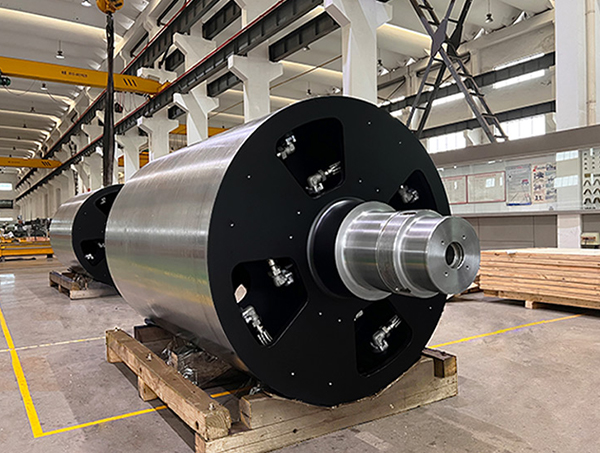
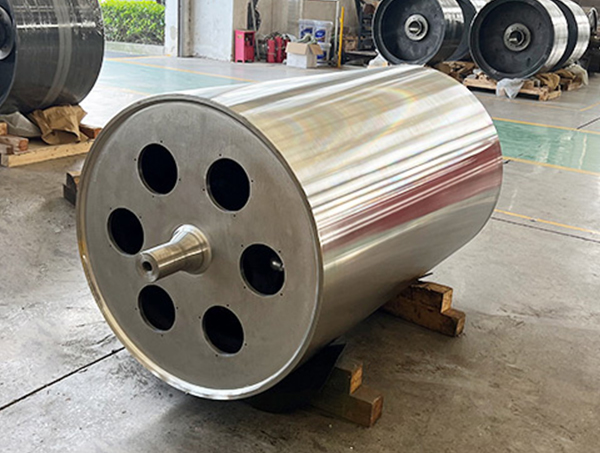
Hollow steel rollers are fabricated from steel tube or rolled and welded steel plate, with an empty core. The hollow construction reduces mass while maintaining a large working diameter, making them the preferred choice for high-speed lines, heat-transfer applications, and situations where bearing load or structural weight must be minimized.
Wall thickness in hollow rollers typically ranges from 6 mm to 30 mm depending on the diameter, load requirements, and whether internal features (such as heating or cooling channels) are incorporated. Larger-diameter hollow rollers used in paper machines or wide-web converting lines can reach diameters of 500 mm–1,200 mm while remaining manageable in weight thanks to the hollow core.
Grooved steel rollers have machined channels, profiles, or patterns cut into their working surface. The grooves serve a functional purpose: they guide material, control lateral movement, manage fluid drainage, or generate specific tension profiles in the web or workpiece. Grooved rollers can be either solid or hollow in their core construction — the defining feature is the surface geometry.
| Groove Type | Profile | Primary Function | Typical Application |
|---|---|---|---|
| V-groove | Angled V-channel | Guide belt or wire laterally | Belt conveyors, wire drawing |
| U-groove | Rounded channel | Support round cable or hose | Cable handling, rope systems |
| Herringbone / spiral | Angled diagonal grooves | Spread web, expel air or fluid | Paper machines, film lines |
| Circumferential rings | Parallel rings around roller | Reduce contact area, drainage | Wet processing, printing |
| Knurled / cross-hatch | Diamond or linear texture | Increase grip and traction | Drive rollers, feed mechanisms |
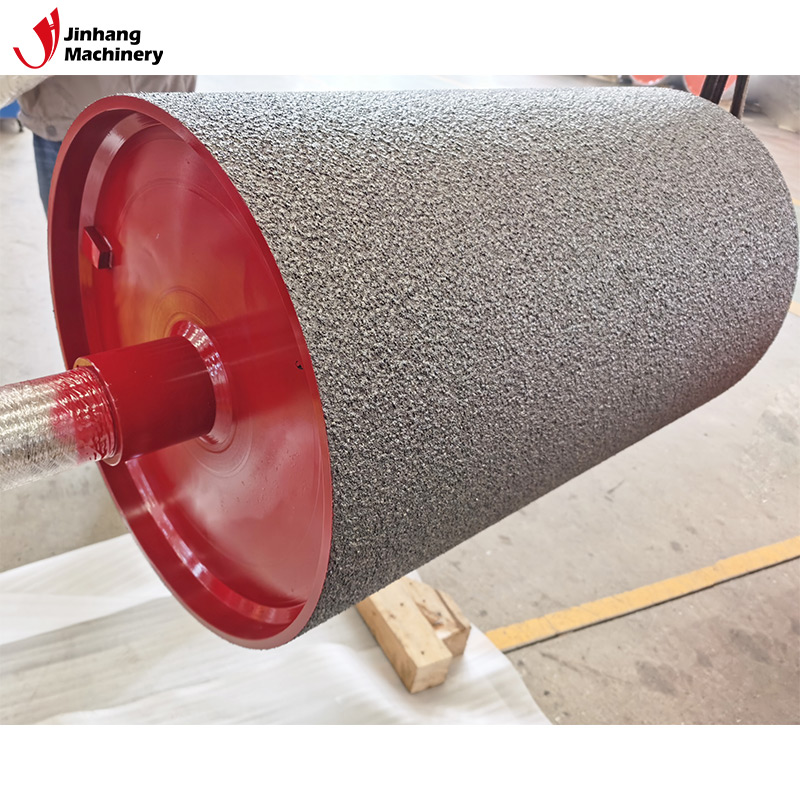
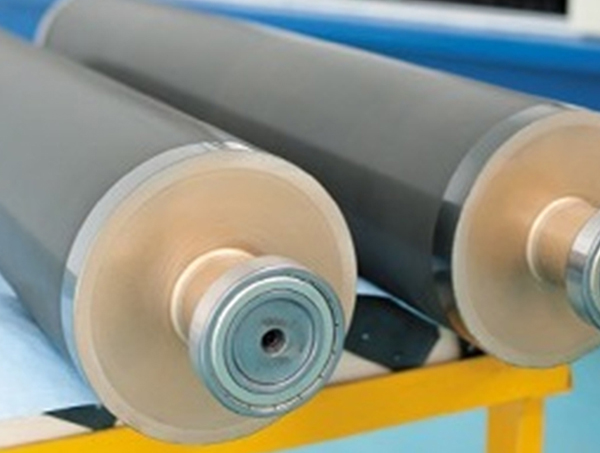
Coated steel rollers use a steel core — solid or hollow — with a functional surface layer applied to modify how the roller interacts with the material passing over it. The coating is not decorative; it is engineered to provide properties the base steel cannot: controlled grip, chemical resistance, non-stick release, electrical insulation, or enhanced hardness.
| Coating | Key Property | Temp Limit | Typical Use |
|---|---|---|---|
| Hard Chrome | Extreme hardness (70+ HRC), low friction | Up to 400°C | Printing, laminating, calendering |
| Rubber / Polyurethane | High grip, vibration damping, surface protection | Up to 120°C | Paper handling, packaging, drive rollers |
| PTFE (Teflon) | Non-stick release, chemical resistance | Up to 260°C | Adhesive lamination, food processing |
| Ceramic (Thermal Spray) | High hardness, wear resistance, electrical insulation | Up to 1,000°C | Steel mills, high-temp processing |
| Tungsten Carbide | Exceptional abrasion resistance (up to 72 HRC) | Up to 500°C | Abrasive web processing, mining |
| Anodized Aluminum Sleeve | Lightweight, corrosion-resistant outer layer | Up to 150°C | Offset printing, light converting |
The table below provides a direct comparison across the most important selection criteria:
| Criteria | Solid | Hollow | Grooved | Coated |
|---|---|---|---|---|
| 3 stars | 3 stars | 3 stars | 4 stars | 4 stars |
| Weight / inertia | Heavy | Light | Medium | Medium |
| Surface customization | Low | Low | High (profile) | High (material) |
| Temperature control | Limited | Excellent | Moderate | Varies by coating |
| Relative cost | Medium | Low–Medium | Medium–High | High |
| Best speed range | Low–medium | Medium–high | Low–high | Low–high |
| Maintenance frequency | Low | Low | Medium | Medium–High |
Work through these questions in order to narrow your selection to the right type:
There is no universally best steel roller type — only the right type for your specific load, speed, surface, and process requirements. Solid rollers win on load capacity and durability under impact. Hollow rollers win on speed, temperature control, and weight efficiency. Grooved rollers solve material tracking and fluid management problems that smooth rollers cannot address. Coated rollers extend service life and enable surface interactions that bare steel cannot provide.
In many production lines, more than one type is used simultaneously — a hollow heated roller upstream, a grooved expander roller mid-web, and a coated chrome impression roller at the nip. Mapping your process requirements to each roller position, rather than applying a single type throughout, is what separates a well-engineered line from one that underperforms or requires constant unplanned maintenance.
Dedicated to developing and manufacturing various shapes of rolls with different roll structures.
Phone: +86-15371769898
Email: [email protected]
Add: 9 Lifa Avenue, Chengdong Town, Haian County, Nantong City, Jiangsu Province, China
Copyright© 2025 Jiangsu Jinhang Machinery Manufacturing Co., Ltd. All Rights Reserved.
 Custom Thin Walled Roller Manufacturers


 English
 русский
 Deutsch