+86-15371769898
 [email protected]
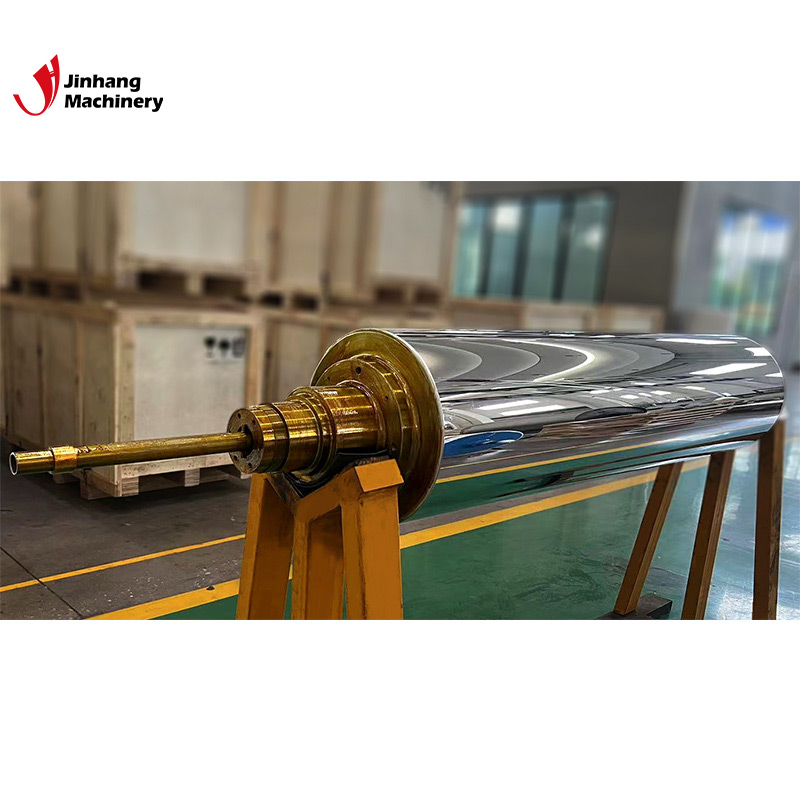
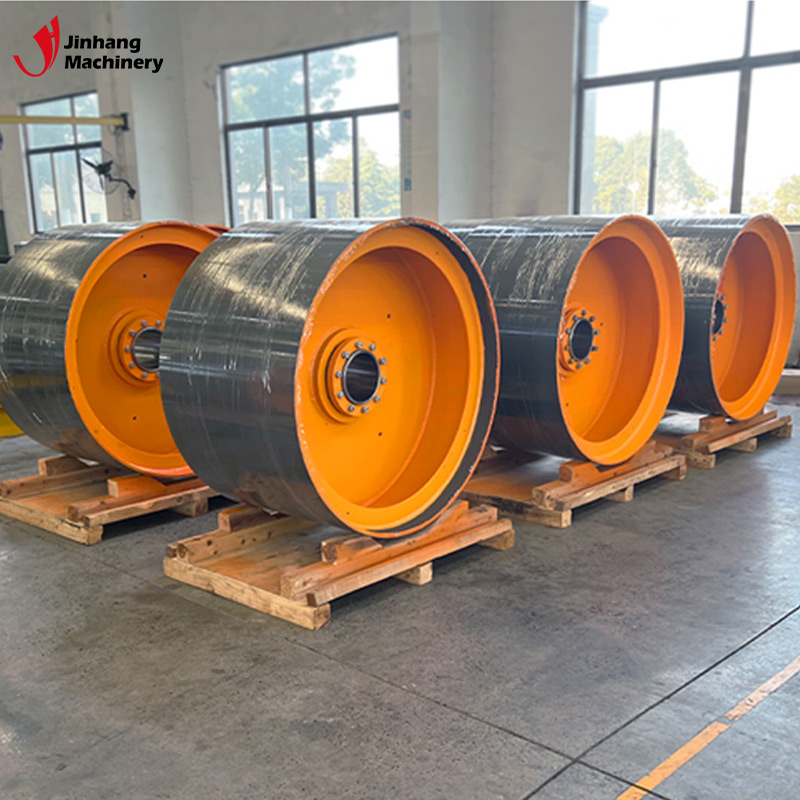
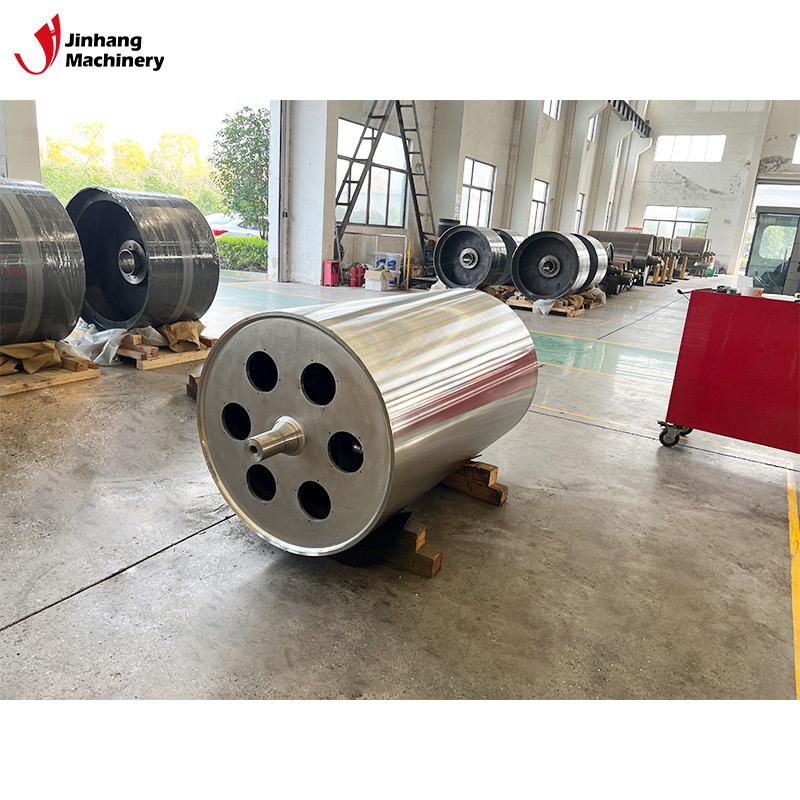
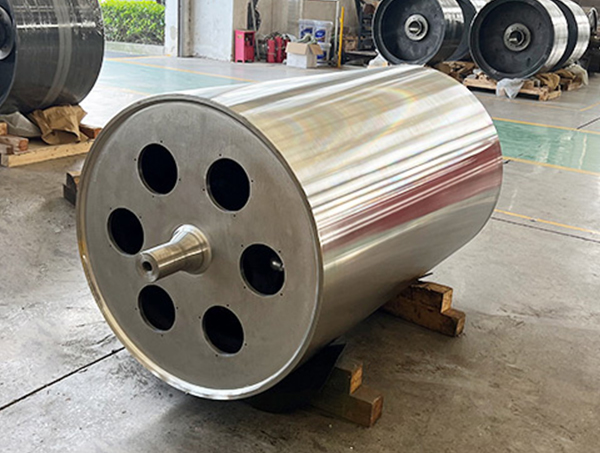
+86-15371769898[email protected]A heating roller (also called a hot roller or heated roller) is an industrial roller with an internal heating system — using electric elements, hot oil, or steam — that maintains a stable, controllable surface temperature, using hot oil, electric heating, steam, or a heat transfer medium to maintain a stable and controllable high temperature on the roller surface. Its core function goes beyond simply warming a material: it delivers precise, uniform heat exactly where a process needs it, enabling softening, bonding, curing, or shaping of the material passing over its surface.
Heating rollers are essential wherever a continuous production line relies on heat to change or stabilize a material's physical properties, and almost all industries that require material softening, plasticizing, coating, pressing, stretching, or shaping need heated rollers. Modern electric versions can reach a maximum continuous operating temperature of around 220°C, with some designs holding surface temperature deviations within ±1–3°C — a level of precision that directly determines product consistency in high-speed manufacturing.
All heating rollers share the same basic goal — generate heat internally and transfer it evenly to the roller surface — but they achieve it through different mechanisms depending on the heating medium.
Electric heating rollers use built-in resistive elements and transmit power and signals through a flange-mounted slip ring contact, eliminating the need for liquid media entirely. Owing to their electrical mode of operation, the heating rollers do not need any liquid media, the power and signals are transmitted via a flange-mounted slip ring contact. This design removes the heat losses associated with external piping systems, since heat losses outside the roller through the pipe system are eliminated. PID-controlled heating elements further ensure consistent thermal output, preventing hotspots that could otherwise cause material warping or adhesive failure.
Conventional heating rollers circulate a liquid medium — oil or water — through an internal chamber. Water-based systems work well below 100°C, but for higher-temperature processing, oil-guided systems are standard because water is completely insufficient for stable operation above 100°C. Oil-guided rollers are also preferred for demanding continuous operations, since they offer superior reliability for high-load, 24-hour equipment, as oil-guided heated rollers are more reliable for high-load equipment. However, both liquid-based systems require heat exchangers, pumps, and pipework, which introduces additional energy losses compared with electric designs, as conventional heating rollers relying on media like oil or water require heat exchangers, pipes, and pumps, leading to significant energy losses.
Some heating rollers are built with segmented heating zones, allowing gradient temperature control across the roller width — useful for composite lamination where different zones need different heat levels. Choose segmented heating zones for gradient temperature control in composite lamination or full-surface uniform heating for paper calendering. This flexibility allows a single roller design to be adapted to very different process requirements simply by adjusting the heating zone configuration.
Heating rollers are typically categorized by heating medium and by surface finish. The right choice depends on required temperature range, precision, and the material being processed.
| Type | Heating Medium | Typical Temperature Range | Best Suited For |
|---|---|---|---|
| Electric Heating Roller | Resistive elements, slip ring | Up to 220°C | Lamination, battery/fuel cell production |
| Oil-Guided Roller | Circulating thermal oil | 100°C – 300°C+ | High-temperature, continuous 24-hour lines |
| Water-Guided Roller | Circulating water | Below 100°C | Moderate-temperature coating and printing |
| Steam-Heated Roller | Pressurized steam | Up to ~180°C | Textile finishing, paper drying |
Beyond heating medium, rollers are also differentiated by surface finish, with options including mirror-polished (Ra ≤ 0.4μm), satin-textured, chrome-plated, or PTFE-coated surfaces, each offering resistance to abrasion, corrosion, and adhesive buildup. The nickel-bonded PTFE coating variant is particularly valuable in acidic or high-friction environments where standard coatings would degrade quickly, extending service life under such conditions.
Heating rollers appear in nearly every industry where continuous material processing depends on controlled thermal input. The seven most common process categories are extrusion, lamination, coating, stretching, polishing, embossing, and metering, which together cover most continuous roller production lines.
| Industry | Process | Role of the Heating Roller |
|---|---|---|
| Plastics & Film | Extrusion, thermoforming | Stabilizes molten material as it exits the extruder |
| Battery & Energy | Battery cell and fuel cell production | Provides even heat during electrode processing |
| Textiles | Heat-setting, dye fixation | Prevents shrinkage and maintains color fastness |
| Lamination & Coating | Multi-layer bonding, UV-curable coatings | Ensures strong adhesive bonding and curing |
| Metal Processing | Annealing, tempering, coating | Delivers uniform thermal treatment across coils |
| Paper & Packaging | Calendering, drying | Provides full-surface uniform heating for finish quality |
One notable real-world application involves winding processes for high-voltage current bushings, where an aluminum core wrapped with brown paper and aluminum foil must have residual moisture completely expelled. In this case, heating rollers bring the materials to a defined process temperature evenly and reliably, allowing moisture to effectively diffuse out of the paper during winding — demonstrating how precise thermal control at the roller surface can directly determine product reliability in specialized manufacturing.
Heating rollers provide precise, rapid, and controllable temperature regulation across the roller surface, which is critical for processes with extremely tight tolerances. Some high-precision applications require temperature uniformity within ±1–2°C, a standard that is difficult for water-guided systems to achieve consistently.
Consistent thermal output across the roller surface eliminates hotspots that would otherwise cause material warping or adhesive bonding failure. In practice, this translates to fewer rejected batches and more predictable product quality across long production runs.
Electric heating rollers avoid the heat losses inherent in oil- or water-piped systems, since energy is delivered directly at the roller rather than lost through an external heat-exchange network. For facilities focused on reducing utility costs, this direct-delivery approach can meaningfully cut wasted thermal energy over continuous operation.
For operations that must run 24 hours a day, oil-guided heating rollers offer superior reliability under high-load conditions, making them a preferred choice in demanding, uninterrupted production environments such as steel coil processing.
A single heating roller platform can be configured — through surface coating, diameter, and heating zone selection — to serve softening, plasticizing, coating, pressing, stretching, or shaping needs across widely different industries, reducing the need for entirely separate equipment lines for each material type.
In high-temperature heat treatment, heating rollers also appear as part of roller hearth furnaces (RHF), which use a conveyor system of rotating rollers to move materials continuously through a heating chamber, offering precise temperature control ideal for high-volume production. Gas-fired variants use burners designed to provide uniform heating throughout the chamber, and are commonly applied to:
This illustrates that "heating roller" technology spans both individual roller components in a production line and larger integrated systems built entirely around rotating, heat-controlled surfaces.
Selecting an appropriate heating roller requires balancing temperature range, precision, material compatibility, and operating cost.
A correctly specified heating roller does more than simply add warmth to a process — it becomes a precision control point that determines whether a material bonds properly, cures evenly, or maintains its dimensional stability through the rest of the production line.
Dedicated to developing and manufacturing various shapes of rolls with different roll structures.
Phone: +86-15371769898
Email: [email protected]
Add: 9 Lifa Avenue, Chengdong Town, Haian County, Nantong City, Jiangsu Province, China
Copyright© 2025 Jiangsu Jinhang Machinery Manufacturing Co., Ltd. All Rights Reserved.
 Custom Thin Walled Roller Manufacturers


 English
 русский
 Deutsch