+86-15371769898
 [email protected]
+86-15371769898[email protected]When a roller in your rotation, conveying, or coating line starts picking up material, wearing flat, or requiring frequent replacement, the cost goes far beyond the replacement part. It shows up as downtime, rework, and inconsistent product quality. Polyurethane rollers are often the answer because they hold their surface geometry, resist wear, and can be formulated to match the exact conditions of your application. In short, the benefits of polyurethane rollers are measurable: they last longer, handle more load, and perform better in the presence of oils, chemicals, and moisture.
Polyurethane is a castable elastomer that sits between rubber and plastic in performance. It can be soft enough to grip delicate film and hard enough to handle heavy steel strip. That wide performance window explains why polyurethane rollers appear in so many industries, from printing and packaging to metalworking and textile processing.
The most common reason for switching from natural rubber or other conventional elastomers to polyurethane is simply how long it lasts. Polyurethane has superior abrasion resistance and tear strength, so it resists the micro-cutting and shredding that happens when a roller runs against web edges, slitting blades, or conveyor frames. In many material-handling and printing environments, a polyurethane roller can deliver several times the service life of a comparable rubber roller under the same load and speed conditions.
The practical impact is a shorter list of spare parts to carry and fewer maintenance interruptions. When a line stops for a roller change, even a 30-minute delay can cascade through downstream operations. A roller that runs without premature wear keeps the line productive and reduces the total cost of ownership per production hour.
Rubber deflects under load. In high-tension applications, that deflection causes the roller to take on a banana shape, which leads to uneven contact and web wandering. Polyurethane can be formulated with a higher hardness while retaining enough resilience to provide grip. The result is a higher load capacity without sacrificing the ability to drive a web or cushion a product.
For example, in a pull-roll station on a coating line, a soft rubber roller may compress and create a crescent-shaped contact area, producing temperature buildup in the coating. A polyurethane roller with a Shore A hardness of 80 or 85 can maintain a more uniform nip, reducing pressure distribution errors and improving coating consistency. This is not just about strength; it is about dimensional stability under operating forces.
Polyurethanes are available in families that resist oils, solvents, oxygen, ozone, and UV exposure better than most general-purpose rubbers. This matters where rollers contact lubricants, ink, adhesives, or cleaning agents. A roller that swells or hardens when exposed to a process fluid will quickly create surface defects and require replacement. Polyurethane chemistry can be tuned for water-based systems, solvent-based systems, or high-temperature operation, depending on the diisocyanate and polyol chosen.
It is important to note that not every polyurethane resists every chemical. Adding a UV stabilizer, changing the hard segment, or selecting an ether-based polyol changes the compatibility. A careful review of the contact media and temperature is needed before specifying the formulation.
One of the less-obvious benefits is rolling resistance. Polyurethane has a low coefficient of friction against many surfaces, which reduces the driving torque required by the roller. In a long conveyor system, that lower resistance can translate into meaningful energy savings. It also helps reduce noise and vibration. Polyurethane absorbs shock and damps oscillations better than metal, so it contributes to a quieter work environment and less wear on bearings, gearboxes, and frames.
Consider a heavy-duty drum roller that is powered by an electric motor. If the roller surface is hard and brittle, every impact sends a spike through the drive train. A polyurethane covering with the right durometer absorbs that impact before it reaches the support structure. The result is a smoother operation and fewer mechanical failures downstream.
Polyurethane rollers are cast or molded, not just wrapped. That means the hardness can be controlled from about Shore A 40 to Shore D 80, and the surface can be ground to a smooth finish or machined into a pattern. A printing roller can be ground for precise ink transfer, while a conveyor drive roller can be machined with a tread pattern for improved traction. This ability to tailor the material and geometry to the application is a major reason why polyurethane is used for specialty rollers.
Choosing between polyurethane and rubber is usually a tradeoff. The table below summarizes the main characteristics that affect the buying decision for an industrial roller.
| Property | Polyurethane Roller | General-Purpose Rubber Roller |
|---|---|---|
| Abrasion and wear resistance | Excellent, long service life | Fair to good, shortens in abrasive contact |
| Load capacity and shape retention | High, improves nip stability | Lower, deflects under load |
| Oil and solvent resistance | Good, tunable by formulation | Poor with most oils unless special compound |
| Noise and vibration damping | Good, low rolling resistance | Good, slightly higher rolling resistance |
| Customization range | Wide hardness range and surface texture | Narrower hardness range |
This is not a blanket statement that polyurethane is always better. If a roller runs at temperatures above 120 degrees Celsius in continuous service, or if the environment contains a solvent that attacks urethane, a specialty rubber or metal roller may be the better choice. The value of polyurethane is that it gives you options in the most common industrial conditions.
The benefits of polyurethane rollers are most visible in applications that involve abrasion, moisture, and continuous loading. In the packaging industry, rollers guide film and paper that may contain dust or abrasive fillers. In printing, anilox and metering rollers rely on a precise surface that does not wear quickly. In metalworking, pinch rolls and conveyor rolls operate next to coolant and scale. In textile processing, rollers handle fibers that are coated with spin finishes and can be chemically aggressive.
For your own line, the decision should start with the roller’s function. Is it a drive roller that needs traction? A guide roller that needs a low-friction surface? A nip roller that must maintain a specific gap? Each function places a different set of demands on hardness, surface finish, and load capacity.
Because polyurethane can be formulated for many different conditions, the biggest risk is not the roller itself. It is the specification that was used to build it. You need to think about these factors before you place an order:
When these factors are not defined, a manufacturer has to make assumptions. Those assumptions can lead to a roller that is too hard, causing damage to the material it runs against, or too soft, causing premature wear. The safest path is to provide the working conditions and any existing drawings to the roller manufacturer. This allows them to select the right polyurethane system and the right machining method.
Polyurethane itself does not guarantee performance. The casting process, the preparation of the metal core, the adhesion layer, and the final grind all determine how the roller behaves in service. A roller that looks identical on the outside can have a weak bond or a void near the interface that leads to separation after a few months of operation. That is why you need a supplier with experience in both non-metal and metal roller construction.
At Jiangsu Jinhang Machinery Manufacturing Co., Ltd., we have been designing and manufacturing rollers since 2001. Our workshop covers 13,000 square meters and includes a domestic advanced polyurethane casting machine and automatic environmental protection sandblasting machine, as well as lathes, grinding machines, boring and milling machines, and dynamic balancing equipment. This allows us to take a polyurethane overlay, cast it on a properly prepared steel or aluminum core, and then turn or grind it to the required diameter and surface finish. We control every process stage, with quality inspection before each subsequent operation. We can also work from your drawings for custom roller designs that require a specific ceramic, chrome, or tungsten carbide coating, although those are different material systems with their own benefits.
Our product range covers steel rollers, mirror rollers, heating rollers, rubber rollers, and anilox rollers. If you are evaluating the benefits of polyurethane rollers, we can help you match the right roller system to your application. To learn more about our complete product portfolio, visit our roller products. You can also review how rollers are applied in a specific industry, such as printing and publishing.
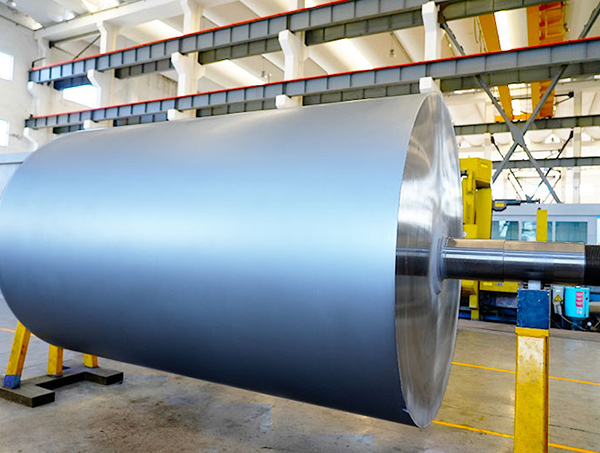
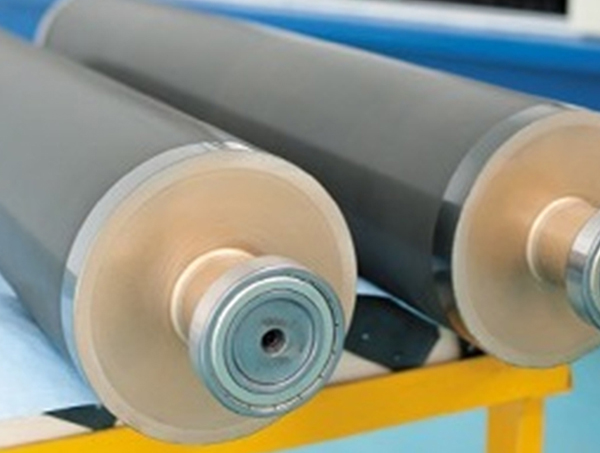
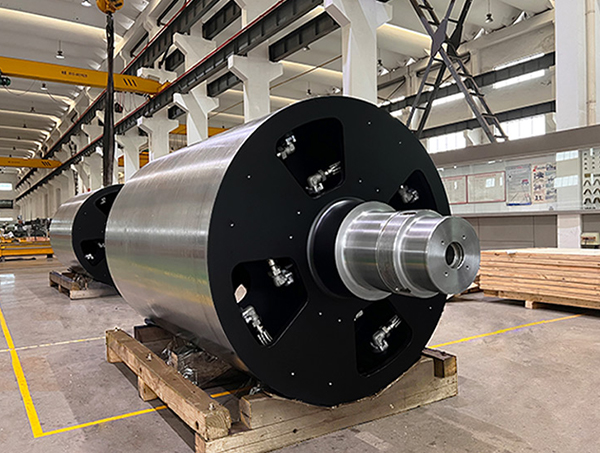
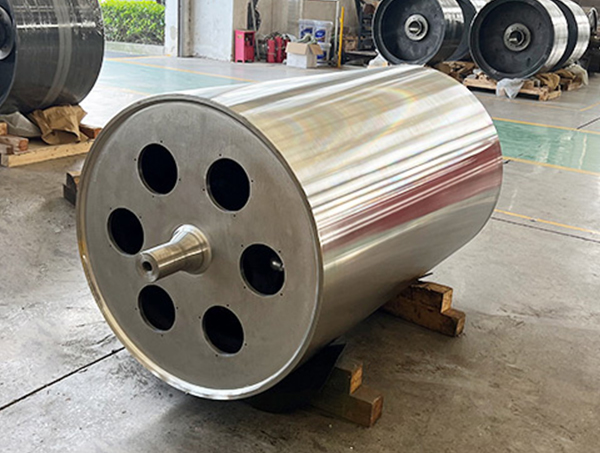
Dedicated to developing and manufacturing various shapes of rolls with different roll structures.
Phone: +86-15371769898
Email: [email protected]
Add: 9 Lifa Avenue, Chengdong Town, Haian County, Nantong City, Jiangsu Province, China
Copyright© 2025 Jiangsu Jinhang Machinery Manufacturing Co., Ltd. All Rights Reserved.
 Custom Thin Walled Roller Manufacturers


 English
 русский
 Deutsch