+86-15371769898
 [email protected]
+86-15371769898[email protected]A maintenance engineer spots faint orange-brown streaks on a chrome-plated roller during a routine line inspection. The immediate question is simple: does chrome plating rust? The short answer is that chromium itself does not rust, because it forms a dense, self-repairing oxide film. The practical answer, however, is that a chrome-plated part can and does rust when the plating is too thin, damaged, or exposed to conditions it was not designed for.
In production environments, where rollers run inside humid, warm, and sometimes chemical-laden lines, this distinction matters. Understanding why rust appears under a chromium layer is what separates a roller that serves for years from one that fails after a single season.
Chrome plating is applied by electroplating a chromium layer onto a prepared metal base, usually carbon steel, stainless steel, or aluminum. The layer itself does not form rust because chromium reacts with oxygen in the air within moments, creating an invisible chromium oxide film. That film is dense, stable, and almost impossible for water or oxygen to penetrate, which is why an undamaged chrome surface stays bright for a long service life.
It is also worth using the word "rust" correctly. True rust is hydrated iron oxide, and it forms only when iron or steel corrodes. Chromium forms chromium oxides that stay tightly bonded to the surface and look clean. When you see reddish-brown streaks on a chrome-plated roller, you are actually looking at the steel substrate corroding through a hole, crack, or pore in the chromium layer.
Rust on a chrome-plated surface has several common causes, and most of them return to one fact: chromium protects by separation, not by consumption. The moment that separation is broken, the base steel behaves like ordinary unprotected steel.
The difference between decorative and hard chrome is easiest to understand in direct comparison.
| Property | Decorative chrome plating | Hard chrome plating |
|---|---|---|
| Typical thickness | 0.05 to 0.5 microns | 5 to 200 microns |
| Primary purpose | Appearance | Wear resistance and corrosion protection |
| Porosity | Micro-porous by nature | Low porosity, especially after post-plate grinding |
| Corrosion behavior | Moisture reaches steel, rust spots develop | Strong protection; rust begins at cracks and damaged edges |
| Typical applications | Trim and consumer parts | Industrial rollers, shafts, and hydraulic cylinders |
The practical rule is clear: the chrome layer on an industrial roller must be thick, dense, and free of through-thickness defects. That is what turns "chrome plated" from a finishing label into an actual corrosion barrier.
Conclusion first: if you are buying chrome-plated rollers, do not simply ask whether a chrome-plated part rusts. Ask instead what will happen when the roller gets scratched, wet, or exposed to chemicals. The answer decides your substrate, your plating thickness, and your maintenance plan.
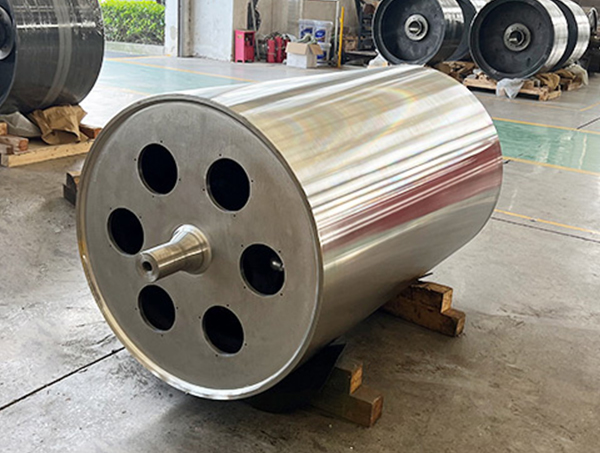
The substrate is the first decision. For dry indoor service, a carbon steel body with hard chrome is a well-established combination and remains a popular choice across industry. On lines that see condensate, wash-down, or aggressive additives, the substrate itself must resist corrosion. A scratch-resistant stainless steel chrome roller adds a second line of defense: even if the chrome layer is scratched completely through, the exposed surface is still stainless steel, so the scratch does not become a channel for rust.
 Custom Scratch resistant stainless steel chrome roller Factory, Manufacturers - Jiangsu Jinhang Machinery Manufacturing Co., Ltd. is China Scratch resistant stainless steel chrome roller manufacturers and factory,When...View Product →
The application also sets the standard. Chrome-plated rollers used in printing and publishing lines have to survive dampening moisture, inks, and periodic acid washes while holding a smooth finish. In that environment, the corrosion specification should be set on day one, not after the first pit appears.
Plating thickness documentation and post-plating grinding are the next checks. Always ask whether the roll was ground after plating and request the recorded chrome thickness. Grinding closes the micro-pores near the surface and makes the coating measurably more resistant to moisture. For standard service conditions, a chrome-plated roller with documented layer thickness and proper finishing will resist rust far longer than one with a purely decorative coating.
Custom Chrome-Plated Mirror Roller Manufacturers, FactoryAs China chrome-plated mirror roller manufacturers and factory, Jiangsu Jinhang Machinery Manufacturing Co., Ltd. custom stainless steel ...View Product →
Finally, consider temperature and chemistry. A chrome layer that serves well in a clean finishing line can look white and corroded after a year inside a steam-rich environment. If the atmosphere around the roll stays damp for long periods, increase the coating thickness deliberately and plan for more frequent inspection. The cheapest roller rarely lasts the longest; the cost of downtime easily exceeds the price difference between a properly plated roller and one with a thin decorative finish.
Even a well-applied hard chrome layer benefits from a simple protection routine. Wipe roller surfaces dry after line stops, keep the roll free of dust and fibers, and never leave condensate sitting on the surface overnight. Use neutral or mildly alkaline cleaners only; chloride-rich and strongly acidic products attack the passive film and shorten coating life. For storage, wrap spare rollers in vapor-phase corrosion protection paper or apply a light oil film.
Inspection is where problems are caught early. Check the surface visually every time the line is down, and pay special attention to roll edges, keyways, and bearing seats, where the chromium coating is most vulnerable. If rust spots appear, remove them immediately. Fine abrasive paper or aluminum foil with water will take off superficial rust without destroying the chrome layer. Delaying a few days is often enough for rust to creep beneath the plating and lift it; once that happens, the roller usually needs stripping, re-grinding, and re-plating, which costs far more than early intervention.
Surface finish also influences corrosion. A smooth, closed chrome surface gives condensate fewer places to cling and speeds up drying after cleaning. On precision sections, a chrome mirror roller is often specified for this reason: its polished, dense surface drains quickly, cleans easily, and leaves moisture much less time to start a corrosion cell.
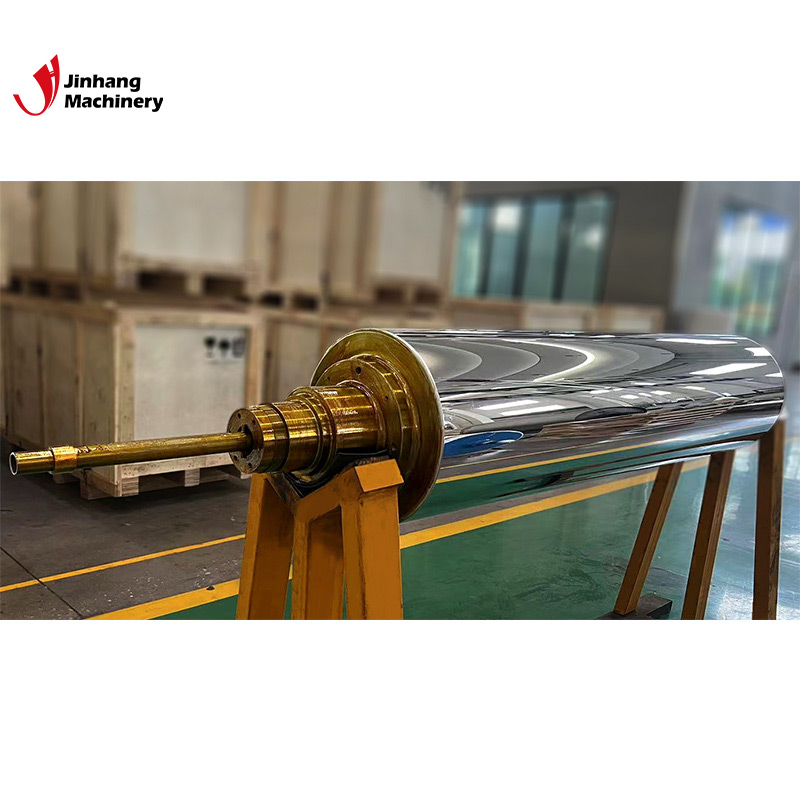 Custom Excellent durability chrome mirror roller Factory, Manufacturers - JiangsJiangsu Jinhang Machinery Manufacturing Co., Ltd. is China Excellent durability chrome mirror roller manufacturers and factory,Excellent ...View Product →
Chrome plating does not rust, but the steel underneath it can. Whether you ever see rust depends on five factors: chrome thickness, substrate material, surface finish, operating environment, and maintenance discipline.
For a buyer, the practical translation is simple. Specify the substrate for the worst condition you expect, not the normal condition. Demand documented plating thickness and post-plating grinding. Remember that a roller designed for a printing hall is not automatically suitable for a steam-wet packaging line.
If you are defining a roller for a demanding production line, contact our engineering team with your operating conditions in hand; we help customers match substrate, chrome thickness, and finishing to the environment the roller will actually live in.
Dedicated to developing and manufacturing various shapes of rolls with different roll structures.
Phone: +86-15371769898
Email: [email protected]
Add: 9 Lifa Avenue, Chengdong Town, Haian County, Nantong City, Jiangsu Province, China
Copyright© 2025 Jiangsu Jinhang Machinery Manufacturing Co., Ltd. All Rights Reserved.
 Custom Thin Walled Roller Manufacturers


 English
 русский
 Deutsch