+86-15371769898
 [email protected]
+86-15371769898[email protected]An anilox roller is a precision-engineered metering device covered in thousands of microscopic cells that pick up a controlled volume of ink and transfer it evenly to the printing plate in flexographic printing. Each cell acts as a tiny, fixed-volume reservoir, and the total ink-carrying capacity is measured in billion cubic microns per square inch (BCM), typically ranging from 1.2 to 12 BCM depending on the print application. The roller's cell count, or line screen—usually between 200 and 1,200 lines per inch (LPI)—determines how fine or coarse the ink metering is, directly affecting print resolution, color density, and overall print quality. Because it controls precisely how much ink reaches the substrate, the anilox roller functions as the single most influential component in determining flexo print consistency, which is why it's often called "the heart of flexographic printing."
To understand why the anilox roller is so critical, it helps to see its position within the broader flexo printing workflow.
In a typical flexo press, the anilox roller rotates through an ink chamber or ink pan, filling its surface cells with liquid ink. A doctor blade then scrapes excess ink from the roller's flat surface, leaving ink only within the engraved cells. The roller then transfers this precisely metered ink film onto the raised surface of the flexographic printing plate, which in turn applies it to the substrate—whether film, paper, corrugated board, or another material.
Because the doctor blade removes all ink outside the cells, the volume transferred to the plate is determined almost entirely by cell geometry rather than press speed or ink viscosity. This is what makes anilox metering so repeatable—unlike other ink delivery systems, the same roller will transfer nearly identical ink volume run after run, provided the cells remain clean and undamaged.
Three interrelated specifications define an anilox roller's performance: line screen, cell volume, and cell angle. Getting these right for a given application is central to achieving accurate, consistent print output.
Line screen refers to the number of cells per linear inch across the roller surface. Higher line screens produce finer, more numerous cells suited to detailed process printing, while lower line screens use larger cells suited to solid color coverage. A roller with 800-1,200 LPI is typical for fine process color work, while 200-400 LPI rollers are common for heavy solid ink coverage on corrugated packaging.
Cell volume determines the actual quantity of ink each cell holds and delivers. As a general rule, line screen and cell volume are inversely related—finer cells hold less ink individually, while coarser cells hold more. Selecting the correct BCM for a given ink type and substrate is essential; too little volume produces washed-out color, while too much can cause dot gain and image distortion.
Cells are typically engraved at a 60-degree angle relative to the roller axis, a configuration chosen to optimize ink release and minimize interference patterns (moiré) when overprinting multiple color separations. Some specialty applications use alternative angles to address specific print quality challenges.
Anilox roller surface material has evolved significantly, with modern production dominated by one technology over the other for good reason.
| Characteristic | Chrome-Engraved | Ceramic-Coated (Laser-Engraved) |
|---|---|---|
| Maximum Line Screen | Up to approximately 400-500 LPI | Up to 1,200+ LPI |
| Surface Hardness | Moderate | Very high, superior wear resistance |
| Service Life | Shorter, more prone to wear | Significantly longer, often years of use |
| Cell Precision | Lower, mechanical engraving limits | Higher, laser engraving allows fine control |
| Typical Use Today | Largely legacy/older equipment | Industry standard for modern flexo presses |
Ceramic-coated rollers, engraved using laser technology, have become the dominant standard because their surface hardness—typically rated at 9 on the Mohs scale, close to that of diamond—provides far greater resistance to abrasion from doctor blades and abrasive inks compared to chrome.
The anilox roller's central role becomes clear when you consider how many downstream print quality issues trace directly back to it.
Since ink volume delivered to the plate is set almost entirely by cell geometry, the anilox roller effectively determines print color density and saturation before ink even reaches the substrate. Adjusting press speed or ink formulation can only fine-tune results within the boundaries the roller's BCM rating establishes.
Fine detail and process color reproduction depend on cell count matching the resolution of the printing plate's image elements. A mismatch—such as using a coarse-screen roller for fine halftone work—results in poor dot formation and loss of image detail regardless of plate or ink quality.
Because cell volume is a fixed physical property, a well-maintained anilox roller delivers consistent ink transfer across production runs of tens of thousands of meters, which is essential for maintaining color match in large packaging or label orders.
Even a well-specified anilox roller can produce poor print results if not properly maintained. Recognizing these issues early prevents costly print defects.
Given the precision required in cell geometry, proper maintenance is essential to protecting print quality investment over time.
Daily cleaning after each production run using appropriate solvents prevents ink from drying and hardening within cells. For heavier buildup, ultrasonic cleaning systems can restore cell volume without damaging the ceramic surface, a method increasingly standard in high-volume print operations.
Print shops typically verify anilox performance using video microscopy or laser profilometry to measure actual cell volume against original specifications, since volume loss of 10% or more can noticeably affect color consistency and typically signals the need for cleaning or reconditioning.
The anilox roller earns its reputation as the heart of flexographic printing because it is the single component most directly responsible for controlling ink volume, print resolution, and color consistency across a production run. Selecting the correct line screen, cell volume, and surface material for a given application—paired with disciplined cleaning and inspection routines—is often the difference between predictable, high-quality print output and persistent, hard-to-diagnose print defects. For print operations evaluating equipment upgrades or troubleshooting quality issues, the anilox roller is almost always the first place to look.
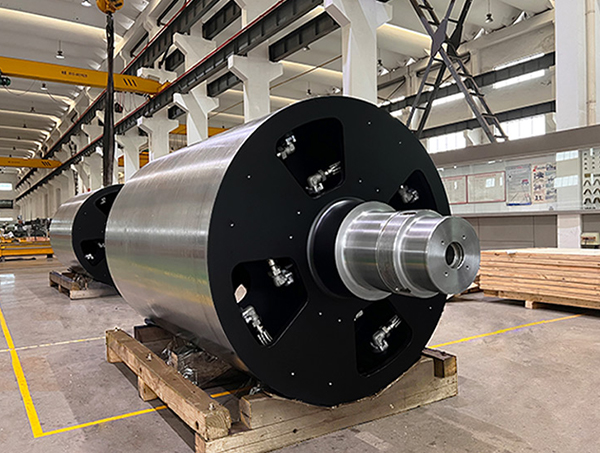
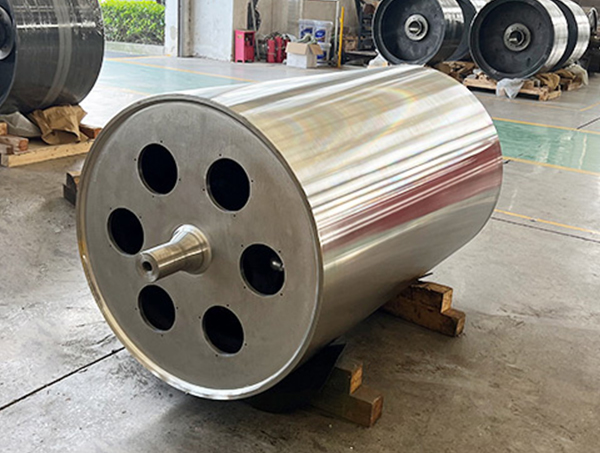
Dedicated to developing and manufacturing various shapes of rolls with different roll structures.
Phone: +86-15371769898
Email: [email protected]
Add: 9 Lifa Avenue, Chengdong Town, Haian County, Nantong City, Jiangsu Province, China
Copyright© 2025 Jiangsu Jinhang Machinery Manufacturing Co., Ltd. All Rights Reserved.
 Custom Thin Walled Roller Manufacturers


 English
 русский
 Deutsch