+86-15371769898
 [email protected]
+86-15371769898[email protected]On a film extrusion line, a heating roller may look like a simple steel cylinder, but when the edge zone runs 8°C cooler than the center, the operator raises the setpoint and the final product becomes too soft. That temperature difference is not a control system fault. It is a mechanical fault in how heat is delivered inside the roller. Thermal rollers work by converting a heat source into a controlled surface temperature through an internal medium, and the quality of that conversion is determined by passages, wall thickness, and machining tolerances.
The three common heat sources are thermal oil, steam, and electric heating elements. In an oil-heated roller, a pump pushes hot oil through a rotating joint into a spiral channel or annular cavity inside the roll. As the oil moves along the channel, it loses heat to the inner wall, and the wall conducts that heat to the outer surface. The return oil goes back to an external heating station where it is reheated and recirculated. A steam-heated roller works on a similar principle but uses latent heat instead of sensible heat. An electric thermal roller uses cartridge heaters inserted into the core, and the temperature is controlled by a thermocouple located near the surface.
| Heating method | Typical range | Key advantage | Watch out for |
|---|---|---|---|
| Thermal oil circulation | 100-350°C | Even heat distribution | Oil degradation and internal deposits |
| Electric cartridge | 50-250°C | Fast temperature response | Hot banding if elements are spaced poorly |
| Steam | 100-180°C | High heat capacity | Condensate removal and corrosion |
The choice of heating medium changes the response time and the risk profile. A small oil circuit with a high flow rate can reach 200°C in about 20 minutes, but it requires a rotary joint that must resist leaks and pressure spikes. A steam system can deliver large amounts of heat in a short time, yet it also needs a condensate trap to keep water from capturing a portion of the roller surface. Electric cartridge heaters respond faster and offer individual temperature control, but they are harder to replace inside a production roller and are more sensitive to local overheating.
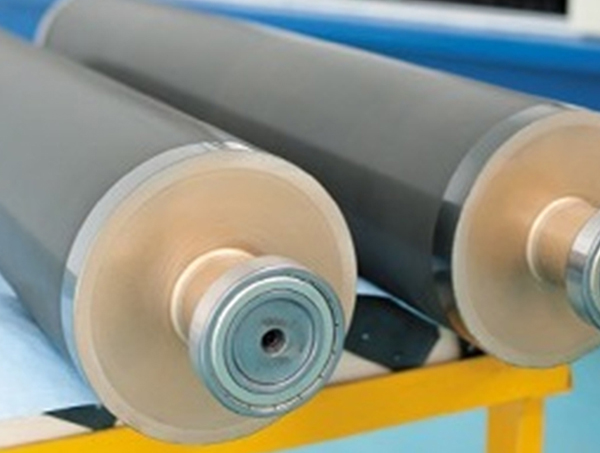
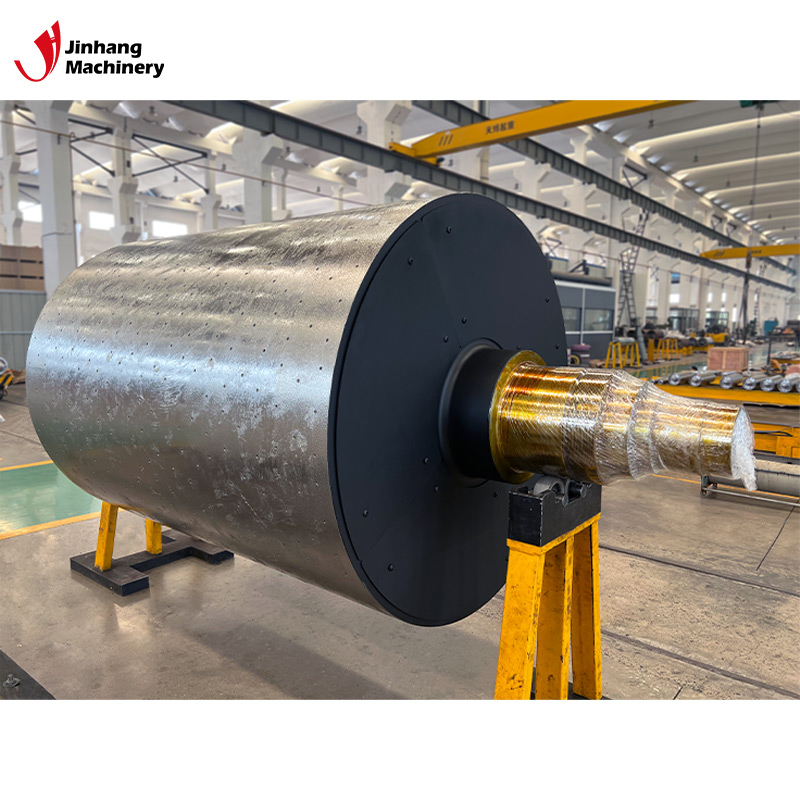 Corrosion-Resistant Oil-Heated Roller for Uniform Heat TransferThis roller combines corrosion resistance with an oil-conducting system for even heat distribution, making it a dependable choice when moisture or chemicals challenge standard equipment in paper, textile, or packaging lines.View Product →
Temperature uniformity is the real test of a thermal roller. A typical specification for a coating or laminating roller is a face temperature tolerance of ±3°C. That tolerance can only be met if the inner channel is machined with a consistent cross-section along the entire face. If the bore has a variation of 0.2 mm from one end to the other, the oil velocity changes, and the local heat transfer coefficient changes. The result is a warm spot near one journal and a cooler spot near the opposite journal.
Wall thickness contributes to uniformity as well. A thicker wall smooths out temperature spikes from the heat source, but it also increases the energy needed to bring the roller up to temperature. A thinner wall responds faster but is more sensitive to hot oil channeling. In many cases, a mirror heating roller is chosen precisely because it balances rapid response with surface stability. The same balance applies to the surface finish: a chromium-plated or mirror-finished surface gives consistent release characteristics for film and coated products.
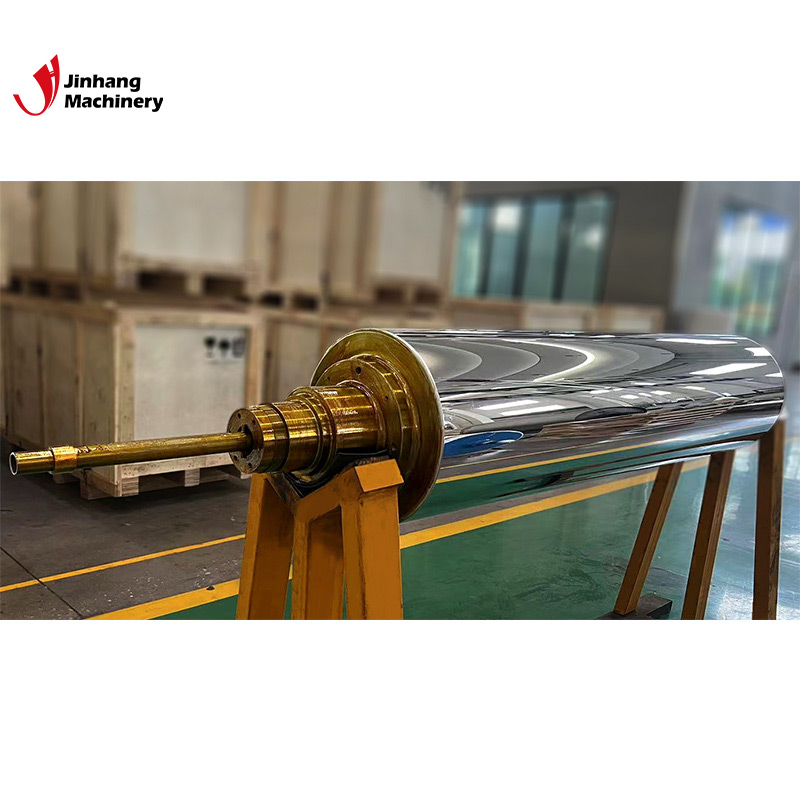
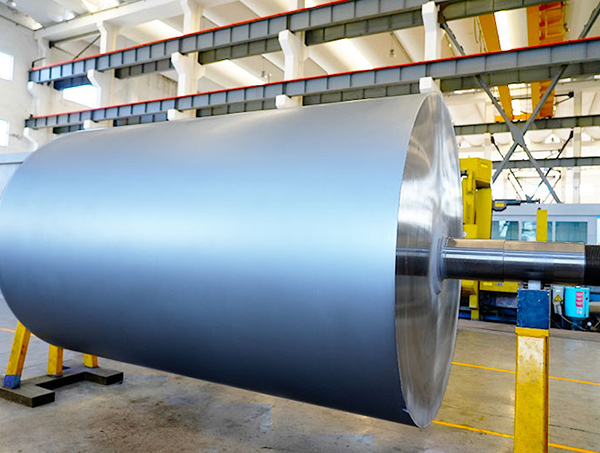
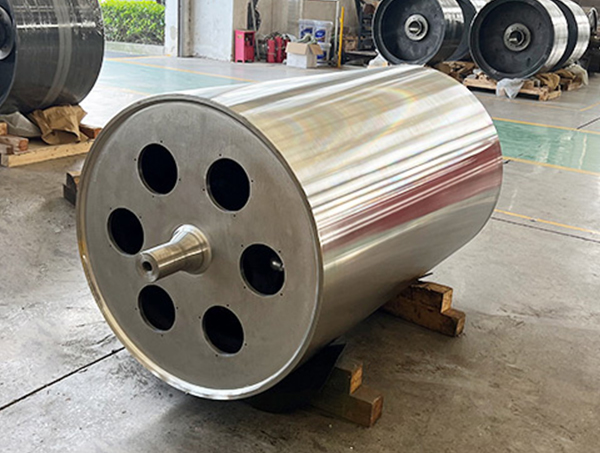
 Mirror-Finished Heating Roller with High Thermal ConductivityIts mirror surface and excellent thermal conductivity support fast response and uniform heating, which suits film lamination or coating processes that demand both precise temperature control and a smooth finish.View Product →
In real operation, thermal rollers fail in ways that are not obvious at startup. The first issue is thermal expansion. When a carbon steel roller heats up from 25°C to 250°C, the shaft extends by several millimeters. If the bearing housing and end seals were not designed for that growth, the roller can develop axial force that wears out the bearing in weeks. The second issue is internal blockage. In an oil system, degraded oil forms varnish on the channel walls. That varnish acts as an insulator, so the roller needs a higher oil temperature to achieve the same surface temperature, which then accelerates the degradation.
A third failure involves a steam-heated roller with a corroded internal passage. Condensate and oxygen create pitting over time, and the resulting leak can contaminate the product being coated. In a food or medical application, that is a serious quality risk. A stainless steel heating roller with a high-temperature-resistant grade reduces that risk by using materials that tolerate oxidation and high-temperature exposure.
Dynamic balance is another factor often overlooked. At 300°C, even small deviations in internal channel wall thickness can create off-center mass. When the roller spins at 1,000 rpm, that mass imbalance shakes the entire web line. A roller that is machined and balanced after heat treating will have much lower vibration than a roller assembled from parts without a final balance check.
The selection process should start with measurable conditions, not with a generic catalog. Ask three questions: What is the required process temperature? What is the heat-up time the line can tolerate? What material is running against the surface? From those answers, a manufacturer can decide between a polished steel surface, a mirror surface, a chrome plated surface, or a corrosion-resistant stainless grade. When the web is being coated at high speed, a mirror heating roller is often the best fit because it gives a smooth release and a clean, even glaze.
For processes that involve highly acidic or alkaline coatings, a stainless steel heating roller with a high-temperature resistant grade is preferred. For food-grade processes, the roller must allow thorough cleaning and inspection. For high-speed printing lines, the surface finish and concentricity are more important than the absolute temperature rating. In all cases, the supplier should be able to provide a thermal profile test or a documented surface temperature measurement from a comparable roller.
These four limits determine whether a stock roller can work or whether a custom design is needed. In many cases, the best way to avoid a costly mistake is to provide the roller manufacturer with the actual line conditions and ask for a calculated performance report before ordering.
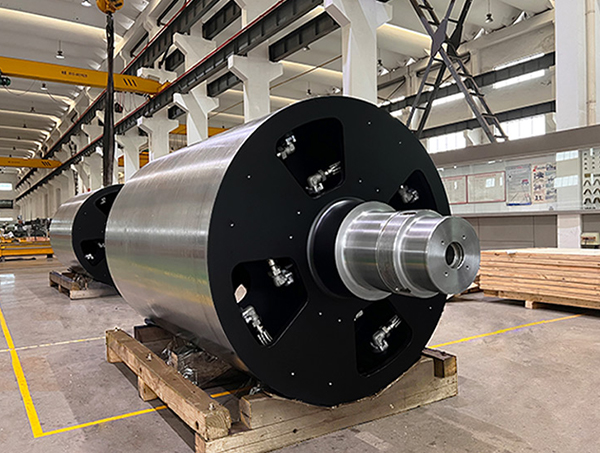
Stainless Steel Heating Roller for High-Temperature ServiceBuilt from stainless steel, this roller maintains strength and resists corrosion at elevated temperatures, offering a durable option for drying or calendaring operations where heat and cleanliness matter.View Product →A custom thermal roller begins with a drawing or an equipment specification. The engineering team calculates the required heat input, the inner channel geometry, and the wall thickness. The roller body is turned on a heavy lathe, the internal passages are drilled or bored, and the surface is ground to the required roughness. In a well-equipped workshop, the roller then goes to dynamic balancing and pressure testing before it reaches the final inspection stage.
For example, a 200 mm diameter heating roller used in a packaging laminator requires a bore for a heat source, a smooth outer surface with a roughness of Ra 0.2 micrometers, and a dynamic balance grade of G2.5. If any one of those specifications is missed, the consumer sees the result as a wrinkled web, uneven adhesive, or premature bearing failure. That is why the best answer to "how do thermal rollers work" is not a description of a heating medium. It is the combination of heat transfer physics and manufacturing discipline.
The same principles apply to all types of rollers that need close temperature control. Whether the roller is a mirror heating roller, a corrosion-resistant oil-conducting heating roller, or a stainless steel heating roller, the internal geometry and the external finish must be designed together. A change in one parameter without adjusting the others creates a new hotspot or a blocked flow path.
Even with a well-designed roller, maintenance habits determine how long the temperature profile stays stable. The most important task is monitoring the heating medium. For oil systems, check the viscosity and acid value at regular intervals. A high acid number indicates that the oil is oxidizing, and the resulting sludge will reduce the heat passage. For steam systems, inspect the condensate return line and the steam traps. A failed trap allows condensate to back up into the roller, and the lower section becomes cold.
The roller surface also needs inspection. A rough, scratched mirror surface creates friction that drags the material and increases the localized temperature. Reforming or re-grinding the surface can restore the release properties. In a high-speed line, these checks can be scheduled with planned downtime rather than waiting for a failure.
The practical takeaway is simple: a thermal roller is a precision heat exchanger disguised as a cylinder. Its performance is defined by the internal channel geometry, wall thickness, surface finish, and dynamic balance. If a roller supplier can demonstrate control over those variables, the roller will provide the even surface temperature your process needs. For line operators and purchasers, the question is not just what type of oil or heater is used, but how the roller body is built around it. Discuss your current roller assembly with our engineering team to verify tolerances before you replace a unit.
Dedicated to developing and manufacturing various shapes of rolls with different roll structures.
Phone: +86-15371769898
Email: [email protected]
Add: 9 Lifa Avenue, Chengdong Town, Haian County, Nantong City, Jiangsu Province, China
Copyright© 2025 Jiangsu Jinhang Machinery Manufacturing Co., Ltd. All Rights Reserved.
 Custom Thin Walled Roller Manufacturers


 English
 русский
 Deutsch