 +86-15371769898
 [email protected]
+86-15371769898[email protected]Picture a packaging plant with two production lines a few metres apart. On one line, rubber rollers in the coating station keep hardening and developing tiny cracks after a few months. On the next line, rollers in the laminating station swell, soften, and need replacement on a tight schedule. The first line runs water-based coatings in a warm, humid atmosphere with occasional steam cleaning. The second line runs solvent-based adhesives with oil mist in the air. Both problems are usually not a reflection of poor maintenance; they are a materials selection problem.
The quick conclusion is this: choose EPDM (ethylene propylene diene monomer) when ozone, water, steam, and outdoor weathering will attack the rubber. Choose NBR (nitrile butadiene rubber) when petroleum oils, fuels, and hydrocarbon solvents are the primary contact. Once this basic rule is clear, you can evaluate the rest of the specification with confidence.
EPDM is a copolymer of ethylene and propylene with a small amount of a diene third monomer. The diene is added so the rubber can be vulcanised, but the unsaturated bonds sit as pendant groups rather than in the main chain. This structure makes the polymer unusually stable against ozone and UV attack, because ozone attacks double bonds in the backbone. That is why EPDM has earned a reputation for weather, oxygen, and water resistance.
NBR is a copolymer of butadiene and acrylonitrile. The nitrile groups create polarity, which makes the material resistant to non-polar fluids such as mineral oils, fuels, and greases. The cost of that polarity is that the butadiene segments retain double bonds in the main chain, making NBR vulnerable to ozone, UV, and weathering over time. In short, EPDM is a water-and-weather rubber, while NBR is a petroleum-and-solvent rubber.
For roller applications, this distinction is not an academic detail. A roller that swells in service not only loses its dimensional accuracy, it also changes its surface profile and can damage the web or sheet it is transporting. A roller that cracks can shed rubber particles onto the product. Understanding the chemical environment is the first and most important design step.
The table below gives a practical side-by-side comparison. These are typical values for commercial compound grades; the exact properties of a finished roller also depend on the filler system, plasticiser level, and curing method selected by the roller manufacturer.
| Characteristic | EPDM | NBR | Practical meaning for rollers |
|---|---|---|---|
| Continuous service temperature | -40°C to 120°C | -30°C to 100°C | EPDM has a wider low-temperature window |
| Ozone and UV resistance | Excellent | Poor | EPDM fits outdoor or ozone-rich environments |
| Water and steam resistance | Excellent | Good, but lower steam tolerance | EPDM is safer in aqueous processes |
| Petroleum oil and fuel resistance | Poor | Excellent | NBR is the clear choice around oils and solvents |
| Abrasion resistance | Good | Very good | NBR handles abrasive contact and wear better |
| Typical hardness range | 40-90 Shore A | 40-90 Shore A | Both can be compounded across a wide hardness range |
EPDM rollers are the preferred choice when the process stream contains water, steam, aqueous cleaning agents, or when the roller is exposed to outdoor conditions. The material develops a thin, protective oxidised surface layer rather than continuing to degrade, which keeps the roller dimensionally stable over long service intervals.
Common applications include printing and publishing presses that use water-based inks and coatings, papermaking equipment where condensate and steam are present, and conveyor rollers in logistics and warehousing facilities that may operate in unconditioned space. In each of these cases, the roller rarely sees petroleum oils, but it constantly sees moisture and ozone generated by electric motors and corona equipment.
The roller cover thickness is often specified at 5 to 25 mm depending on the diameter and the load, and the rubber layer should be ground after vulcanisation to meet the concentricity and surface finish required by the machine. For a high-speed coating station, surface roughness values around Ra 0.4 to 0.8 micrometres are common; an experienced roller maker will be able to achieve these tolerances consistently.
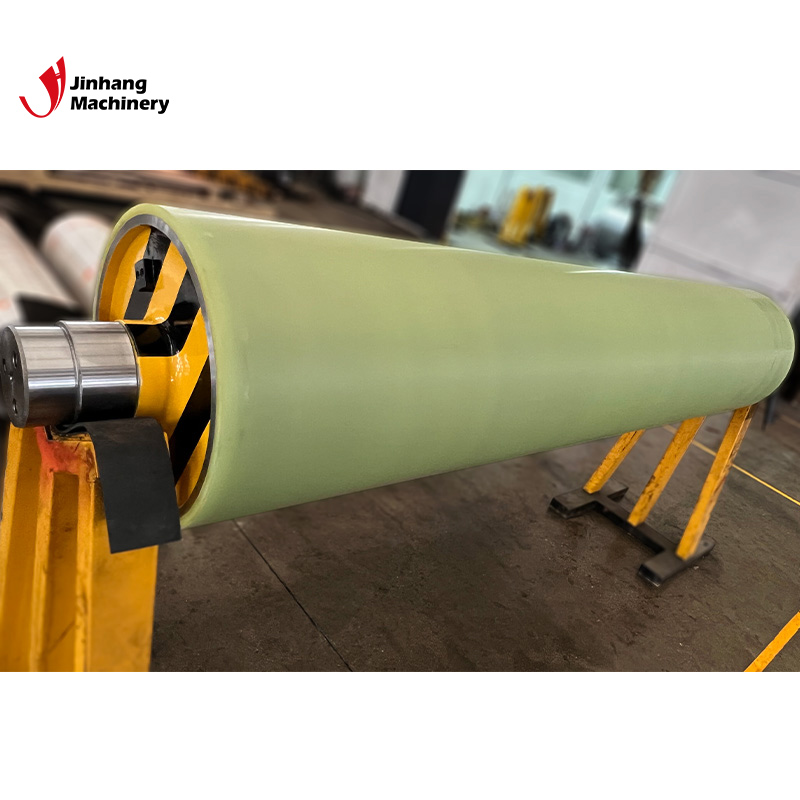 Ozone-Resistant EPDM Rubber Rollers for Industrial ApplicationsThese EPDM rollers resist ozone degradation, maintaining flexibility and strength in ozone-rich environments. Ideal for printing and packaging, they ensure smooth operation and long service life.View Product →
NBR rollers come into their own in environments that contain mineral oils, hydraulic fluids, greases, or hydrocarbon solvents. The polymer resists swelling and softening in these fluids, helping to preserve the roller diameter and surface hardness that the application depends on.
Typical applications include metalworking and forming lines that use oil-based lubricants, rubber and plastics processing where the compound itself may contain oily plasticisers, and packaging lines that use solvent-based adhesives in lamination. A laminating roller running a solvent adhesive will fail quickly if the cover is made from EPDM, whereas an NBR cover will hold its dimensions for months of continuous production.
Abrasiveness is another consideration. NBR shows very good wear resistance, so in a line where the web has a rough or mineral-filled surface, an NBR cover can outlast many generic rubber compounds. The same guidance applies to hardness: selecting a higher Shore A value improves load capacity but reduces conformability, so the supplier should be given the line speed, nip pressure, and product surface requirements in the specification.
Water-Resistant Nitrile Rubber Rollers for Wet or Oily EnvironmentsNitrile rollers resist swelling from water and oils, offering durability in food processing, packaging, and marine settings. Their abrasion resistance and grip support reliable performance under moisture.View Product →The selection process can be reduced to three practical rules.
The main procurement risk is selecting by colour, price, or a generic description such as "rubber roller" rather than by compound. A roller that swells can jam the nip, overload the drive, and create scrap. A roller that hardens can develop flat spots, causing vibration and uneven coating. The downtime cost of one failed roller frequently exceeds the price difference between an EPDM and an NBR cover by a wide margin.
Once the compound family is fixed, the next level of specification is hardness and surface geometry. Rubber rollers are commonly supplied in hardness values from 20 to 90 Shore A. For coating and printing rollers, a typical hardness is 60 to 80 Shore A; for laminating and nip rollers, 50 to 75 Shore A is common. A lower durometer conforms better to webs with irregularities, while a higher durometer transfers more uniform nip pressure.
Surface finish matters in coating and printing because the roller surface transfers the coating thickness. A mirror or fine-ground surface is usually produced by grinding the rubber cover on a cylindrical grinder after vulcanisation. Roller suppliers that retain in-house grinding capacity can control rubber layer thickness to a tolerance of roughly ±0.1 to ±0.3 mm, which is the kind of tolerance a precision roller buyer should ask for in writing.
For rollers used in the paper and printing industries, concentricity and dynamic balancing also deserve attention. A poorly balanced roller can excite vibration and shorten bearing life. A supplier with dynamic balancing capability in the same workshop can deliver a cover that is ready to run, which avoids the extra handling and transport that can introduce damage.
The material decision is straightforward once the operating conditions are known. EPDM is the right choice for ozone, water, steam, and weather exposure; NBR is the right choice for oils, fuels, and hydrocarbon solvents. Do not rely on appearance or a broad label, and make sure the supplier understands both the fluid chemistry and the actual roller surface temperature before manufacturing the cover.
When you present the roller diameter, cover thickness, required hardness, operating temperature, and the fluid list, a competent roller manufacturer can recommend the exact compound and confirm the achievable tolerance. Asking the supplier to state the tolerance before ordering is one of the simplest ways to avoid a costly mismatch in production.
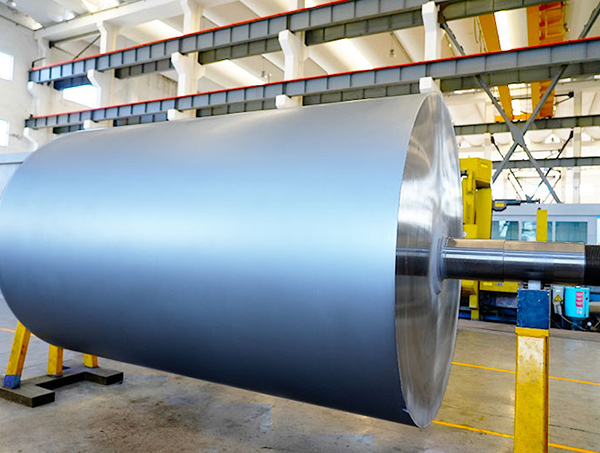
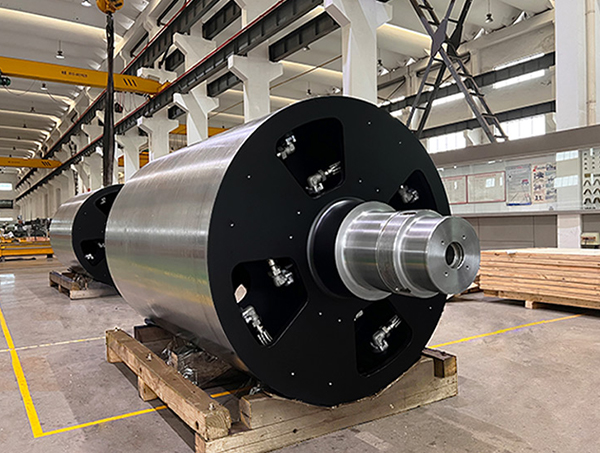
Dedicated to developing and manufacturing various shapes of rolls with different roll structures.
Phone: +86-15371769898
Email: [email protected]
Add: 9 Lifa Avenue, Chengdong Town, Haian County, Nantong City, Jiangsu Province, China
Copyright© 2025 Jiangsu Jinhang Machinery Manufacturing Co., Ltd. All Rights Reserved.
 Custom Thin Walled Roller Manufacturers


 English
 русский
 Deutsch