+86-15371769898
 [email protected]
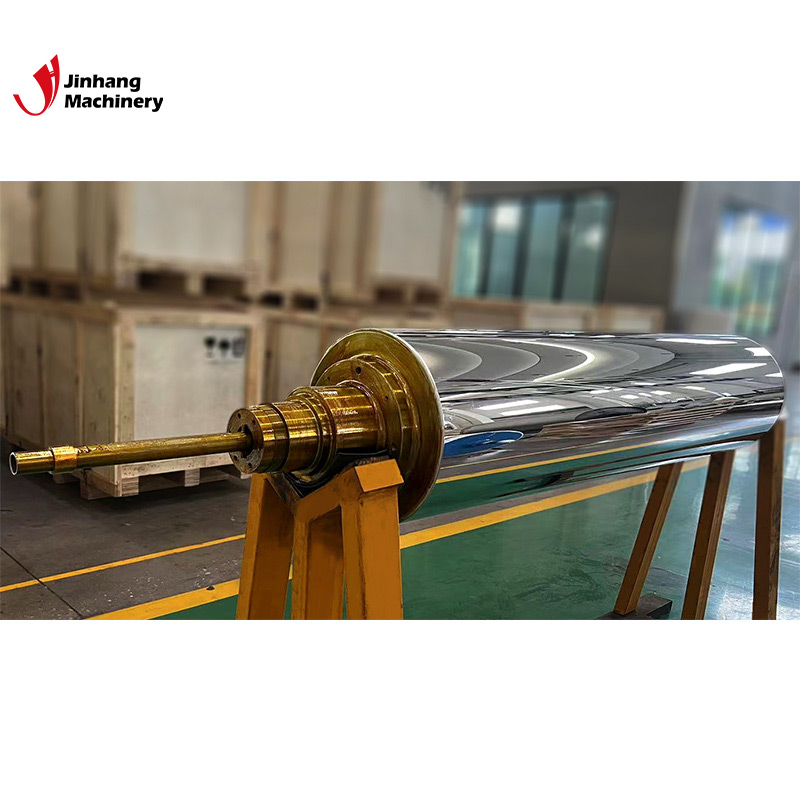
+86-15371769898[email protected]In the industries of precision plastic extrusion, optical film production, and high-end paper coating, the Mirror Surface Roller is the core component that determines the final surface quality of the product. Ideally, a mirror roller should grant the product a flawless, glass-like clarity and gloss. However, production engineers often encounter a frustrating defect known as “Orange Peel Marks.” This defect appears as microscopic ripples or dimples on the film surface, resembling the skin of a citrus fruit, which severely compromises the optical clarity and market competitiveness of the product.
The appearance of orange peel usually indicates a failure in the harmony between mechanical precision, thermodynamic balance, and material characteristics.
To resolve the orange peel issue, one must first understand the surface structure of the Mirror Surface Roller from a microscopic perspective. In industrial terms, orange peel is essentially a form of “surface micro-undulation.” Even if a roller appears as bright as a mirror to the naked eye, its microscopic morphology under a microscope directly determines the leveling effect of the molten polymer during the cooling process.
The surface roughness of a mirror roller is typically required to reach Ra 0.01μm or even lower. If the roller does not meet these standards during the fine grinding or super-finishing stages, or if the electroplating layer has coarse crystallization, micro-peaks and valleys will exist on the surface. When the molten film comes into contact with such an uneven surface, pressure cannot be distributed uniformly, leading to microscopic deformation as the film solidifies.
Mirror rollers typically utilize hard chrome plating. If the plating solution ratio is incorrect or the current density is uneven, the chrome layer may develop tiny “pinholes” or “micro-fissures.” These flaws, invisible to the naked eye, induce uneven peeling forces during high-speed production, which pulls the film surface into textures resembling orange peel. Furthermore, the adhesion between the polymer and the roller is critical. If the surface is contaminated or the lubricity of the chrome layer decreases, microscopic “sticking” occurs as the film leaves the roller, resulting in irregular dimples.
A Mirror Surface Roller is not merely a transport component; it is essentially a high-precision heat exchanger. In extrusion or casting production, the heat from the molten resin must be carried away uniformly by the roller. If the temperature distribution across the roller surface is uneven, localized cooling shrinkage differences occur, which is the core thermodynamic driver of orange peel marks.
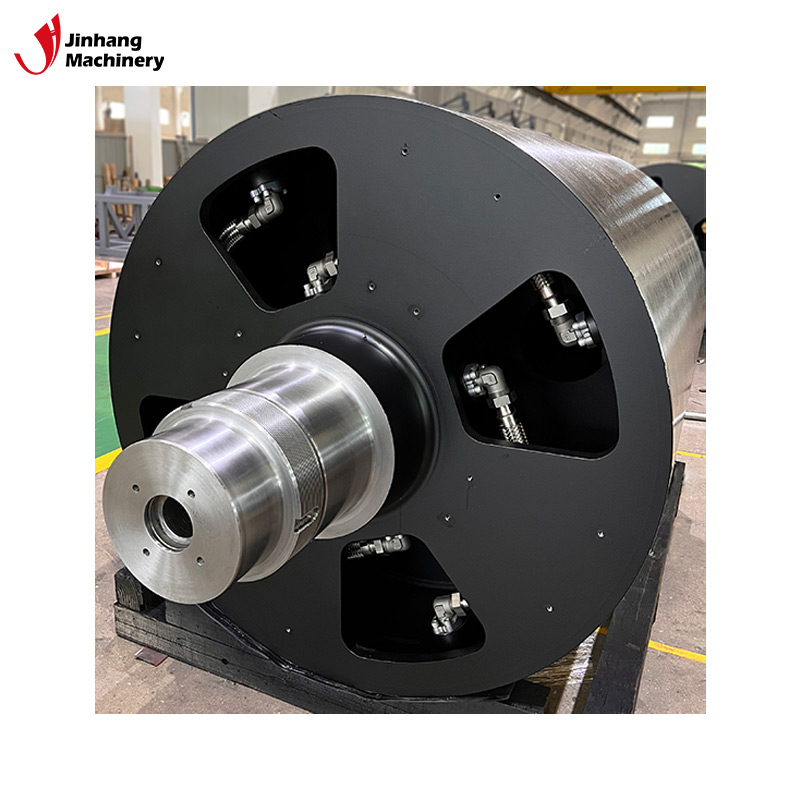
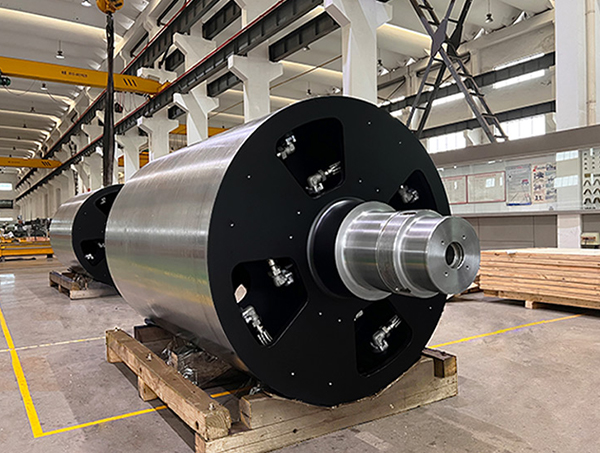
High-quality mirror rollers typically feature complex Spiral Flow Channels. The purpose of this design is to ensure that the cooling medium (chilled water or thermal oil) flows through the entire roller body at a constant speed and pressure, keeping the surface temperature variance within ±0.5°C.
Many factories overlook the quality management of cooling water. Over long periods of operation, scale or rust can accumulate within the internal channels. These deposits alter fluid direction and create localized thermal resistance. When “cold spots” or “hot spots” appear on the roller surface, the cooling rate of the film contacting these areas becomes inconsistent. This variance in shrinkage rates leads directly to uneven surface tension, manifesting as systemic orange peel marks on the film.
During the procurement phase, understanding how different technical standards impact production outcomes is vital. To assist in your selection process, we have summarized the key technical indicators below to help you avoid low-end products that are prone to orange peel.
| Technical Indicator | Premium Mirror Roller (Precision Grade) | Standard Mirror Roller (General Grade) |
|---|---|---|
| Surface Roughness (Ra) | < 0.01 μm (Super-finished) | 0.02 - 0.05 μm |
| Plating Hardness | HRC 62 - 65 (Dense & Uniform) | HRC 55 - 60 (Fluctuating) |
| Radial Run-out (TIR) | < 0.005 mm | 0.01 - 0.02 mm |
| Temp. Control Accuracy | ±0.5°C to ±1.0°C | ±3.0°C to ±5.0°C |
| Internal Structure | Double-layer Spiral Channels | Simple Sleeve or Baffles |
| Defect Resistance | Excellent (For Optical/High-clear Film) | Moderate (Prone to Orange Peel) |
Beyond thermodynamics, the Total Indicated Run-out (TIR) of the Mirror Surface Roller is a decisive factor. If the roller is slightly out-of-round, the pressure exerted on the film during the nipping process will fluctuate periodically with the rotation. This pulse in pressure interferes with the arrangement of polymer molecules, causing transverse or irregular textures on the film surface, thereby exacerbating the appearance of orange peel.
The cost of maintaining a Mirror Surface Roller is far lower than the cost of replacement or the loss of scrapped products. To prevent orange peel, strict maintenance protocols must be established to protect the fragile and expensive super-finished surface.
The chrome layer on a mirror roller, while hard, is highly susceptible to scratches from small, hard particles.
We recommend that enterprises conduct regular “surface footprint” inspections. Use portable profilometers or microscopic observers to monitor changes in the Ra value after different production cycles.
Q1: Why did my new mirror roller start showing orange peel marks after only one month of use?
A: This may be due to poor quality in the hard chrome plating, which has undergone microscopic pitting under high temperatures and chemical erosion from resin additives. Additionally, check if your cooling system has internal scaling, which decreases temperature control precision.
Q2: Can increasing the roller temperature solve orange peel issues?
A: Sometimes. Increasing the temperature improves the flow and leveling of the resin, allowing the film to adhere better to the roller surface. However, this may also lead to “sticking” or insufficient cooling. The fundamental solution remains checking the surface precision and temperature uniformity of the roller.
Q3: Are ceramic mirror rollers better at preventing orange peel than chrome-plated ones?
A: Ceramic rollers offer extreme wear resistance, but achieving the same Ra value through polishing is much more difficult than with chrome layers. For most high-transparency films, chrome-plated mirror rollers remain the preferred choice because they achieve lower Ra values and better microscopic flatness.
Dedicated to developing and manufacturing various shapes of rolls with different roll structures.
Phone: +86-15371769898
Email: [email protected]
Add: 9 Lifa Avenue, Chengdong Town, Haian County, Nantong City, Jiangsu Province, China
Copyright© 2025 Jiangsu Jinhang Machinery Manufacturing Co., Ltd. All Rights Reserved.
 Custom Thin Walled Roller Manufacturers


 English
 русский
 Deutsch