+86-15371769898
 [email protected]
+86-15371769898[email protected]In modern industrial manufacturing, the Rubber Roller is a core component ensuring smooth production lines. Whether in high-speed printing, precision film extrusion, or heavy-duty steel processing, the choice of roller material directly determines product quality, equipment lifespan, and costly downtime. The most common dilemma for procurement managers and engineers is: Should we choose Natural Rubber (NR) or Synthetic Rubber?
Derived from the latex of rubber trees, Natural Rubber possesses a molecular structure that grants it unparalleled physical performance. In the field of industrial roller manufacturing, Natural Rubber (NR) remains the top choice for many traditional mechanical applications.
Despite its physical prowess, natural rubber is vulnerable in complex chemical environments. It has poor oil resistance and swells rapidly when in contact with petroleum-based solvents. Additionally, it is sensitive to UV rays and ozone, leading to “cracking” over time. Therefore, NR is rarely the best choice for processes involving chemical cleaning or high-heat drying.
To meet the demands of harsh modern environments—involving strong acids, alkalis, high temperatures, and extreme speeds—Synthetic Rubber was developed. By altering chemical formulas, manufacturers can “customize” the performance of the roller to specific tasks.
Nitrile (NBR) is the standard for the printing and coating industries. It offers excellent resistance to aliphatic hydrocarbons, petroleum, and vegetable oils. If your process involves inks, adhesives, or solvent-based coatings, NBR is the most cost-effective solution.
Ethylene Propylene Diene Monomer (EPDM) performs exceptionally well with polar solvents like ketones and esters. Its standout feature is thermal stability. In plastic film processing or outdoor machinery, EPDM can withstand temperatures around 150°C without degrading.
To assist your team in decision-making, we have quantified the core metrics. The following table illustrates how mainstream rubber materials perform across various dimensions.
| Properties | Natural Rubber (NR) | Nitrile (NBR) | EPDM | Polyurethane (PU) | Silicone |
|---|---|---|---|---|---|
| Hardness (Shore A) | 30 - 90 | 40 - 95 | 40 - 90 | 10 - 95+ | 10 - 80 |
| Abrasion Resistance | Excellent | Good | Good | Outstanding | Poor |
| Oil/Fuel Resistance | Poor | Outstanding | Poor | Excellent | Moderate |
| Max Temp (°C) | 80°C | 120°C | 150°C | 90°C | 230°C |
| Ozone/Weathering | Poor | Fair | Outstanding | Outstanding | Outstanding |
| Typical Application | Woodworking, Logistics | Printing, Coating | Plastic, Laminating | Steel, Paper Mills | Food, Heat Seal |
Before contacting a Rubber Roller Manufacturer, your engineering team should define these key parameters to ensure a high Return on Investment (ROI):
Consider not just the raw materials, but also the cleaning agents used. Many natural rubber rollers fail not because of the workload, but because workers use harsh solvents for daily cleaning. If solvent evaporation is present, prioritize EPDM or Nitrile.
Under high loads, “Hysteresis Heat” (internal heat buildup) is a leading cause of rubber debonding from the metal core. If the roller must endure sustained high pressure, the low heat-generation and mechanical strength of Polyurethane (PU) will save significant replacement costs.
For precision coating applications (like optical films), synthetic rubbers like specialized NBR formulas provide more uniform surface density and lower deformation rates, ensuring consistent coating thickness.
Choosing between natural and synthetic rubber is essentially a balance between initial cost and lifecycle value. Natural rubber offers unmatched cost-efficiency for simple mechanical transport, while synthetic rubber acts as the guardian for complex, high-stress industrial conditions.
As a leading provider of rubber roller solutions, we recommend small-scale material testing before placing large orders. The right material choice not only boosts production efficiency but also significantly reduces maintenance frequency.
Q1: How do I know if my rubber roller needs replacement?
A: Check for surface cracks (ozone aging), dimensional swelling (oil attack), abnormal hardening or softening, and the presence of “ghosting” or uneven coating on your final product.
Q2: Why did my NBR roller become hard after high-temperature use?
A: When Nitrile rubber operates above its rated temperature (approx. 120°C) for long periods, it causes increased molecular cross-linking, making the rubber lose elasticity and become brittle.
Q3: What is the typical lead time for custom synthetic rubber rollers?
A: It depends on core preparation and the wrapping process. Standard specs usually take 2-3 weeks, while specialized custom formulas may require 4-6 weeks.
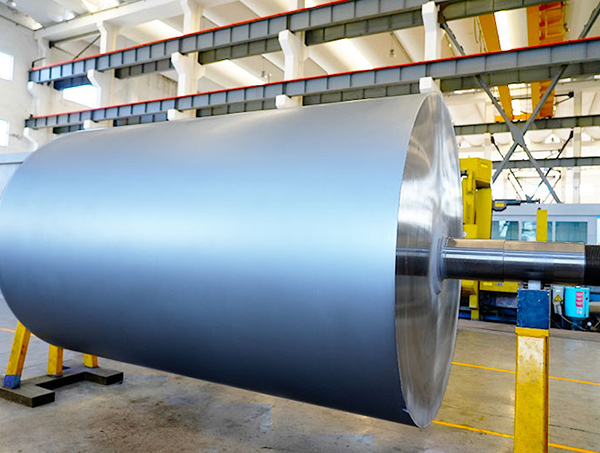
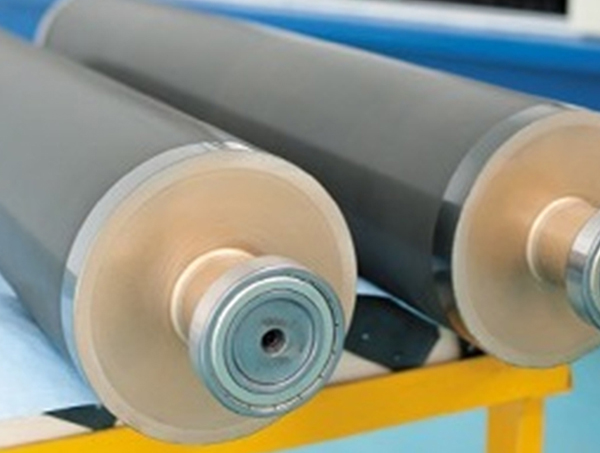
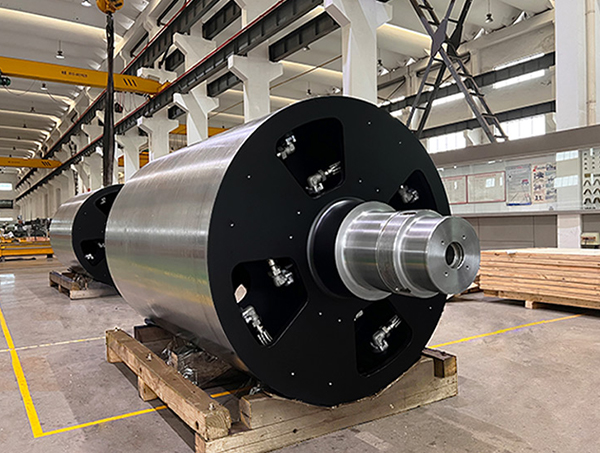
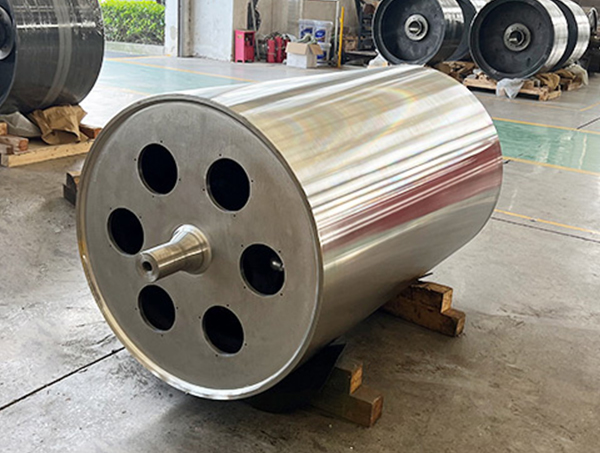
Dedicated to developing and manufacturing various shapes of rolls with different roll structures.
Phone: +86-15371769898
Email: [email protected]
Add: 9 Lifa Avenue, Chengdong Town, Haian County, Nantong City, Jiangsu Province, China
Copyright© 2025 Jiangsu Jinhang Machinery Manufacturing Co., Ltd. All Rights Reserved.
 Custom Thin Walled Roller Manufacturers


 English
 русский
 Deutsch