+86-15371769898
 [email protected]
+86-15371769898[email protected]Ask any press operator what single component decides whether a job looks crisp or washed out, and most will point at the anilox roller. It is a precision metering roller, usually a steel or aluminium core wrapped in an industrial ceramic and engraved with tens of thousands of tiny cells. Those cells pick up ink, a doctor blade scrapes the surface clean, and the remaining ink is transferred to the printing plate in a controlled, repeatable volume.
We have been manufacturing and reconditioning rolls since 2001, and the same conversation comes up almost every week: the press is fine, the plate is fine, the ink is fine, but the print looks heavy in some areas and patchy in others. Nine times out of ten the answer is an anilox roller that was specified for a different job, or one whose cells have quietly worn or clogged. This guide covers what actually matters when you buy, run, and maintain one.
In flexographic printing, ink is not simply poured onto the plate. The anilox roller takes up a film of ink into its engraved cells, and a doctor blade wipes away everything above the cell openings. What remains is a fixed volume that depends on the size, depth, and shape of those cells. That volume is then released to the plate under pressure, and the plate transfers it to the substrate.
The key word is repeatable. A properly made anilox roller delivers the same film thickness from the first impression of a shift to the last, which is what makes consistent colour possible across a long run. Change the roller and you change the ink film, the colour density, and often the drying behaviour of the whole job.
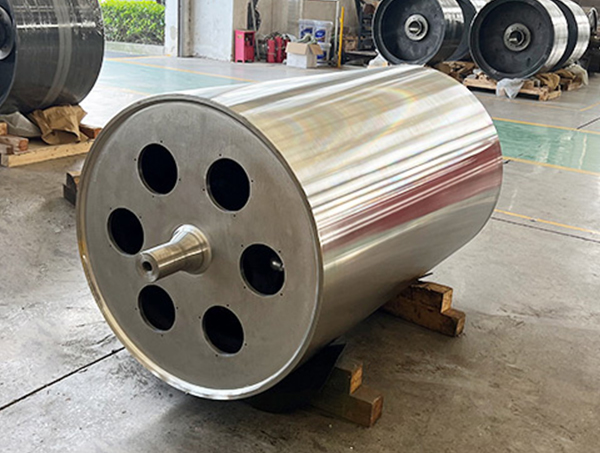
Most anilox rollers start life as a steel or aluminium cylinder with machined journals, balanced and straightened to run true at press speed. Straightness and dynamic balance matter more than many buyers expect, because a core that runs out of tolerance will produce uneven blade wear and banding long before the coating fails.
The core is grit-blasted and then plasma-sprayed with a ceramic layer, typically based on chromium oxide. That coating is ground and polished to a fine, uniform finish. Its job is to give the engraved cells hard, wear-resistant walls that survive years of contact with doctor blades and abrasive inks.
Finally, the cells are cut into the ceramic. Their count, depth, angle, and opening shape determine how much ink the roller carries and how readily it releases it. This is where an anilox roller stops being a cylinder and becomes a metering instrument.
Two numbers do most of the work on a specification sheet. The first is cell count, or line screen, expressed in cells per inch or per centimetre. The second is transfer volume, usually given as BCM, or billion cubic microns per square inch. Higher cell counts generally mean finer detail and lower volumes; lower counts mean heavier laydown.
Cell geometry matters just as much. A 60-degree hexagonal pattern is the most common because it packs cells tightly and releases ink evenly. Thirty-degree channels, elongated cells, and tri-helical patterns exist for specific jobs where flow direction or release characteristics need adjusting.
| Cell count (cells/inch) | Typical volume (BCM) | Common application |
|---|---|---|
| 200-250 | 8.0-12.0 | Heavy laydown, whites, varnishes |
| 300-400 | 5.5-8.0 | Solids, bold line work |
| 500-600 | 3.5-5.0 | Halftones, process colour |
| 700-900 | 1.8-3.2 | Fine halftones, high line screen |
| 1000-1200 | 0.9-1.6 | Very fine detail, specialty coating |
Two families cover most of the market, and they are not interchangeable.
An aluminium core keeps the weight down, which makes handling and changeover easier on wide-web presses, and it reduces the load on the bearing housings. With a properly applied ceramic layer and laser-engraved cells, these rollers handle water-based, solvent-based, and UV inks well. They are the default choice for most flexible packaging and label work.
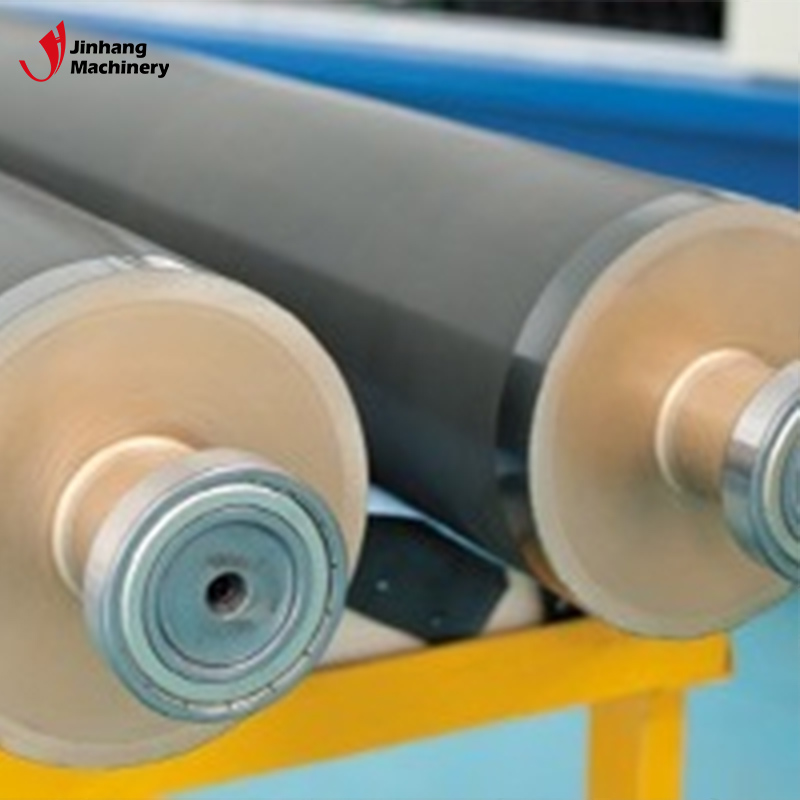 Aluminum Ceramic Anilox Rollers for Flexographic PrintingLightweight aluminum core and ceramic laser-engraved cells suit wide-web flexo, water, solvent, and UV inks, but require careful cleaning to preserve volume.View Product →
Where aluminium ceramic rollers need care is cleaning discipline. The coating is hard, but aggressive brushing or acidic wash cycles will shorten its life, and once the cell walls start to round off, the volume you set on the specification sheet is no longer the volume you get on press.
Metal anilox rollers are engraved mechanically and finished with a hard surface layer. They carry up to heavier volumes, tolerate more abrasive inks and coatings, and are often the practical option for coating stations, varnish units, and older presses where a ceramic roller would be overkill or physically incompatible. They are also easier to repair in some cases, since the surface can be reworked rather than replaced.
Wear-Resistant Metal Anilox Rollers for Packaging and Label PrintingMechanically engraved metal anilox rollers handle heavier volumes and abrasive inks, making them practical for coating stations, varnish units, and older presses.View Product →Laser engraving produces consistent cell geometry and depth across the full face of the roller, which makes it the standard route for ceramic anilox rollers. Because there is no cutting tool touching the surface, it also allows very high cell counts and the fine, uniform openings that high-line-screen work depends on. Mechanical engraving, by contrast, uses a knurled or engraved tool pressed into the surface. It is well suited to coarser screens and heavier volumes, and it holds up well in applications where the cell pattern is not expected to change.
Whichever route is used, the important thing is that the measured volume, not the nominal figure on the drawing, is what gets verified before the roller leaves the workshop.
Ink film thickness is the starting point, but the application decides the rest. Narrow-web label presses running UV inks behave very differently from wide-web printing and publishing lines running water-based inks at high speed, and both differ again from a coating station on a packaging line applying a protective lacquer.
Practical questions to settle before ordering:
Answer those five questions and the cell count and volume usually narrow themselves down to a small range of sensible options.
Most anilox roller failures we see are not coating failures at all; they are dried ink left in the cells. Once ink polymerises inside the cell walls, transfer volume drops and the print goes patchy in a way no amount of press adjustment can fix.
An anilox roller does not fail suddenly. It degrades. A simple audit routine, checking printed density against a known reference at fixed intervals, will tell you far more than a visual inspection. When density drops, a volume measurement will confirm whether the cells have worn, clogged, or been damaged by the doctor blade.
If the roller has simply lost volume, refurbishment is usually the economical answer. If the ceramic is chipped, the plating is lifting, or the core itself has run out of tolerance, replacement is the better investment. We usually recommend keeping one spare roller per press anyway, because a two-hour stoppage costs more than a spare cylinder sitting on the rack.
If you send us your drawing, we manufacture to it. If you only have a sample roller on the bench and a print problem to solve, that works too. To give you an accurate quotation we normally need:
An anilox roller is only as good as the tolerances it was built to. Our workshop covers 13,000 square metres, staffed by more than 60 people working with lathes, imported Italian POMINI universal grinding machines, boring and milling equipment, dynamic balancing machines, and automatic sandblasting lines. Every roller is tracked and inspected at each process stage and only moves to the next operation once it passes, which is how we can hold the precision that high-line-screen work demands.
We are ISO 9001 certified, and we back our work with free repair or replacement during the warranty period for any quality issue that arises under the mechanical conditions stated on the drawing. If you are replacing a worn anilox roller, upgrading a coating station, or developing a new press, we are happy to look at your specifications and tell you honestly what will work.
An anilox roller is a small part of the press and a large part of the result. Get the cell count, volume, and coating right, keep it clean, and audit it honestly, and it will return consistent colour for years. Get it wrong, and every other adjustment you make is a workaround. If you are unsure which specification fits your job, send us the details and we will work through it with you.
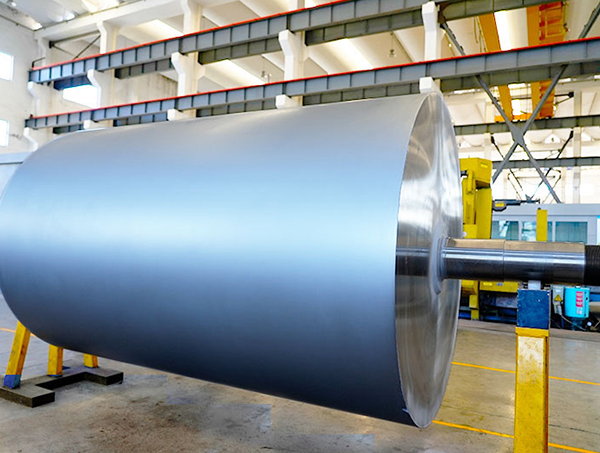
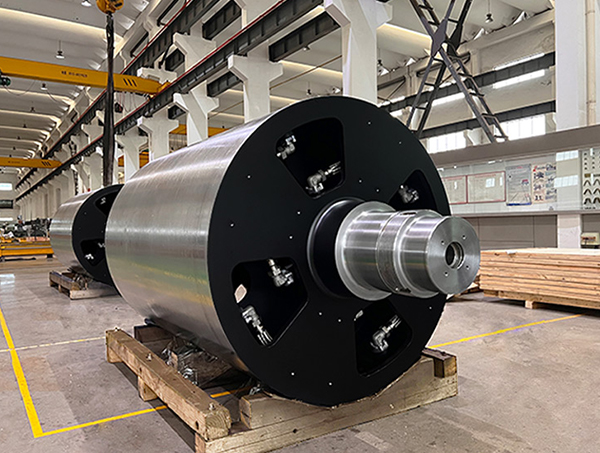
Dedicated to developing and manufacturing various shapes of rolls with different roll structures.
Phone: +86-15371769898
Email: [email protected]
Add: 9 Lifa Avenue, Chengdong Town, Haian County, Nantong City, Jiangsu Province, China
Copyright© 2025 Jiangsu Jinhang Machinery Manufacturing Co., Ltd. All Rights Reserved.
 Custom Thin Walled Roller Manufacturers


 English
 русский
 Deutsch