+86-15371769898
 [email protected]
+86-15371769898[email protected]If you spend your days around a flexographic press, you already know the anilox roll is the quiet member of the crew. It never touches the substrate, it carries no image of its own, and on a busy shift nobody gives it a second look. Then the print density drifts, a job that ran clean last month starts filling in, or the highlights turn mottled, and the anilox roll becomes the first suspect.
Anilox printing is really a discipline of measuring. The roll holds ink in thousands of tiny engraved cells, and the press depends on the geometry of those cells to deliver the same volume of ink from the first impression to the ten-thousandth. When the cells are right, everything downstream behaves predictably: colour strength, opacity, coating weight, drying. When they are not, no amount of adjusting viscosity will rescue the job.
We have been building rollers since 2001, and anilox rolls sit at the demanding end of our work because the tolerances are unforgiving. What follows is what we have learned about how these rolls are made, how they behave on press, and what genuinely shortens their working life.
The anilox roll turns in the ink pan or inside a closed chamber, and ink flows into the cells as it rotates. A doctor blade then wipes the surface clean, so ink remains only in the engraved cells below the surface. When the roll meets the printing plate, those cells release their contents onto the raised image areas as a controlled film.
In effect, the roll is a volumetric measuring device disguised as a cylinder. A smooth roller would transfer whatever ink happened to cling to it, and that amount changes with speed, viscosity and temperature. An engraved roller transfers a fixed volume per unit of area, defined by the depth, shape and count of its cells.
Two practical consequences follow. Cell geometry is the single most important specification on the roll. And anything that alters that geometry, whether wear, corrosion or ink dried hard inside the cells, alters the printed result as well, usually gradually enough that nobody notices until a customer does.
Every anilox roll begins as a machined steel or aluminium cylinder. Everything that follows exists to create and protect a precise pattern of cells on its surface.
Aluminium is widely used because it is light and accepts ceramic coating well; steel is often preferred where stiffness, width or heat stability matters. In a ceramic roll, the base is grit-blasted and plasma-sprayed with a chromium oxide or similar ceramic layer, usually a few tens of microns thick. The cells are then laser-engraved into that ceramic, which produces sharp, repeatable geometry and a surface that resists both abrasion and corrosion. In a chrome roll, the cells are engraved mechanically and the chrome plating that follows supplies hardness and good ink release.
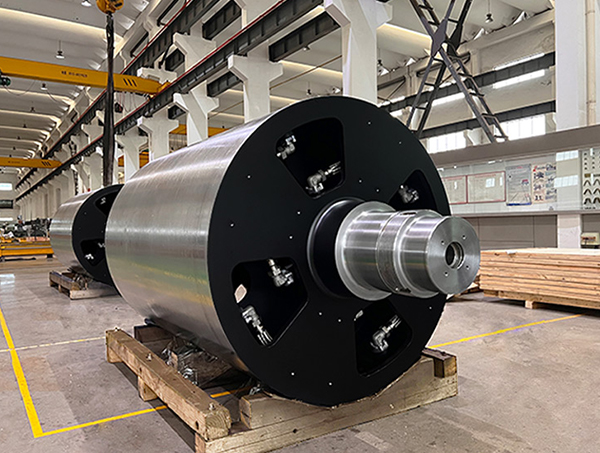
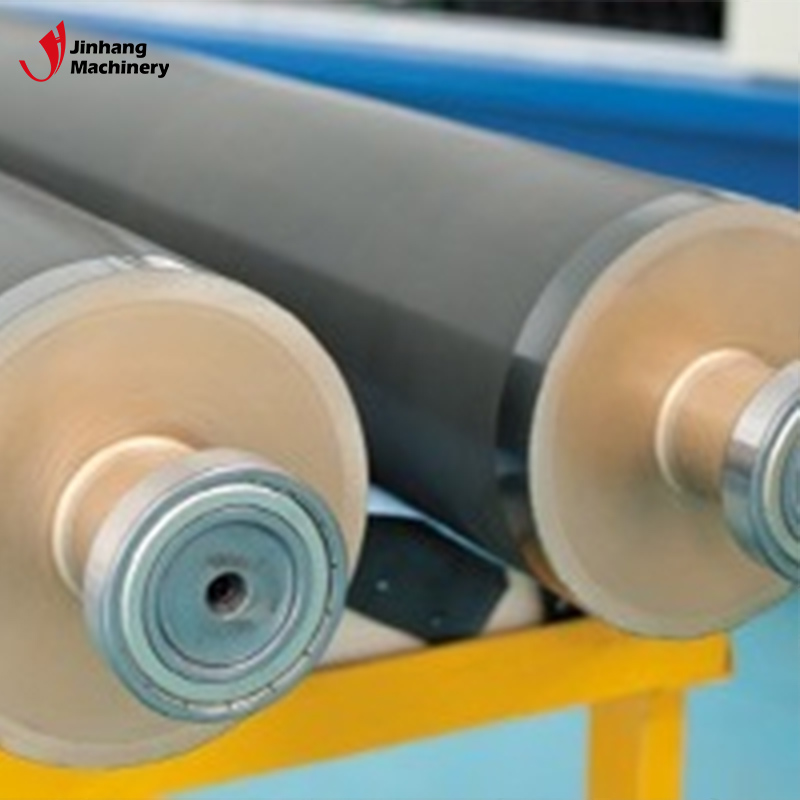 Aluminum Ceramic Anilox Roller for Precision Flexographic Ink TransferLightweight aluminum core with ceramic coating and laser-engraved cells supports uniform ink transfer, durability, and customization for flexographic printing and packaging.View Product →
Cell shape matters as much as cell count. A 60-degree hexagonal pattern is the workhorse for most flexo inks because the cells nest tightly and the walls between them stay thin. A 45-degree diamond pattern is common for coatings and heavier films. Trihelical patterns suit viscous materials, and asymmetric cell shapes can be chosen where release is difficult. The angle at which the pattern meets the doctor blade also affects how evenly the blade wipes across the surface.
Coating hardness is the other half of the story. A harder, denser surface keeps its cell walls intact for longer under abrasive inks, and we wrote about the advantages of hard alloy coated rollers if you would like the metallurgy behind that claim.
There is no universally best anilox roll. The right choice depends on the ink, the substrate, the run length and how much abuse the roll will take over its service life.
| Roll type | Surface | Typical work | Relative wear life |
|---|---|---|---|
| Aluminium ceramic | Laser-engraved ceramic on aluminium | Labels, flexible packaging, coatings | Long |
| Steel ceramic | Laser-engraved ceramic on steel | Wide web, high speed, warm processes | Long |
| Chrome-plated | Mechanically engraved, chrome finished | Corrugated, kraft, adhesive coating | Moderate |
| Metal with hard coating | Hard alloy or carbide layer | Abrasive inks, very long runs | Very long |
Where white or metallic pigments are involved, a metal roll with a wear-resistant coating is frequently the cheaper option across several years, even though it costs more up front.
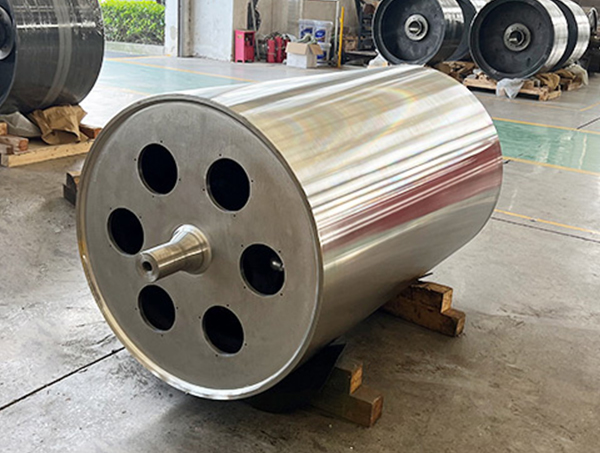
Wear-Resistant Metal Anilox Roller for Demanding Printing ApplicationsMetal anilox roller with advanced surface treatments for abrasive inks, solvents, and doctor blade contact, supporting consistent ink transfer and long service life.View Product →Anilox rolls appear almost anywhere a controlled film of liquid has to be applied to a moving web or sheet. The usual suspects include:
Our own production tends to cluster around these areas. You can see where our rollers fit on the printing and publishing page, which lists the equipment types we supply.
Two numbers tell you most of what you need to know about a roll, and a third explains why two rolls with the same numbers can still perform differently.
When a customer tells us a job is starving for ink or flooding, these three figures are where the conversation starts.
An anilox roll rarely fails suddenly. It loses volume slowly, and the loss is easy to miss. The most common causes are:
Checking cell volume periodically with a microscope or a volume gauge is the only reliable way to know whether a roll is still doing what it did when it was new.
In practice, most anilox problems are solved with a routine rather than a purchase. Clean the roll properly after every job, use the gentlest method that removes the ink, store it so the surface cannot be knocked, and record cell volume readings so you can see a trend rather than a surprise. As a working rule, once a roll has lost roughly fifteen to twenty per cent of its original volume and cleaning no longer brings it back, it is time to plan a replacement rather than chase density on press.
Replacement is also where a made-to-order roll earns its keep. Because we machine from bar stock and apply our own coatings, we can work from your drawing or from a worn sample, match the base material and coating to the ink you actually run, and set the line screen and cell volume to the job rather than to whatever is on the shelf. Every roll is tracked through each stage of production and inspected before it moves on to the next one, which is how we keep the final dimensions where the drawing says they should be.
If you are specifying a new roll, the useful things to send us are the ink type, the substrate, the line screen and volume you need, and the mounting details. From there we can suggest a construction and quote it.
Anilox printing rewards attention to small details. A roll that is measured, cleaned and replaced on evidence will hold its density for years, and the press will spend far more of its time printing than being adjusted.
Dedicated to developing and manufacturing various shapes of rolls with different roll structures.
Phone: +86-15371769898
Email: [email protected]
Add: 9 Lifa Avenue, Chengdong Town, Haian County, Nantong City, Jiangsu Province, China
Copyright© 2025 Jiangsu Jinhang Machinery Manufacturing Co., Ltd. All Rights Reserved.
 Custom Thin Walled Roller Manufacturers


 English
 русский
 Deutsch