+86-15371769898
 [email protected]
+86-15371769898[email protected]"Can you chrome plate stainless steel?" sounds like a question with a one-word answer. In practice, the first word is easy and everything that follows is where the engineering lives. Stainless steel can be chrome plated, and it is chrome plated commercially every single day — on decorative trim, medical instruments, hydraulic rods, food-processing equipment and a long list of industrial rollers.
The complication is that the very thing that makes stainless steel "stainless" also makes it stubborn. Its surface carries a thin, dense, self-repairing chromium oxide film. Plating needs a genuine metallic bond, and that film stands directly in the way. Rush or skip the activation step and you can still end up with a bright, attractive part — one that blisters, flakes, or rusts inward from the edges a few months later.
This guide walks through what actually happens in a plating shop: why stainless behaves differently, how the process is adjusted for it, how decorative chrome differs from hard chrome, where chrome-plated stainless earns its place on rollers, and what to ask before you place an order.
Yes. Chromium, nickel, copper and several other metals can all be electroplated onto stainless steel, and the industry has settled on a reliable route: thorough cleaning, an aggressive activation step, a nickel strike, and then the chromium deposit itself. When those steps are respected, adhesion on common austenitic grades such as 304 and 316 is good enough for genuinely demanding service.
One useful way to frame it: stainless steel is not difficult to plate because it is an exotic metal. It is difficult to plate because it insists on covering itself in a protective skin the moment it meets air. Once you accept that activation is the whole ball game, the rest of the line looks much like plating any other steel.
Stainless steel contains at least 10.5 percent chromium. That chromium reacts with oxygen almost instantly to form a chromium-rich oxide film roughly one to three nanometres thick. The film is dense, adherent and self-healing: scratch it, and it rebuilds itself in seconds using oxygen from the air or from water. That behaviour is exactly why stainless steel resists corrosion, and exactly why electroplated metals struggle to bond to it. Nickel, copper and chromium ions cannot form a metallic lattice with an oxide.
The surface oxide is loose and easily stripped by a standard acid pickle. Activation is forgiving, and a conventional copper-nickel-chrome sequence works without drama.
The oxide is dense, chemically stable and instantly self-repairing. Activation must be aggressive, the window between activation and plating is short, and a nickel strike is effectively mandatory.
Grade selection matters as much as process control. Austenitic grades such as 304 plate well; 316 is also platable but its molybdenum content makes the activation window slightly narrower. Ferritic 430 behaves predictably. Martensitic grades like 410 and 420 can be plated, though high-strength variants raise hydrogen embrittlement concerns that require a post-plate bake. Free-machining 303 is the difficult one: its sulfur inclusions can smear across the surface and create localised adhesion failures. Precipitation-hardening grades add copper and other alloying elements into the mix, which complicates bath control further.
A plating line for stainless steel is not radically different from a line for carbon steel, but the sequence and the tolerances are tighter. Here is the practical order of operations in a well-run shop.
People say "chrome" as if it were one thing. In a plating shop it is at least two, and confusing them leads to parts that look right but wear out fast. Decorative chrome is a thin, bright cosmetic layer sitting on top of copper and nickel. Hard chrome, sometimes called engineering chrome or functional chrome, is a much thicker deposit plated directly onto the prepared substrate for wear and friction control.
| Property | Decorative chrome | Hard chrome |
|---|---|---|
| Typical thickness | 0.25 - 0.8 micrometres | 20 - 500 micrometres |
| Hardness | Approximately 700 - 900 HV | Approximately 850 - 1100 HV |
| Underlayers | Copper and nickel required | Usually none, plated on the substrate |
| Primary purpose | Appearance, mild corrosion resistance | Wear resistance, friction reduction |
| Appearance | Bright, reflective, blue-white | Matte to satin, dull grey |
| Typical stainless uses | Trim, instruments, sanitary fittings | Rollers, rods, moulds, hydraulic parts |
| Post-plate finishing | Usually none | Often ground and polished to tolerance |
For stainless steel rollers, hard chrome is almost always the relevant coating. Decorative chrome on a roller would be worn through within days of continuous contact with a web, a film or a sheet.
Searches for chrome plating often sit alongside searches for chrome versus stainless steel, and the two get tangled constantly. They are not competing materials. One is a coating, the other is a bulk alloy, and the right choice depends on what the part has to survive.
Chrome plating is a thin electrodeposited layer measured in micrometres. Stainless steel is a solid alloy with chromium dissolved throughout its structure.
Stainless relies on a chromium oxide film it can regenerate. Chrome plating relies on the coating staying intact, plus nickel underlayers doing most of the corrosion work.
A scratch through chrome plating exposes the substrate. A scratch on stainless steel re-passivates on its own.
Chrome gives hardness, low friction and a mirror finish. Stainless gives through-thickness corrosion resistance and structural strength.
Electrodeposited chromium is weakly magnetic. Austenitic stainless such as 304 is essentially non-magnetic until it is heavily cold worked.
Plating chrome onto stainless steel gives you a corrosion-resistant body wearing a hard, smooth, low-friction surface. That combination is why the pairing exists at all.
In industry, the appeal of chrome over stainless is rarely cosmetic. It is about wear, friction, release and cleanability. Chrome plating on a stainless body raises surface hardness, drops the coefficient of friction, resists adhesive wear, and produces a surface that releases product and cleans down easily.
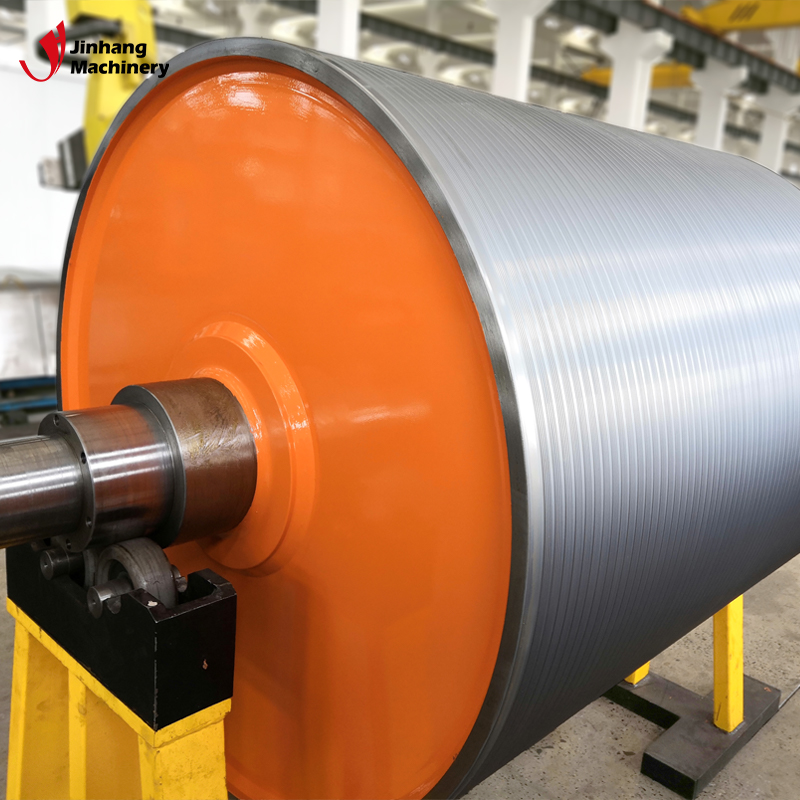
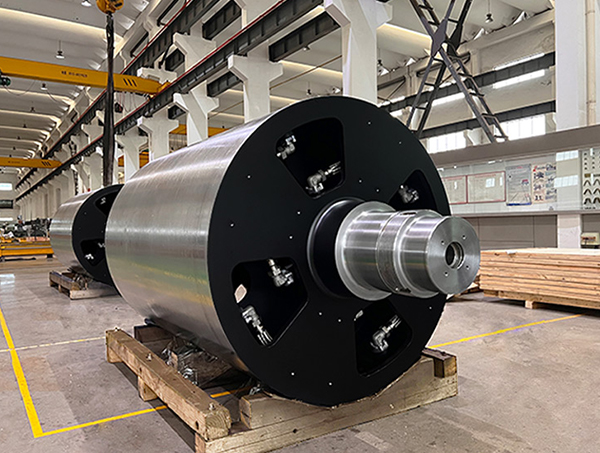
Rollers are the clearest example. A stainless roller carrying a chrome surface is common in printing and publishing equipment, packaging and converting lines, coating and laminating machinery, and film handling systems where the web must not stick or scuff. The stainless body shrugs off moisture and washdown chemicals, while the chrome surface takes the abrasion. In food and beverage equipment and in tissue and papermaking lines, the same logic applies: a durable, hygienic, easy-to-clean working surface.
 Custom Chrome-Plated Rollers for Printing, Coating, and Film LinesChrome-plated stainless rollers suit printing, packaging, coating, and film handling, offering hard, low-friction, corrosion-resistant surfaces that protect webs and can be re-plated.View Product →
Outside rollers, chrome-plated stainless turns up in medical and dental instruments, marine hardware, architectural fittings, automotive trim, and hydraulic or pneumatic rods where a hard, low-friction surface protects a seal. In each case, the decision to chrome plate stainless rather than simply use a polished stainless surface comes down to one of three things: hardness, friction, or finish.
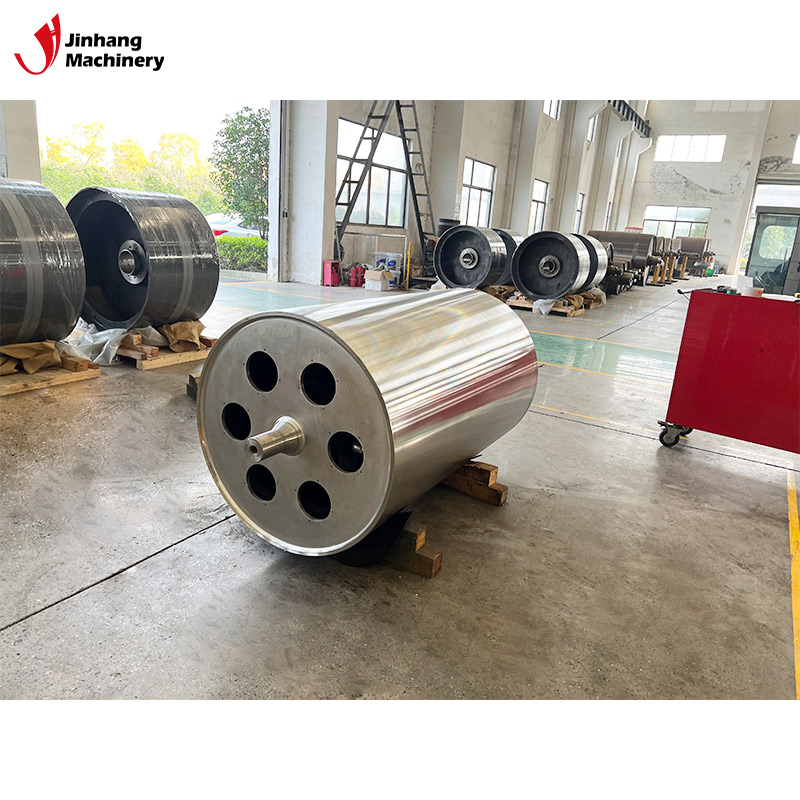
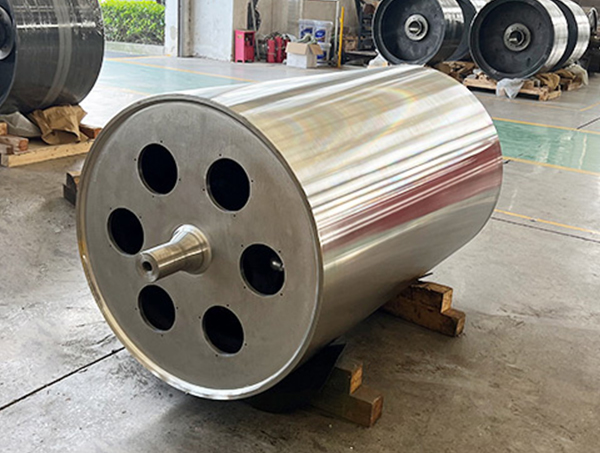
Chrome plating is frequently the last step that turns a finely ground stainless roller into an optical-quality mirror surface. One important detail is often misunderstood: chrome does not fill defects. It replicates whatever is underneath, amplified slightly. If the base is not polished to the required finish before plating, the finished roller will faithfully reproduce every scratch and grinding mark.
Surface roughness is therefore the specification that matters most, and it is measured as Ra in micrometres. The chart below gives a sense of typical values at each processing stage.
A chrome-plated mirror roller has to hold three things at once: roughness, concentricity and coating uniformity. Wrap a hard chrome layer of uneven thickness around a perfectly round body and you have an out-of-round roller. That is why mirror and hard chrome work on rollers is inseparable from precision grinding and dynamic balancing.
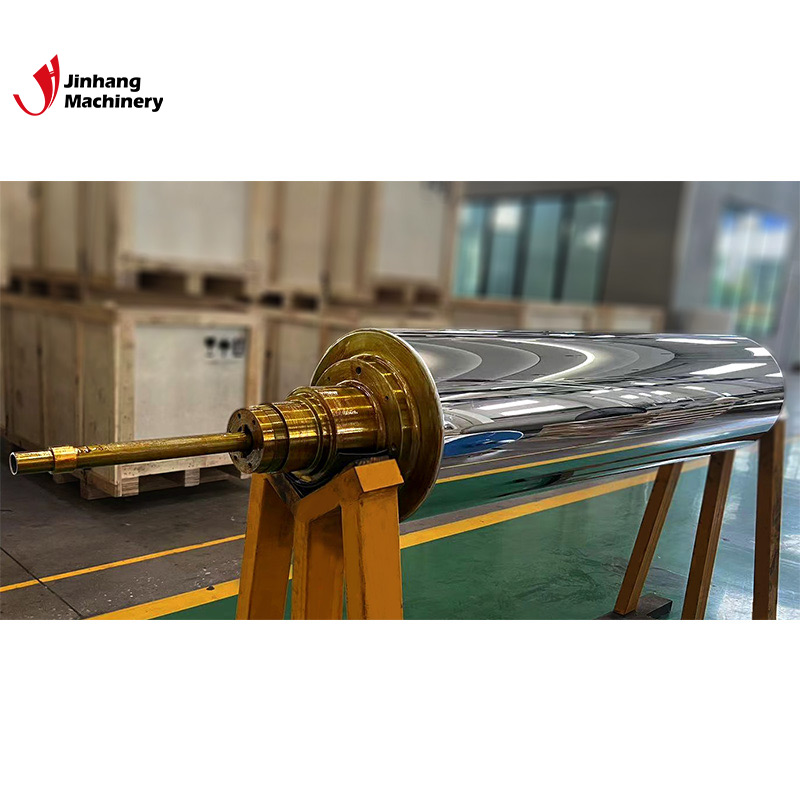 Chrome-Plated Mirror Rollers for Precision and Durable Surface PerformanceFor mirror-quality applications, this chrome-plated roller combines a reflective, low-friction surface with customizable sizing and support for printing, packaging, and high-speed equipment.View Product →
If mirror quality is the deciding factor in your application, it is worth understanding how roughness, hardness and coating thickness trade off against each other before you specify anything. A closer look at roller selection criteria can save an expensive rework cycle later.
When a roller is going to be chrome plated anyway, does the base grade still matter? It matters a great deal. The base determines corrosion resistance in the event of coating damage, mechanical strength, dimensional stability under temperature, and how easily the plater can achieve reliable adhesion.
 Custom Stainless Steel Rollers for Food, Packaging, and Printing EquipmentThese custom stainless rollers resist corrosion and suit food processing, packaging, and printing lines where hygiene, alignment, and smooth rotation matter.View Product →
For roller bodies, the stainless grade also has to suit the operating temperature, the chemical exposure and the mechanical load. A roller running in a hot, humid converting line and a roller running in a cold logistics conveyor are not the same component, even if both are cylindrical and both are metal.
Coating thickness drives performance, and there is no single correct number. Decorative layers are measured in fractions of a micron; heavy-duty hard chrome can be several hundred microns thick. The gauge bars below show where the main application bands sit.
Adhesion is harder to measure than thickness, because a coating that looks perfect can still be weakly bonded. The methods that actually tell you something include:
Chrome plating is not always the best answer, and a good supplier will say so. Several surface treatments solve the same problems from different angles.
The right question is never "which finish is best" in the abstract. It is "which finish best matches the wear mechanism, the chemical exposure and the dimensional tolerance of this specific part."
Because so much of the outcome depends on process discipline rather than equipment, the conversation before the order matters as much as the specification itself. These are the questions that separate a supplier who understands stainless steel from one who plates it occasionally.
A supplier who can answer these without hesitation is generally a supplier whose parts hold up. A supplier who deflects them is telling you something useful too.
Technically yes, but reliably is a different matter. The passive oxide layer re-forms within seconds of exposure to air, so home kits designed for mild steel usually produce deposits that look fine and then peel. On top of that, hexavalent chromium is a serious health hazard and requires proper ventilation, personal protective equipment and waste handling.
The chromium layer is not the main corrosion barrier. Decorative chrome is thin and can be slightly porous, so the copper and nickel underlayers do most of the corrosion work. On stainless steel the substrate already resists corrosion, which is why the combination performs well — but the coating is there primarily for hardness, friction and appearance, not as a rust shield.
Yes, with correct activation and a nickel strike. The molybdenum in 316 makes the passive film more tenacious, so the activation window is narrower than for 304, but experienced platers handle it routinely.
Decorative chrome typically runs from 0.25 to 0.8 micrometres. Functional hard chrome starts around 10 micrometres and can reach 500 micrometres for heavy wear or dimensional salvage work. The right thickness depends on the load, the environment and the surface finish required.
The chromium layer itself is weakly magnetic, but it is so thin that it has little practical effect. Austenitic stainless steel such as 304 remains essentially non-magnetic, although heavy cold working can make it slightly magnetic on its own.
Indoor decorative coatings commonly last a decade or more. Hard chrome in industrial service depends heavily on thickness, load and chemistry — a well-specified roller coating can last for years, but in abrasive or chemically aggressive service it is treated as a wear surface that is periodically stripped and re-plated.
So the short answer to the original question is yes: stainless steel can be chrome plated, and it is a well-established industrial process with predictable results when the activation step is taken seriously. The longer answer is that the outcome depends far less on the plating bath than on everything that happens before the part reaches it — cleaning, pickling, activation, and the nickel strike that bridges the gap between a passive oxide and a functional metal coating.
For rollers specifically, chrome-plated stainless is a genuinely useful combination: a corrosion-resistant body wearing a hard, low-friction, mirror-capable surface. Specify the base grade, the coating type, the thickness and the surface roughness deliberately, verify adhesion on a first article, and the part will behave the way the drawing says it should.
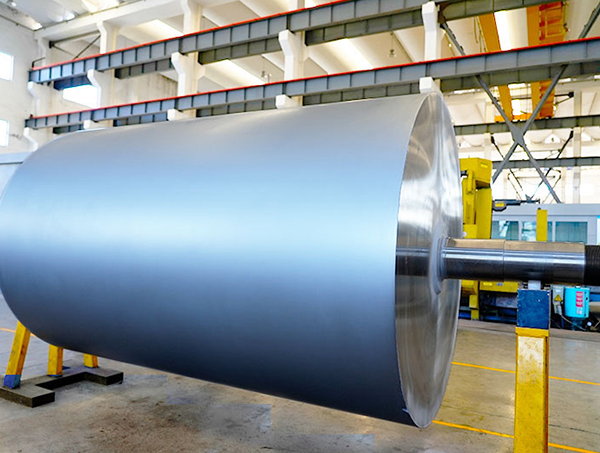
Dedicated to developing and manufacturing various shapes of rolls with different roll structures.
Phone: +86-15371769898
Email: [email protected]
Add: 9 Lifa Avenue, Chengdong Town, Haian County, Nantong City, Jiangsu Province, China
Copyright© 2025 Jiangsu Jinhang Machinery Manufacturing Co., Ltd. All Rights Reserved.
 Custom Thin Walled Roller Manufacturers


 English
 русский
 Deutsch