Understanding the Hot Rolling Process and the Role of the Water Quenching Roller
Hot rolling is one of the most important processes in steel manufacturing, where steel billets or slabs are heated to high temperatures and passed through rollers to reduce their thickness and shape them into the required forms. During the hot rolling process, the steel is heated to temperatures ranging from 900°C to 1300°C, making it malleable enough to undergo plastic deformation. However, this high temperature also presents challenges in controlling the metal's cooling rate, which directly impacts its mechanical properties, such as strength, hardness, and ductility. The
Water Quenching Roller plays a critical role in addressing this challenge. After the steel passes through the rolling mill, it is exposed to high temperatures and is highly susceptible to thermal distortion and residual stresses if not cooled uniformly. This is where the Water Quenching Roller comes into play. By evenly spraying water across the surface of the metal, the roller ensures that the cooling process is controlled and uniform. This rapid cooling is essential in preventing the steel from developing non-uniform thermal stresses that could cause defects like warping, cracking, or dimensional inaccuracies. For example, in hot rolling mills used in the production of steel bars, rods, and beams, maintaining consistent cooling throughout the process is crucial to ensure that the final products meet industry standards for strength and hardness. Jiangsu Jinhang Machinery Manufacturing Co., Ltd. manufactures Water Quenching Rollers that ensure optimal cooling through precision-engineered spray nozzles, which distribute water evenly across the metal surface. This is essential for achieving the desired mechanical properties such as tensile strength and toughness. By controlling the cooling rate, the roller helps achieve fine grain structures that result in steel products with superior performance.
The cooling process facilitated by the Water Quenching Roller directly influences the microstructure and mechanical properties of steel. When steel is rapidly cooled through quenching, the cooling rate determines which phases form in the metal, and ultimately how the material behaves under stress. The cooling rate affects the phase transformation within the steel, which in turn governs key material properties such as hardness, strength, and toughness. The cooling process induced by the Water Quenching Roller can lead to the formation of different microstructures such as martensite, bainite, or pearlite. These microstructures significantly influence the final properties of the steel. For instance, martensite is a very hard phase formed when steel is cooled rapidly, and it provides high strength but low ductility. On the other hand, slower cooling might form pearlite, which is softer and more ductile but provides lower strength. The ability of the Water Quenching Roller to control the cooling rate is a crucial factor in achieving the desired mechanical properties in the final product. For high-strength applications such as structural steel or automotive components, a rapid cooling process may be necessary to achieve martensitic structures. Conversely, for applications requiring more ductility, such as wire rods, a more controlled or slower cooling process is beneficial. For example, Jiangsu Jinhang Machinery Manufacturing Co., Ltd. ensures that our Water Quenching Rollers are designed to meet the exact cooling requirements of different steel grades. In the production of high-strength steel for construction, a rapid quenching process might be used to ensure high tensile strength. Alternatively, for steel used in applications where more formability is required, we adjust the cooling rate to ensure that the steel retains sufficient ductility. By providing customizable cooling solutions, our rollers ensure that every batch of steel meets the required specifications. This precise control over steel properties through quenching also reduces the likelihood of defects like thermal cracks and distortions that could arise from uneven cooling. Therefore, by using high-quality Water Quenching Rollers, manufacturers are able to produce a more consistent product with fewer defects, increasing yield and improving overall productivity.
In continuous casting systems, molten steel is poured into a mold and begins to solidify as it moves through the cooling system. The cooling rate during this phase is critical, as it directly influences the steel's microstructure and overall quality. If the cooling rate is not controlled carefully, it can result in defects like surface cracking, segregation, or internal porosity, all of which negatively impact the mechanical properties of the steel. The Water Quenching Roller serves as a key tool in controlling the cooling rate in continuous casting systems. The roller provides an additional layer of cooling beyond the traditional water spray cooling methods used in continuous casting. As the steel moves through the caster, the Water Quenching Roller applies a precise amount of water to ensure even and consistent cooling across the surface of the metal, preventing the formation of cracks or other surface defects. One of the main challenges in continuous casting is to ensure that the solidifying metal cools at an even rate, without experiencing thermal shock that could lead to cracks in the surface. By using our high-performance Water Quenching Rollers, Jiangsu Jinhang Machinery Manufacturing Co., Ltd. ensures that the cooling process is optimized, resulting in a high-quality product that is free of such defects. The Water Quenching Roller also helps maintain the solidification structure of the steel, ensuring that the final product has a uniform grain structure and density. For example, in the production of billets or blooms, the roller helps control the temperature gradient from the outside to the inside of the metal. This minimizes the risk of segregation, where the composition of the metal varies across the cross-section, leading to inconsistencies in material properties. Our Water Quenching Rollers are engineered to provide precise cooling, ensuring the uniformity of the final cast product, whether it’s a billet for further processing or a final product ready for use.
The design of the Water Quenching Roller is paramount to its performance in both hot rolling mills and continuous casting systems. The roller must not only meet the mechanical and thermal requirements of the processes it is used in but also withstand the wear and tear associated with prolonged contact with hot metal and water. The primary design considerations include the material selection for the roller, the water distribution system, the roller surface finish, and the cooling capacity. Each of these factors must be optimized to ensure that the roller performs efficiently and reliably over an extended period of use.
The roller must be made from heat-resistant materials that can endure the high temperatures encountered during metal processing. Materials such as high-alloy steels or stainless steel are commonly used for their excellent resistance to thermal fatigue, corrosion, and wear. The material selected must also have the ability to withstand constant exposure to water and steam, which can cause corrosion if not properly addressed. Jiangsu Jinhang Machinery Manufacturing Co., Ltd. ensures that all of our Water Quenching Rollers are made from high-quality, durable materials that can resist the harsh conditions of steel processing environments.
A precise water distribution system is essential for ensuring uniform cooling across the surface of the metal. Jiangsu Jinhang Machinery Manufacturing Co., Ltd. designs our Water Quenching Rollers with advanced spray nozzle technology, allowing for an even application of water on the steel. This is crucial for preventing uneven cooling, which can lead to defects like thermal stresses or warping. We carefully engineer our rollers with adjustable spray nozzles and optimized water pressure to ensure the cooling process meets the specific needs of each steel grade and production line.
The surface finish of the Water Quenching Roller plays a significant role in its efficiency. A smooth, polished surface minimizes the build-up of scale and debris that could affect the roller's performance. Rough surfaces can create uneven cooling, leading to defects in the metal. Jiangsu Jinhang Machinery Manufacturing Co., Ltd. ensures that our Water Quenching Rollers have a high-quality surface finish that promotes smooth heat transfer, enhances water distribution, and prevents blockages in the spray system.
The cooling capacity of the roller must be tailored to the specific requirements of the steel being processed. Different steel grades have different cooling needs, and our rollers can be designed to accommodate these varying requirements. By adjusting factors such as water flow rate, spray nozzle size, and roller speed, we ensure that the cooling capacity of our rollers is optimized for each production line.


 English
 русский
 Deutsch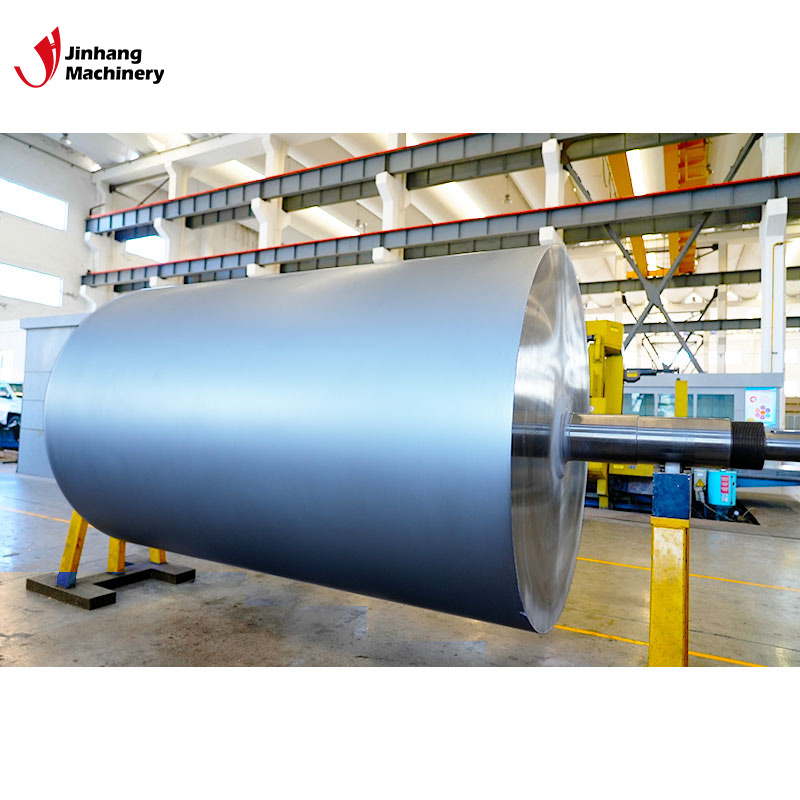
 +86-15371769898
 [email protected]